The quick version
Five families, one trade: attention for smoke flavor. An offset gives the deepest wood flavor but wants a fresh split every 30-45 minutes; a pellet rig holds its setpoint within about ±5°F with WiFi and the mildest smoke; a kamado runs 200°F smoking to 700°F+ searing at a premium; and the drum and Weber Smokey Mountain deliver strong smoke on one charcoal load for under $500 — the best flavor-per-dollar going. Match the rig to how much babysitting you actually want, not to the brand.
Every smoker cooks meat with wood smoke and low, indirect heat. What changes from one rig to the next is how much you pay, how much you babysit it, and how loud that smoke flavor comes through on the plate. Pick wrong and you'll fight your equipment on every cook. Pick right for your life — your patience, your budget, your Sunday schedule — and the machine gets out of your way.
I've run all of these for years, from a rusted-out barrel drum to a competition offset that eats a wheelbarrow of wood a weekend. Here's the honest breakdown of the five families of smoker, what each one is genuinely good at, and which one belongs on your patio.
An offset smoker (also called a "stick-burner") burns whole splits of wood — oak, hickory, post oak, pecan — in a firebox bolted to the side of the cooking chamber. Heat and clean smoke draft sideways across the meat and out a chimney on the far end. This is the setup that produces the deep, layered smoke ring and bark you taste in Central Texas barbecue joints. Nothing else tastes quite like it.
That flavor comes at a price: attention. You're running a live wood fire, and you feed it a fresh split roughly every 30 to 45 minutes for the entire cook — that's 10 to 14 hours on a packer brisket.
You manage temperature with the firebox air intake and the chimney damper, chasing a steady 250-275°F (121-135°C) at the grate. Thin-walled cheap offsets swing wildly and run hotter near the firebox; a good heavy-gauge unit (¼-inch steel) holds steady and cooks more evenly end to end.
Burn clean fire, not smoldering fire. You want thin, bluish smoke — barely visible. Thick white or gray smoke means the wood is choking for air, and that's what deposits bitter, acrid, ashtray flavor on your meat. Keep the firebox vent wide open and control heat with the size and timing of your splits, not by strangling the air.
Price runs the widest of any category: around $400 for an entry backyard offset up to $3,000 and well beyond for a custom fabricated cooker. Budget offsets need "mods" (sealing leaks, adding a baffle) to cook well. Buy an offset if wood-fire flavor is the whole point for you and you genuinely enjoy tending a fire. If you resent being chained to it, you'll hate this rig.
Not sure an offset is beginner-friendly? It usually isn't — see the beginner guide.
Grab the free doneness + wood-pairing cheat sheet →A pellet smoker (Traeger, Pit Boss, and others) is the closest thing to a smoke oven. Compressed hardwood pellets feed from a hopper down an auger into a fire pot, where a hot rod ignites them and a fan feeds the burn. A digital controller reads the chamber temperature and meters pellets to hold your setpoint, typically within ±5°F — often within ±10°F on cheaper units. You dial a number, it holds the number.
Temperature range runs roughly 180°F to 500°F (82-260°C), so one machine does low-and-slow brisket in the morning and higher-heat chicken or even pizza later. Most modern units have WiFi apps that push meat-probe temps and alerts to your phone, so you can run a 12-hour cook and check it from the couch. Hands-on time is minimal: fill the hopper, set it, and glance at it every couple hours.
The trade-off is smoke intensity. Pellet grills burn efficiently and clean, which means the mildest smoke flavor of any real smoker — noticeably lighter than an offset or a charcoal rig.
You can push it harder with a lower "smoke" setting (around 180-225°F, where more smoldering happens), longer cook times, or a smoke tube, but it will never scream wood the way a stick-burner does. Expect to pay around $400 to $1,500+ depending on size and build.
If you want great results with the least babysitting, this is the easy answer. See how the two big brands stack up in Traeger vs Pit Boss.
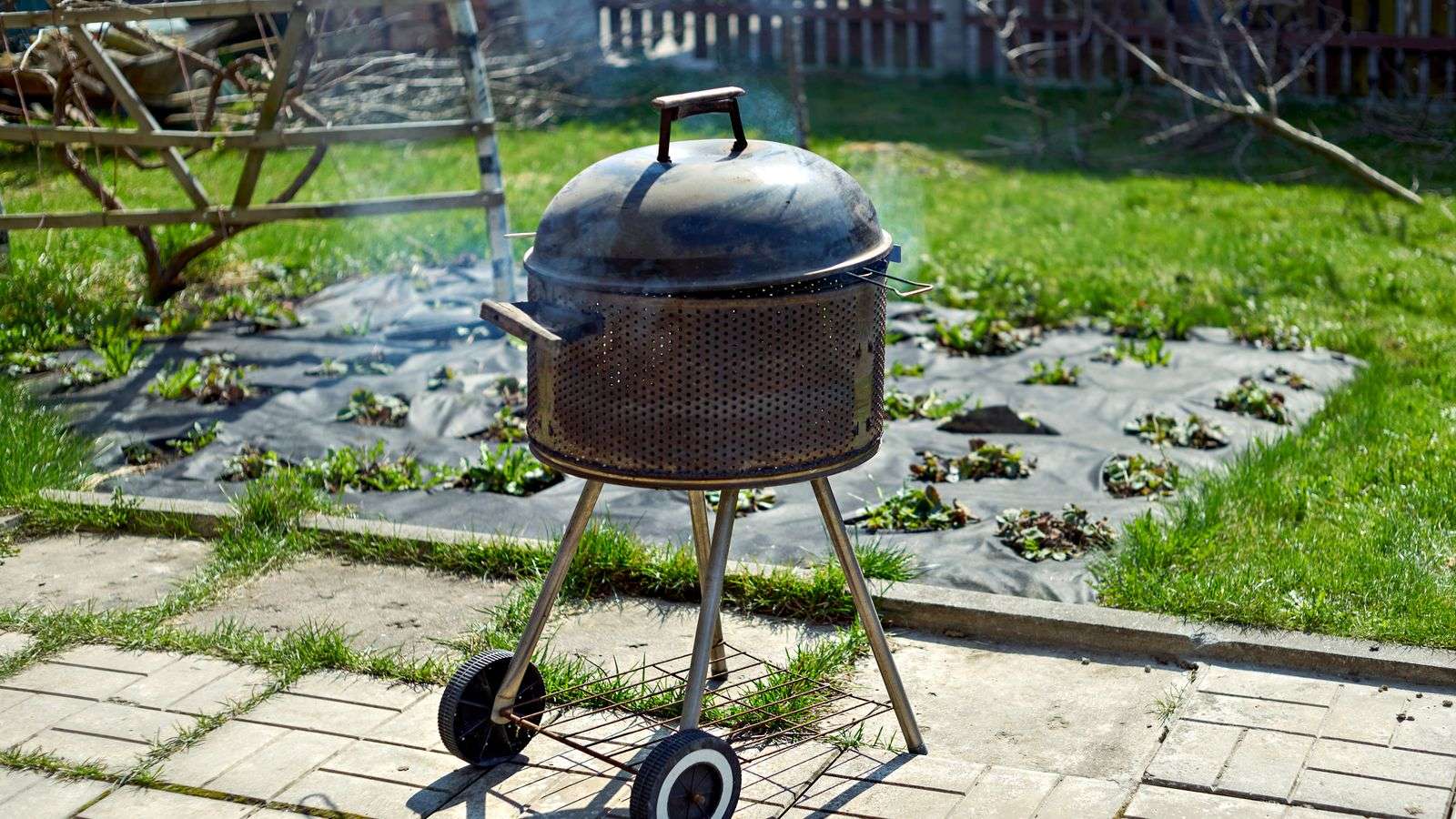
A kamado is a thick, egg-shaped ceramic cooker burning lump charcoal. That ceramic mass is the whole trick — it holds heat like a brick oven and sips fuel, so a single load of lump can run a 18-hour low-and-slow cook without a refill. It's also the most versatile single machine here: choke the vents down to 200-250°F for smoking, or open them wide and hit 700°F+ (370°C+) for searing steaks and blistering pizza in minutes.
You control temperature with a bottom intake vent and a top damper, and because the ceramic responds slowly, the lesson every new kamado owner learns is: sneak up on your target temp, never overshoot it. Once a kamado runs away past your setpoint it takes a long, frustrating time to bring back down. Dial the vents to a hair open and let it climb gently. Our vent-control guide walks through exactly how.
Downsides: it's pricey — a full-size ceramic with accessories runs around $700 to $1,600+ — the ceramic is heavy and can crack if dropped, and cooking capacity is limited to roughly one brisket or two pork butts. But for a backyard cook who wants one machine to smoke low, sear high, and bake, few things beat it. Weighing it against a Weber? Read Weber Kettle vs Smokey Mountain vs Kamado Joe.
These two charcoal rigs deliver the best flavor-per-dollar in barbecue, and both nail the two things that matter most: heat retention and great smoke.
A UDS is a 55-gallon steel drum with a charcoal basket in the bottom and a grate near the top. The meat hangs or sits directly over the coals, and rendering fat drips onto the fire and vaporizes back up onto the meat — that basted, slightly grilled edge is the drum's signature.
It's dead simple: light a full basket, set your intake vent, and a UDS will hold 250-275°F for 8 to 12 hours on one load with almost no tending. Commercial drums run around $350 to $500; a DIY build from a food-safe drum can come in under $200.
The WSM is the classic bullet smoker: a vertical cylinder with a charcoal ring at the bottom, a water pan in the middle, and two cooking grates above.
The water pan is the secret — it acts as a heat sink and humidity buffer, so the WSM holds a rock-steady 225-250°F for 10 to 14 hours on a single charcoal load using the Minion method (a pile of unlit coals with a few lit ones dropped on top, so the fire burns slow and long).
It's forgiving, consistent, and holds two full racks of ribs or a couple of pork butts. Sizes run around $250 to $500. It's my standard recommendation for a first serious smoker — dead reliable, and cheap enough to learn on. Perfect for your first pork butt.
If convenience matters more than chasing maximum flavor, gas and electric cabinet smokers (Masterbuilt is the best-known name) get you there with the least fuss. Both are tall insulated boxes with racks, a heat source at the bottom, and a tray for wood chips.
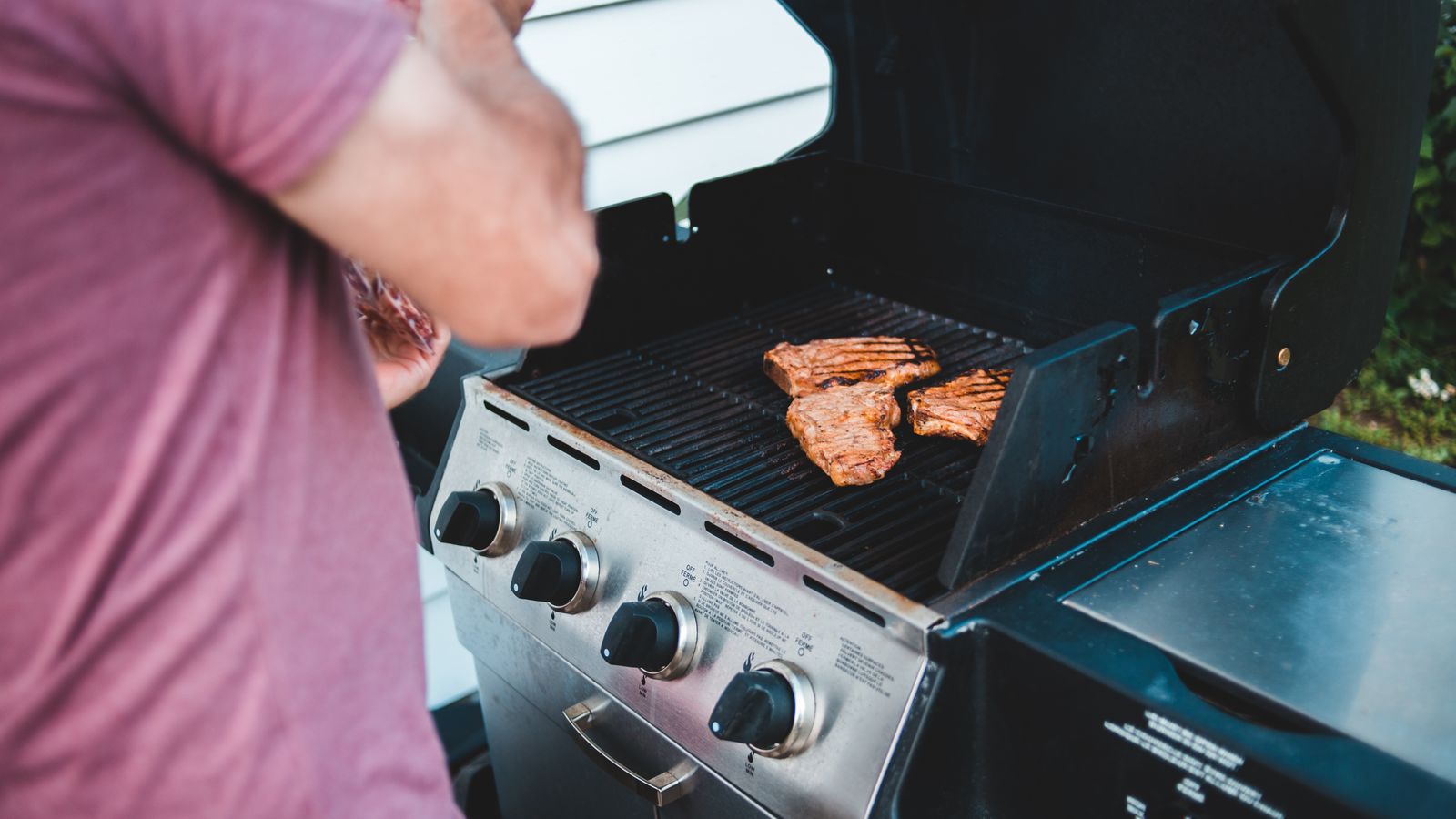
A propane smoker runs off a standard 20-lb tank with a burner and a wood-chip tray. Light it, set the burner, and it holds temperature steadily with no electricity — handy for spots without an outlet. You'll reload chips every hour or two for continuous smoke, and it does put out real, decent smoke flavor. Expect around $150 to $400.
An electric smoker is the lowest-effort machine in barbecue: plug it in, set a digital temperature, drop chips in the tray, and walk away. Many have Bluetooth or WiFi.
The catch is smoke — electric elements don't burn hot enough to make chips smolder aggressively, so it produces light smoke flavor, similar in intensity to a pellet grill or milder. Great for cold-weather cooks, apartment-friendly patios, and hands-off jerky or smoked salmon.
Typically around $150 to $500.
On any low-flavor rig — electric, propane, or pellet — don't fight it by cranking chips. Instead, cook longer at lower temps to maximize smoke exposure, and lean on a bold dry rub and a finishing sauce to carry the plate. Season aggressively; let the machine do the easy part.
| Type | Fuel | Temp range | Hands-on time | Smoke flavor | Price (approx.) | Best for |
|---|---|---|---|---|---|---|
| Offset / stick-burner | Wood splits | 225-300°F | High — feed every 30-45 min | Strongest | $400-$3,000+ | Purists who love tending fire |
| Pellet | Hardwood pellets | 180-500°F | Very low — auto-fed, WiFi | Mildest | $400-$1,500+ | Convenience + versatility |
| Kamado | Lump charcoal | 200-700°F+ | Low-medium | Medium-strong | $700-$1,600+ | One-machine do-it-all cook |
| Drum / UDS | Charcoal | 250-300°F | Low — one load, set and go | Strong | $200-$500 | Best flavor-per-dollar |
| Bullet (WSM) | Charcoal + water | 225-275°F | Low — Minion method | Strong | $250-$500 | Reliable first serious smoker |
| Propane cabinet | Propane + chips | 175-350°F | Low-medium — reload chips | Medium | $150-$400 | No-outlet convenience |
| Electric | Electricity + chips | 100-275°F | Lowest — plug and walk | Lightest | $150-$500 | Hands-off, apartment patios |
For a deeper look at how the underlying fuels shape flavor and cost across grills too, see gas vs charcoal vs pellet vs electric.
Strip away the brand loyalty and it comes down to three questions:
Whichever you land on, the machine is only half the job. Master the fundamentals that apply to every smoker: build a proper two-zone fire, understand low-and-slow times and temps, learn to push through the stall, and always cook to internal temperature — pull every cut at its target on the meat temperature chart, verified with a good instant-read thermometer, not by the clock.