The quick version
Every cut has two numbers: the USDA minimum that makes it safe and the flavor target that makes it good, and they’re almost never the same. Whole beef, pork and lamb are safe at 145°F with a 3-minute rest, ground meat needs 160°F, all poultry 165°F — but collagen cuts like brisket and pork butt don’t turn tender until 195–205°F, and dark-meat chicken wants 175–185°F. Always pull early for carryover, and let probe tenderness make the final call on the big cuts.
There are two numbers that matter for every piece of meat you cook: the temperature that makes it safe, and the temperature that makes it good. They are almost never the same number, and confusing the two is why so much backyard meat ends up either risky or ruined.
A chicken breast is safe at 165°F but a brisket you pull at 165°F is a chewy brick. This is the one chart you bookmark and stop guessing. Planning a cook around these numbers? The free cook-time calculator turns cut + weight into the hours to budget.
I've pulled thousands of cooks off the pit chasing internal temperature instead of a clock, and I'll tell you straight: the thermometer is the single most important tool you own. Not the smoker, not the rub. The probe. Learn these numbers and you'll never serve raw pork or gray steak again.
The USDA safe minimum is the temperature that kills off the bacteria that can make you sick. It's a floor, not a goal. Hit it and you're safe; that's all it promises. The flavor target is where the meat actually tastes its best, and depending on the cut it can sit right on the safe line or a full 50°F above it.
Here are the government floors every cook should have memorized:
| Category | USDA Safe Minimum | Rest Required |
|---|---|---|
| Whole beef, pork, lamb, veal (steaks, chops, roasts) | 145°F (63°C) | 3 minutes |
| Ground beef, pork, lamb | 160°F (71°C) | None required |
| All poultry (ground or whole, white or dark) | 165°F (74°C) | None required |
| Fish & shellfish | 145°F (63°C) | None required |
Two things trip people up here. First, whole cuts of beef, pork and lamb are safe at 145°F with a 3-minute rest — that rest time is part of the safety standard, not optional garnish. During those three minutes the surface heat keeps working and finishes the job.
Second, ground meat is a different animal. Grinding smears surface bacteria all through the meat, so a burger has to hit 160°F all the way through. That's why a rare steak is fine but a rare burger is a gamble.
Poultry gets the highest floor at 165°F because of salmonella risk, and that number applies to the whole bird and every ground-chicken slider. We'll talk in a minute about why thighs actually want to go even higher — for texture, not safety.
This is the concept that separates people who own a smoker from people who actually cook on one. A brisket is technically safe at 145°F. If you pull it there, you'll have a tough, chewy slab that nobody wants seconds of.
The tough cuts — brisket, pork butt, beef short ribs, chuck — are loaded with collagen, the connective tissue that makes them rugged. Collagen doesn't render into soft, juicy gelatin until the meat climbs into the 195–205°F (90–96°C) range and holds there for a while.
So on these cuts you deliberately blow past safe by 50 degrees or more. You're not cooking for doneness anymore — you're cooking for texture. That long climb from 165°F to 200°F is where the magic happens, and it's also where the temperature stalls and tests your patience. If your brisket temp flatlines for hours, that's normal — read the stall explained so you don't panic and crank the heat.
Grab the free doneness + wood-pairing cheat sheet →Stop chasing a single magic number on big cuts. Brisket is "done" somewhere between 195°F and 205°F — but the real tell is probe tenderness. When your thermometer slides into the thickest part of the flat like it's going into warm butter, it's ready, whether that's 198°F or 204°F. The number gets you close; the feel confirms it.
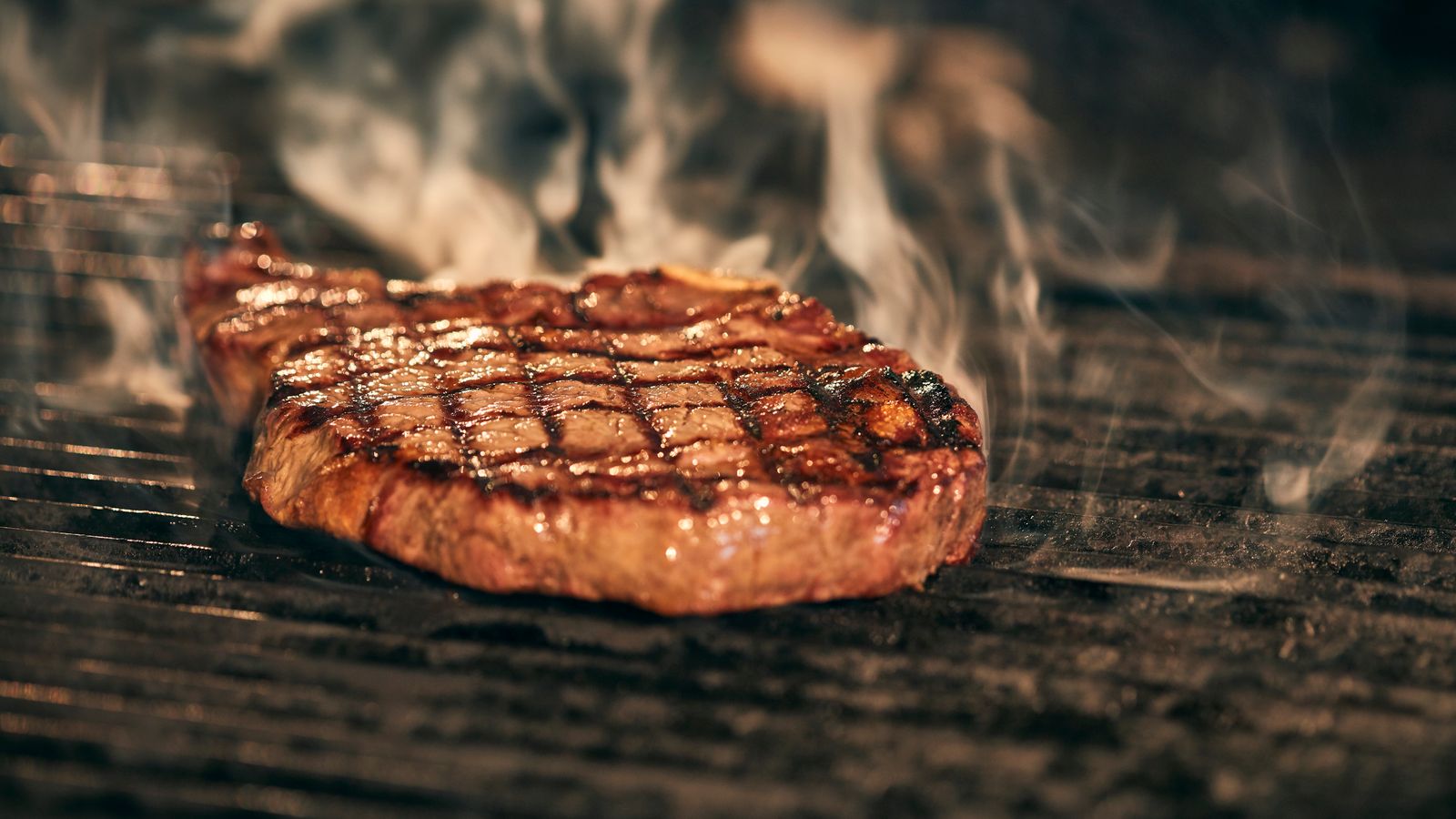
Here's the whole board. Pull temp is the number you take the meat off the heat — not the number it finishes at, because carryover cooking keeps raising it while it rests (more on that next). For the tough cuts, the pull temp is the target because they rest long and hot.
| Doneness | Pull Temp | Final Temp After Rest | What You Get |
|---|---|---|---|
| Rare | 120°F | 125°F (52°C) | Cool red center, very soft |
| Medium-rare | 125–128°F | 130–135°F (54–57°C) | Warm red center — the sweet spot |
| Medium | 135°F | 140–145°F (60–63°C) | Pink center, firmer |
| Medium-well | 145°F | 150°F (66°C) | Faint pink, drier |
| Well-done | 155°F+ | 160°F+ (71°C) | No pink — I won't stop you, but I'll miss you |
For a thick steak, the best way to nail any of these is to cook it gently first and sear it last. That's the whole idea behind the reverse sear method — it gives you edge-to-edge pink instead of a gray band under the crust.
| Cut | Pull Temp | Target / Final | Note |
|---|---|---|---|
| Pork chop / tenderloin / loin roast | 140°F | 145°F (63°C) + 3-min rest | A blush of pink is safe and juicy |
| Pork ribs | — | Probe-tender, ~200–203°F | Bend test: cracks on the surface |
| Pork butt (pulled pork) | — | 200–205°F (93–96°C) | Bone pulls clean; probe like butter |
| Ground pork / sausage | 160°F | 160°F (71°C) | Same rule as any ground meat |
The old "cook pork to 160°F or die" rule is long dead — the USDA dropped whole-muscle pork to 145°F back in 2011. A modern pork chop pulled at 140°F and rested to 145°F is tender and slightly pink, and that's exactly how it should be. Save the high heat for the collagen cuts. When you're ready for the big one, the full method is in the pork butt guide.
| Cut | Safe Minimum | Best Texture Target | Why |
|---|---|---|---|
| Chicken breast | 165°F | 160–165°F (71–74°C) | Pull at 160°F and rest — carryover lands it at a safe 165°F; every degree past dries it out |
| Chicken thigh / drumstick | 165°F | 175–185°F (79–85°C) | Dark meat needs heat to break down tendon |
| Whole chicken / turkey (breast) | 165°F | 160°F pull, carries to 165°F | Rest lets it climb the last 5°F |
| Chicken wings | 165°F | 175–190°F (79–88°C) | Higher = rendered fat, crispy skin |
Here's the counter-intuitive part: dark meat is safe at 165°F but tastes rubbery there. Thighs, drumsticks and wings are packed with connective tissue like the tough beef cuts, just on a smaller scale — take them to 175–185°F and they turn silky. That's the secret behind properly rendered smoked chicken wings and a juicy spatchcocked whole chicken. Breast meat is the opposite — it's lean, so you stop dead at 165°F.
| Type | Safe Minimum | Chef's Target | Result |
|---|---|---|---|
| Salmon | 145°F | 125–130°F (52–54°C) | Moist, just-flaking center |
| Tuna (searing) | 145°F* | 115–125°F | Rare center — sourcing matters |
| White fish (cod, halibut) | 145°F | 140–145°F (60–63°C) | Opaque, flakes cleanly |
| Shrimp / lobster | — | Opaque & firm, ~120–140°F | Overcooking turns them to rubber fast |
Salmon is where the safe number and the good number split hardest. The USDA says 145°F; most cooks pull it at 125–130°F for a buttery, moist flake, accepting the small trade-off the same way they do with a medium-rare steak. That's a personal-risk call — know that going in, and buy quality fish. For hot-smoking, the approach is different and covered in the hot-smoked salmon guide.
Meat doesn't stop cooking when it leaves the heat. The hot exterior keeps driving energy toward the cooler center, so the internal temperature keeps climbing after you pull it — this is carryover cooking, and if you ignore it you'll overshoot every time. The size of the jump depends on the thickness of the cut and how hot you cooked it:
Resting lets the muscle fibers relax and reabsorb juices instead of dumping them on your cutting board. Bigger cut, longer rest:
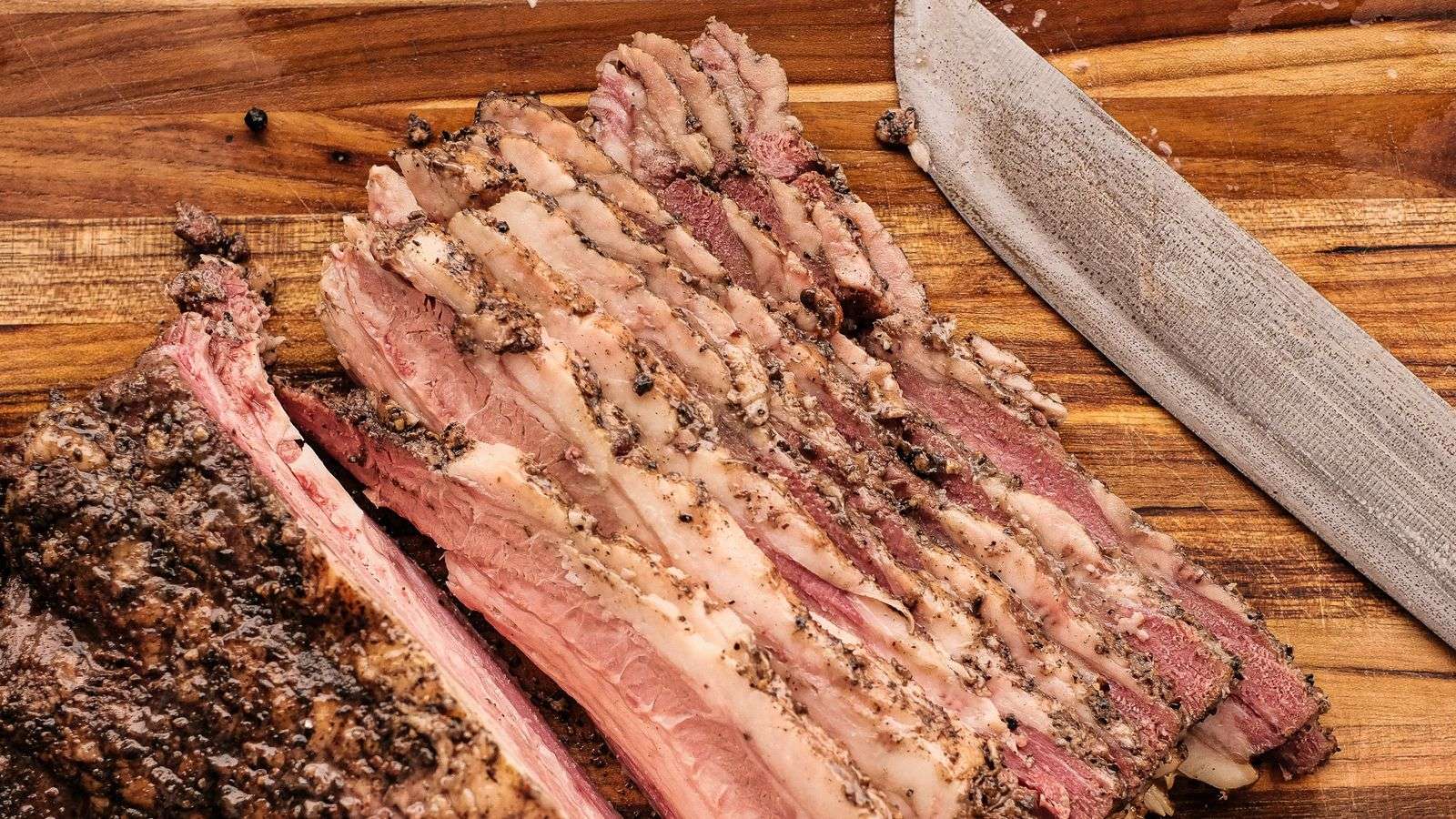
The right temperature read in the wrong spot is worthless. Nail your placement and everything above actually works.
You want both tools, and they do different jobs:
For a full breakdown of which type fits your cooking and what the wireless options actually deliver, see the dedicated meat thermometer guide. Whatever you buy, check its accuracy in an ice-water bath — it should read 32°F.
Calibrate before you trust it. Drop your thermometer tip into a glass of ice packed with water, wait 30 seconds — it should read 32°F (0°C). If it's off by 3 degrees, every cook you do is off by 3 degrees. Do this the day before a big smoke, not while your guests are hungry.
The temperatures on this page are the backbone of nearly everything else you'll cook.
Chasing internal temp instead of the clock is the entire philosophy behind low and slow smoking, and it's why setting up a proper two-zone fire matters — you need a cool side to bring meat gently up to a precise pull temp without scorching it.
Learn to read the probe, respect carryover, and rest your meat, and you've mastered the part of barbecue that actually separates the good from the great.