The quick version
You need two thermometers, not a drawer full: a fast instant-read for the final doneness call, and a leave-in or wireless probe with an ambient channel to run the cook itself. Skip the dome gauge — it can sit 15–30°F off from grate level — and stop peeking, because every lid-open costs roughly 15–20 minutes of recovery. Calibrate in ice water (32°F) before you trust any of them, and probe the thickest, slowest spot before you call it done.
Here's the truth nobody selling you a smoker wants to say out loud: your thermometer matters more than your pit. You can smoke a competition-grade brisket on a rusty drum, but you cannot save one you pulled at the wrong internal temp because you were guessing. Meat doesn't care how much your rig cost. It cares whether you hit the number.
So let's cut through the noise. There are three kinds of thermometer worth owning, they do different jobs, and the pros run two of them at once. I'll tell you exactly which, why, and how to make sure they're actually telling you the truth.
Stop shopping by price and start shopping by job. A thermometer is a tool, and you match the tool to the moment in the cook. Get this framing right and the buying decision makes itself.
An instant-read is the one you jab in, read, and pull out. Its whole value is speed and accuracy in one spot. The gold standard is the Thermapen ONE — it locks a reading in about one second and holds an accuracy of roughly ±0.5°F.
When you're probing a brisket for that "like buttah" feel or checking whether the thick part of a chicken thigh cleared 175°F (79°C), you don't want to stand there with the lid open counting to ten while a slow dial thermometer catches up.
On a budget, the ThermoPop 2 reads in around 2–3 seconds for a fraction of the cost and is plenty for backyard work.
Use an instant-read to confirm doneness at the moment of truth: pulling steaks off a reverse sear, checking that pork butt has gone past 203°F and probes tender, or spot-checking wings before they come off. It's the final word, not the babysitter. For every cut's target, keep the meat temperature chart within reach.
Probe in more than one place. A brisket flat can read 205°F while the point is still at 195°F. The "done" number is where the meat is thickest and slowest, not the first spot your probe happens to land.
Grab the free doneness + wood-pairing cheat sheet →
An instant-read is useless for a 12-hour brisket — you're not standing there for twelve hours, and you shouldn't be opening the lid to check. That's what a leave-in probe is for. You insert the probe into the meat before it goes on, run the thin cable out through the lid or a grommet, and watch the temperature climb on a base unit without ever cracking the pit.
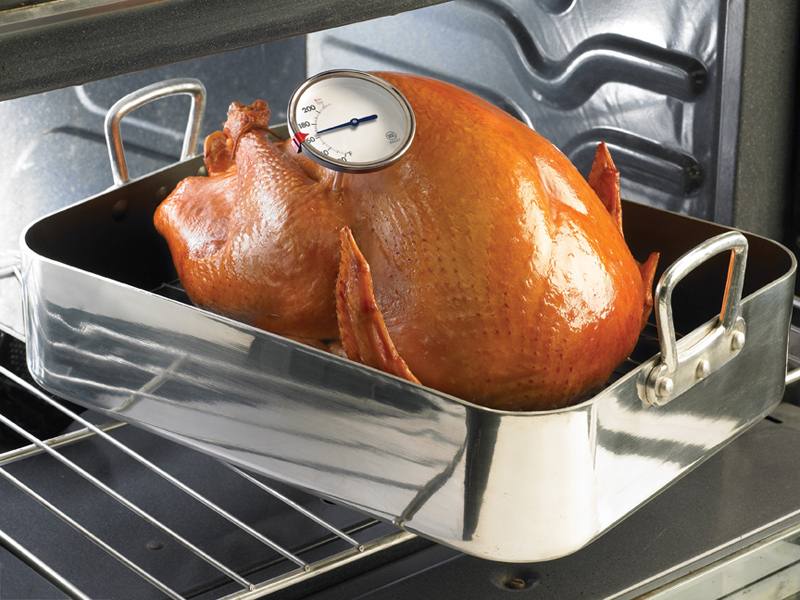
The setup you want is dual-probe: one probe in the meat, one clipped at grate level to read ambient (pit) temperature right next to the food. Why ambient? Because the dome thermometer built into most smokers is reading air up top, often 15–30°F off from where your meat actually sits.
When you're trying to hold a steady 225–250°F for a low-and-slow cook, that grate-level number is the one you tune your vents to. A unit like the ThermoWorks Signals (four probes) or the classic dual-probe DOT-style rigs will run you somewhere around $60–230 depending on probe count and features.
This is the thermometer that tells you when you've hit the stall — that maddening plateau around 150–170°F where evaporative cooling stalls the climb for hours. Without a leave-in probe you'd be opening the lid in a panic, which is exactly the wrong move.
Wireless probes cut the cable entirely and push readings to your phone. There are two flavors, and the difference matters more than the marketing admits:
Wireless is the answer to the real question behind "best meat thermometer for smoking": how do I run a 14-hour overnight cook without babysitting a fire I can't see from bed? You set high and low alarms — say, alert me if the pit drops below 215°F or the meat passes 165°F — and the phone wakes you only when the cook needs you.
Whatever wireless unit you buy, do a range test in your actual yard before the overnight cook. Metal smoker walls, brick, and a couple of interior walls eat signal fast. Find your dead zones on a Tuesday, not at 3 a.m. with a brisket on the line.
This is the single most important habit in smoking, so I'll say it plainly: every time you open the lid, you lose roughly 15–20 minutes of cook time while the pit claws its way back to temperature. Open it six times over a long cook "just to check" and you've added an hour to hour and a half, dried the surface, and thrown your timeline into chaos. "If you're lookin', you ain't cookin'" isn't a cute saying — it's thermodynamics.
A leave-in or wireless probe eliminates the reason to open at all. You watch the numbers climb in real time, you tune your vents off the grate-level ambient reading, and you only lift the lid for a genuine reason: spritzing, wrapping at the stall, or the final feel-check.
That's the difference between a stressed cook and a calm one — and calm cooks turn out better brisket. It's why I tell every beginner working through their first packer brisket or a Boston butt to buy the leave-in probe before they upgrade anything else.
| Type | Best job | Read speed | Rough price |
|---|---|---|---|
| Instant-read (Thermapen ONE / ThermoPop 2) | Final doneness spot-checks | ~1–3 sec | Around $35–110 |
| Leave-in dual-probe (Signals / DOT-style) | Long smokes, tuning the pit | Continuous | Around $60–230 |
| Wireless (MEATER / RFX) | Overnight, walk-away monitoring | Continuous | Around $70–150+ |
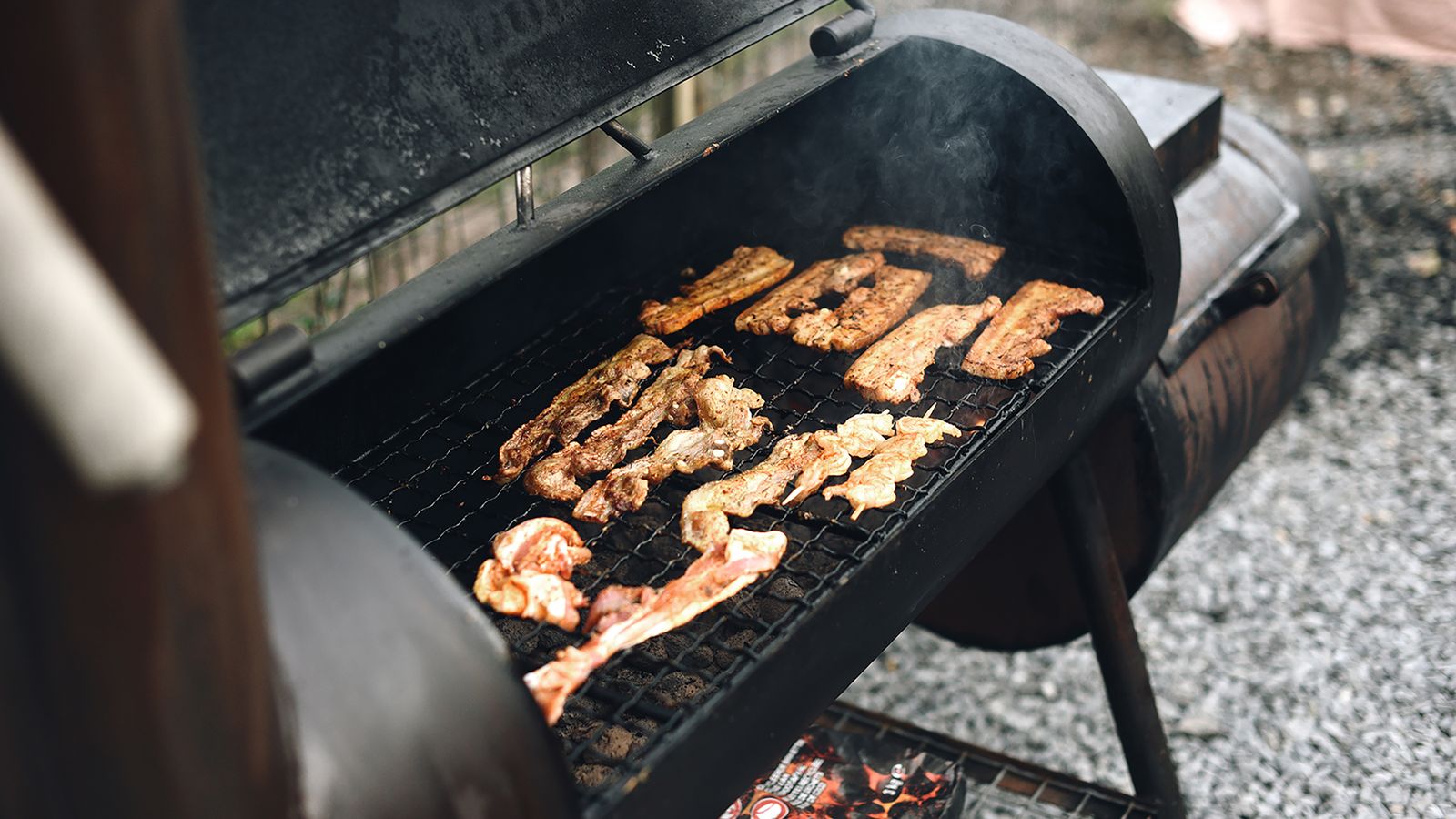
A thermometer that reads 5°F low will have you pulling brisket at a true 198°F when your probe says 203°F — undercooked, tough, and you'll blame the recipe. Check calibration when a unit is new, after you drop it, and every few months. Two reference points, five minutes:
Cheaper instant-reads and dial thermometers often have an adjustment nut or an offset setting. Fixed-calibration units like the Thermapen can't be adjusted, but you can note the offset — "reads 2°F high" — and do the math at the pit. The ice bath is the more important test of the two, because it's the range where you're actually judging doneness.
You don't need a drawer full of gadgets. You need two thermometers that cover both jobs:
That's it. A fast checker and a set-it-and-watch-it monitor. Together they cover every cook you'll ever do, and they cost less than the fuel you'll burn learning to smoke without them.