The quick version
Your first smoker matters less than your first ten cooks — buy forgiveness. The 18-inch Weber Smokey Mountain (~$400) is the workhorse pick, holding 225-250°F for 8+ hours on nothing but vents and a water pan; a pellet grill is the easiest path, keeping within about 10-15°F from an app but needing an outlet; a kamado does everything up to 700°F+ sears but overshoots and costs more. Skip the offset for now, and make your first cook a pork butt or chicken thighs — not brisket.
Here's the truth nobody selling you a smoker wants to say out loud: your first smoker matters way less than your first ten cooks. Any of the three machines below will make barbecue that shuts up the whole backyard. What separates them is how much they let you screw up and still win. That's the whole game when you're starting out — forgiveness.
So I'm not going to bury you in specs. I'm going to tell you which smoker holds a steady 225-250°F (107-121°C) with the least fuss, which one you can run from your phone, and which one makes you earn it. Then I'll point you at the exact cut to cook first so you don't blow $80 of brisket learning a lesson a $6 pork butt teaches just as well.
Everything at the entry level comes down to how you make heat and how you control it. You've got charcoal-and-water (the bullet), automated wood pellets (the pellet grill), and thick ceramic (the kamado). Each one changes what your first year looks like. If you want the full family tree, I break down every design in smoker types explained, but for a first buy these are the only three worth your money.
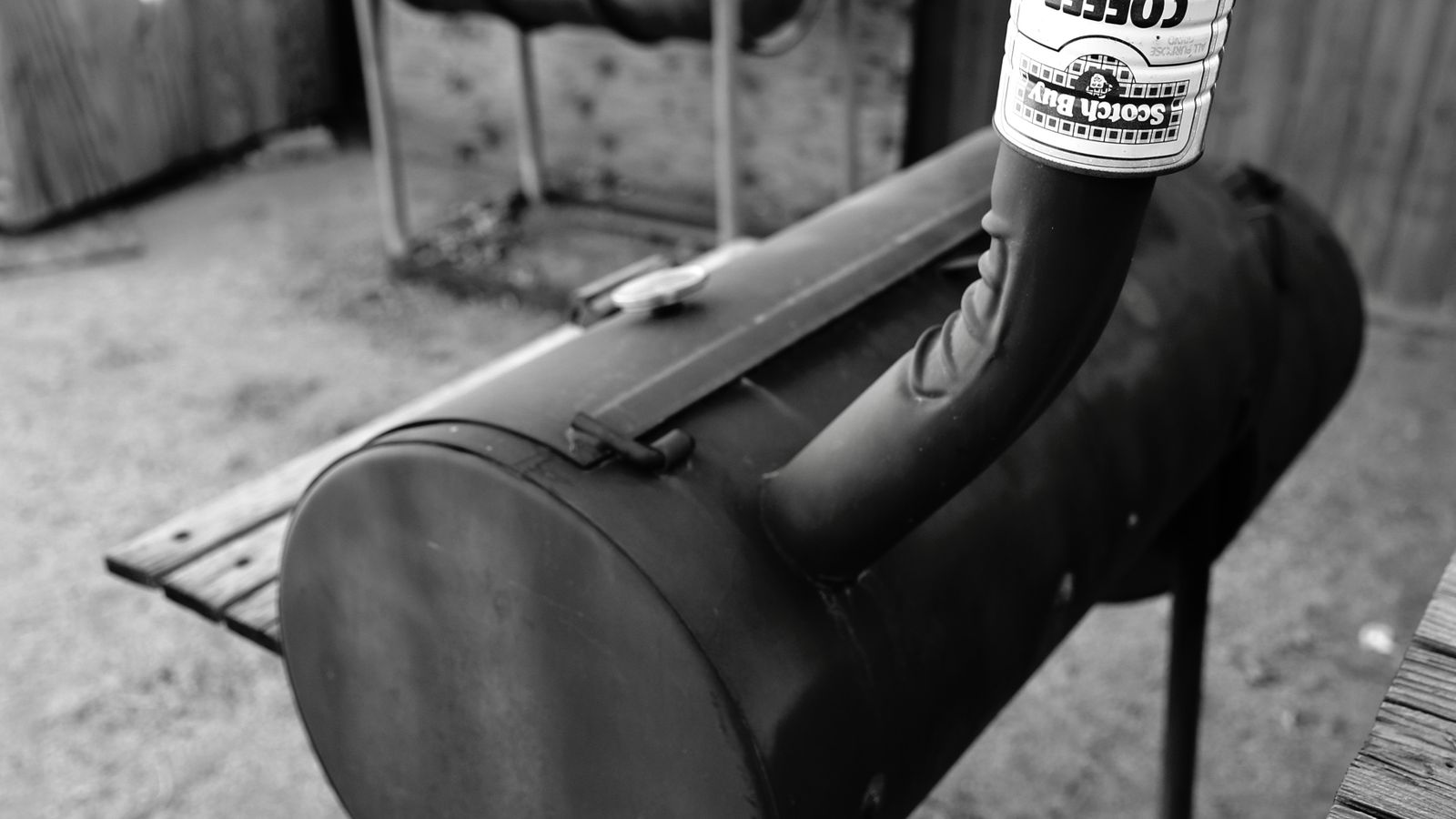
And before we go further: an offset stick-burner is not a beginner smoker. I don't care how good it looks in the photos. A traditional offset asks you to feed splits and manage a live fire every 30-45 minutes for 12 hours, fighting temperature swings and thin blue smoke the whole way.
That's a craft, and it's a rewarding one — but it's a second or third smoker, not a first. Buy one when babysitting a fire sounds like the fun part, not the chore.
If you asked me to hand one smoker to a nervous first-timer with a real budget, it's the 18-inch Weber Smokey Mountain — the "WSM," a bullet smoker that runs around $400. This thing is boring in the best possible way. It just works.
The magic is the water pan sitting between your charcoal and your meat. Water can't get hotter than 212°F (100°C), so it acts like a thermal flywheel — it swallows temperature spikes and stalls temperature drops. Once you dial the WSM in, it'll hold 225-250°F for 8 or more hours on a single load of charcoal, controlled by nothing but the three bottom vents.
If dialing in vents feels like a dark art at first, it isn't — it's a skill you own forever. I walk through the exact logic in mastering charcoal vents. The tradeoff with the WSM is simple: it's charcoal, so there's a small learning curve and you're the thermostat. The payoff is real wood-and-coal flavor, a genuine smoke ring, and no electronics to fail.
Grab the free doneness + wood-pairing cheat sheet →Don't wrap your WSM in a welding blanket or panic in cold weather. The water pan already regulates you. In winter, just start with more lit coals (18-20) and expect to open the vents a touch wider. The machine adapts.
If your honest goal is "I want great barbecue and I do not want to think about fire," buy a pellet grill. Full stop. It's the most beginner-friendly smoker made, and there's no shame in the game — plenty of serious cooks run them.
A pellet grill works like a wood-fired oven. You pour hardwood pellets into a hopper, an auger feeds them into a fire pot, an igniter lights them, and a fan and controller regulate the burn to hit whatever temperature you dial in. You set 225°F on the panel — or on the app from your couch — and it holds it. Most modern units keep within about 10-15°F of your target automatically. There's no vent to manage, no fire to tend.
For a first cook with zero drama, a pellet grill is unbeatable. If you're weighing brands, I put the two biggest head-to-head in Traeger vs Pit Boss, and if you're still deciding between fuel types entirely, start with gas vs charcoal vs pellet vs electric.
The kamado — thick egg-shaped ceramic — is the most versatile cooker on this list and the most expensive, often running well past $700-$1,000 by the time you add the stand and accessories. That ceramic is a superpower: it's a heat battery.
A kamado will low-and-slow at 225°F using shockingly little charcoal, then, with the deflector plate pulled out and the vents opened up, rip to 700°F+ (370°C+) for steaks and pizza. One cooker, both jobs.
Here's the catch, and it's a real one: the airflow learning curve is steeper. Because ceramic holds heat so stubbornly, a kamado overshoots easily.
If you let it climb to 400°F while you're chatting, you can't just crack the lid and cool it down — you'll wait an hour for that ceramic to give the heat back. The rule is to sneak up on your target temperature, closing your vents down as you approach it, never letting it blow past.
Overshoot on a WSM is a shrug; overshoot on a kamado is a time-out.
It's a fantastic smoker and a lifelong one. Just know you're signing up for a slightly harder first month in exchange for a cooker that does literally everything. If you want the three Weber-class options side by side, I laid them out in Weber Kettle vs Smokey Mountain vs Kamado Joe.
| Factor | WSM 18" | Pellet grill | Kamado |
|---|---|---|---|
| Rough price | ~$400 | ~$450-$900 | ~$700-$1,200+ |
| Ease for a first-timer | Easy | Easiest | Moderate |
| Set-and-forget? | Mostly (check every 2-3 hrs) | Yes (app control) | Mostly, once dialed in |
| Smoke flavor & ring | Strong | Milder | Strong |
| Needs electricity? | No | Yes | No |
| Can sear at 700°F+? | No | No (most) | Yes |
| Best for | Value + real charcoal flavor | Total convenience | One cooker for everything |
Whichever you pick, set aside about $100 for the gear that separates good cooks from frustrated ones. Skip the gadgets, buy these:
I'm going to save you from yourself: do not smoke a brisket first. Brisket is 12+ hours, expensive, and unforgiving — it will punish a beginner's mistakes and leave you with $80 of dry, sad beef and a bruised ego. Earn brisket later; when you're ready, the complete packer guide will be waiting.
Start with one of these two instead:
For either cook, keep a simple rub and a good thermometer in play. Build your own seasoning with the ultimate dry rub guide, and cook to the number, always — the safe pull temps and the "actually perfect" pull temps live in the meat temperature chart. Timers lie. Thermometers don't.
Whatever you cook, rest it. A pork butt needs 30-60 minutes wrapped and off the heat before you pull it; the juices redistribute and the meat finishes carrying over. Cutting in early is how good barbecue becomes dry barbecue.