The quick version
Buy the Kettle (~$200–$250) if you’re a grilling generalist — it handles 80% of backyard cooking in one small footprint. Buy the Smokey Mountain if the goal is brisket and pulled pork: its water-pan design holds 225–250°F for 8–10 hours with almost no babysitting, but it won’t sear. The Kamado Joe ($800–$1,500+) is the only one that sears 700°F+ and smokes low-and-slow in the same shell — at roughly 3 to 5 times the WSM’s price per square inch, which is why a Kettle + WSM combo often beats it on capability per dollar.
Three charcoal cookers built their reputations the hard way — one grill session, one brisket, one Saturday at a time.
The Weber Kettle, the Weber Smokey Mountain (WSM), and the Kamado Joe all burn the same fuel and all wear the Weber-class badge of "buy it once, cook on it for twenty years." But they are not interchangeable, and the guy who tells you to "just get the Kamado, it does everything" is selling you $1,200 of grill you don't need yet.
I've run all three hard — kettles for weeknight burgers and beer-can chicken, WSMs for competition-adjacent pork shoulders, kamados for reverse-seared tomahawks followed by an all-night brisket in the same firebox. This is the honest breakdown: what each one actually does better, what it costs to really own (not just to buy), and which one earns the first spot on your patio.
| Cooker | Price Range | Primary Job | Temp Range | Best For |
|---|---|---|---|---|
| Weber Kettle 22" | ~$200–$250 | Grilling + occasional smoking | 250°F–650°F (121°C–343°C) | Generalists, first grill, small yards |
| Weber Smokey Mountain | ~$330–$480 | Dedicated low-and-slow smoker | 225°F–275°F (107°C–135°C) | Budget beginner smoker, set-and-forget |
| Kamado Joe | ~$800–$1,500+ | High-heat searing + low-and-slow smoking | 200°F–750°F+ (93°C–400°C+) | One do-it-all cooker, steak-and-smoke households |
The 22-inch kettle is the most versatile single grill Weber makes, and probably the most versatile grill anyone makes at this price. About 363 square inches of cooking surface, a one-touch ash-cleaning system, and a lid that's been engineering-unchanged for decades because it doesn't need fixing.
At $200–$250, it's the cheapest entry point into real charcoal cooking, and it's the one grill that does direct-heat grilling, indirect roasting, and passable low-and-slow smoking all in the same footprint.
Set it up as a two-zone fire — charcoal banked to one side, empty grate on the other — and you can sear a steak over 600°F+ coals, then slide it to the cool side to finish gently, or roast a whole spatchcocked chicken indirect at 375°F while the skin crisps from radiant heat off the lid.
Add a Slow 'N Sear or Vortex accessory (each around $40–$60) and the kettle stretches into decent 3-4 hour smokes — ribs, chicken, even a small pork butt if you're willing to babysit the vents every 45 minutes.
What it won't do gracefully: an unattended 12-14 hour brisket cook. The fuel bed is small, the airflow is manual, and holding a rock-steady 225°F overnight on a kettle means you're getting up to check it. That's fine for a Saturday afternoon rack of ribs. It's a bad plan for a brisket you need ready by noon.
CEO TIP: Learn to read smoke, not just thermometers. Thin, almost-invisible blue smoke means clean combustion and good flavor. Thick white-gray smoke means you're about to make something taste like an ashtray — open the vents, let it burn cleaner, and don't touch the meat again until the smoke clears.
The WSM (18.5-inch runs ~$330–$370, the 22.5-inch ~$400–$480) is not a grill. It's a vertical water smoker, shaped like a bullet, and it does exactly one job: hold low, steady heat for a long time with almost no attention. That single-mindedness is precisely why it's the best budget beginner smoker on the market and the reason it shows up on every serious beginner-smoker shortlist.
Below the two cooking grates sits a water pan, and it's doing three jobs at once: it acts as a heat buffer that absorbs and slow-releases temperature swings, it adds humidity that helps bark form without drying the meat's surface, and it physically blocks direct radiant heat from the coals below, turning the WSM into a true indirect smoker even though the fire sits just a couple feet under the meat.
Fill it with hot water (not cold — cold water drags your pit temp down right when you're trying to stabilize it) and you can walk away for 3-4 hours between vent checks.
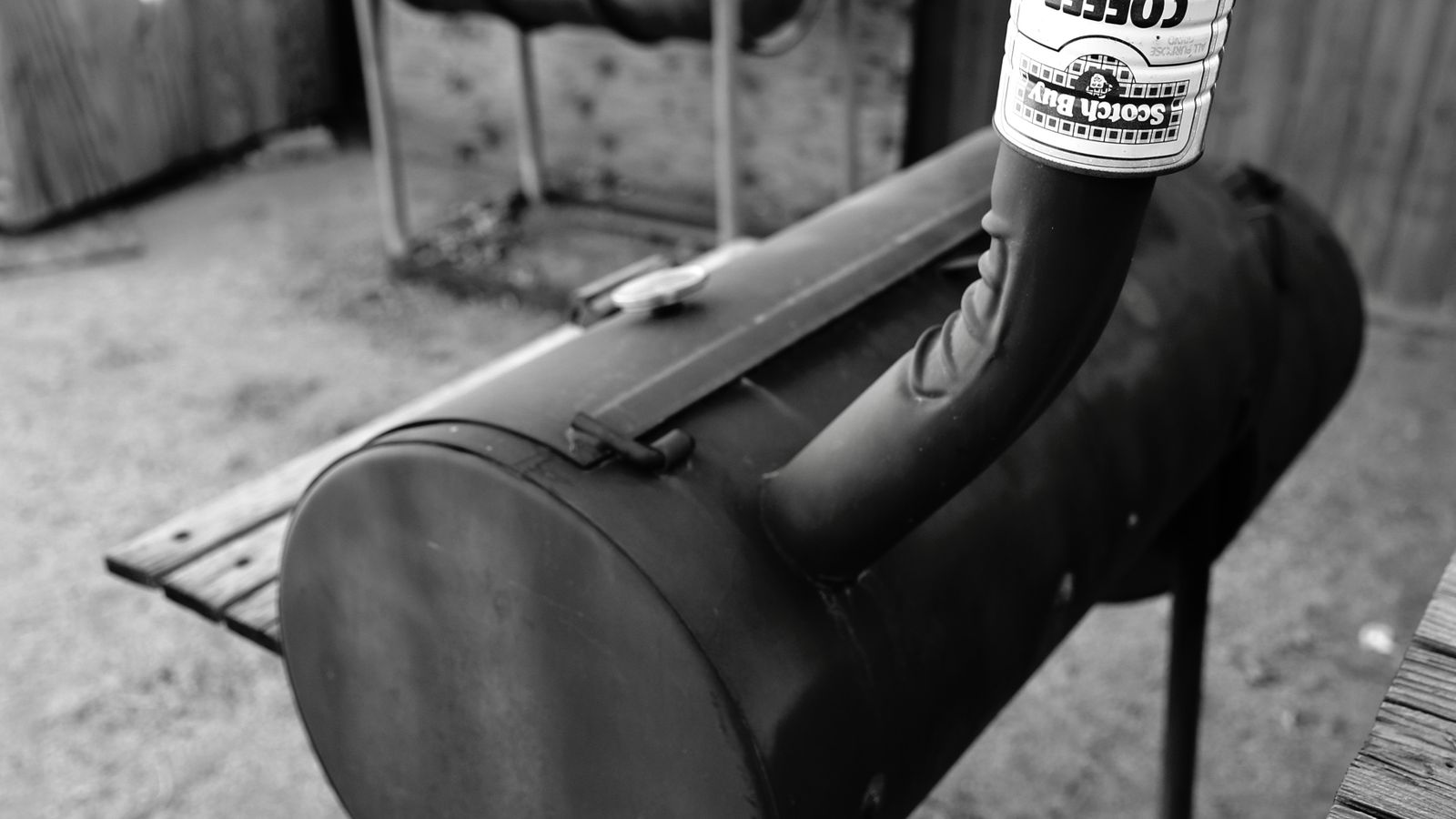
A full ring of unlit charcoal with a chimney's worth of lit coals dumped in the center (the Minion Method) will hold 225°F–250°F for 8-10 hours on the 22.5-inch WSM with the bottom vents cracked to roughly 25% open.
That's enough runway for a 7-8 lb pork butt or a full packer brisket without a mid-cook reload.
Pull pork at 195°F–203°F internal for shreddable bark-to-bone texture; pull brisket flat at 203°F–205°F, checking for that probe-tender "like butter" feel rather than trusting the number alone — see the meat temperature chart for the full breakdown by cut. Grab the free doneness + wood-pairing cheat sheet →
What the WSM won't do: sear anything. There's no direct high-heat mode. It's a smoker, full stop, and if you buy one expecting to also cook Tuesday-night burgers on it, you'll be disappointed. That's the trade you're making for a rock-steady low-and-slow cooker at less than half a kamado's price.
Kamado Joe's thick ceramic shell is the whole story. Ceramic holds and reflects heat far more efficiently than steel, which means two things: it can climb to 700°F–900°F for genuine steakhouse-quality searing, and its insulation is good enough that it'll also idle at 225°F for 12+ hours on a single load of lump charcoal, sipping fuel the whole time. No other cooker in this comparison does both jobs at a high level in the same vessel.
To actually get a Kamado Joe to 700°F+, you need patience most people skip: load it heavy with lump charcoal, open both vents fully, and let it heat-soak for 20-30 minutes with the lid closed before you cook.
Ceramic is slow to heat and slow to cool, so a quick 8-minute warmup gets you a grate that reads hot but a dome that's still lukewarm — inconsistent sears.
Give it the full soak and you can genuinely reverse sear a steak: bring it up slow and indirect to 10°F below target, then hit the direct high-heat side for 60-90 seconds a face.
Kamado Joe's stackable "Divide and Conquer" grate system lets you run indirect low-and-slow using the same firebox as the sears — deflector plates go in, and the ceramic mass does the rest.
Once dialed in with the daisy-wheel top vent and bottom slider, a Kamado Joe genuinely holds 225°F within a 10-15°F band for 12+ hours, using noticeably less lump charcoal than an equivalent steel smoker because almost none of the heat is escaping through the walls.
CEO TIP: Master your vent control on a kamado before you trust it overnight. Because the ceramic holds heat so well, temperature swings arrive on a delay — you'll overshoot 275°F, correct the vents, and then watch it keep climbing for another 20 minutes before it responds. Small vent adjustments, patience, and no chasing the number.
Here's the number that matters: a 22.5-inch WSM gives you roughly 726 square inches of cooking space across its two grates for around $450. A mid-size Kamado Joe Classic gives you around 250-300 square inches (before adding extension racks) for $1,000-$1,300.
Per square inch of grate, you're paying roughly three to five times as much for the kamado — and you're paying for the sear capability and the ceramic build quality, not for extra capacity. That premium is worth it if you actually want both jobs in one cooker.
It's wasted money if 90% of your cooking is one or the other.
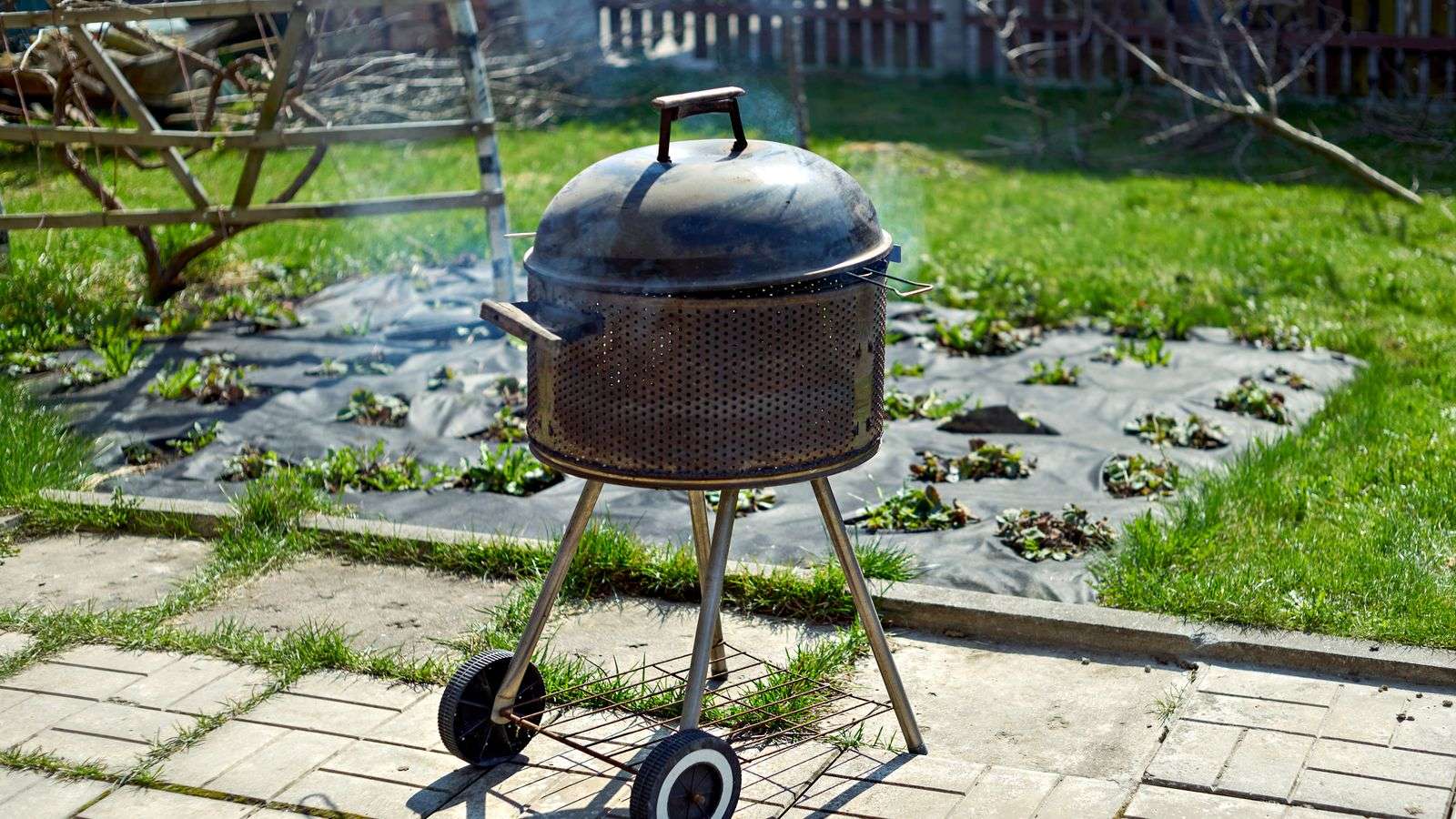
If you're still weighing charcoal against gas and pellet options entirely, that's a separate decision — see our breakdown of gas vs charcoal vs pellet vs electric grills before committing to any of these three.
The sticker price is never the real price. Fuel consumption, replacement parts, and the accessory rabbit hole all add up differently across these three.
| Factor | Weber Kettle | Smokey Mountain | Kamado Joe |
|---|---|---|---|
| Fuel per long cook | ~8-10 lbs briquettes (short cooks only) | ~10-12 lbs charcoal / 8-10 hr smoke | ~6-8 lbs lump / 12+ hr smoke (ceramic efficiency) |
| Replacement parts | Grates, ash catcher — rarely, lasts years | Water pan, grates — durable, minimal wear | Gasket every 2-4 years (~$20-30), felt seals |
| Core accessories | Slow 'N Sear, Vortex, rotisserie ($40-150 total) | Extra grate, thermometer upgrade ($30-80) | Deflector plates, extension rack, joetisserie ($150-400+) |
| Realistic 5-year cost | Grill + accessories: ~$300-400 | Smoker + accessories: ~$450-550 | Ceramic + full ecosystem: ~$1,200-1,900 |
The kamado's ecosystem is also its trap: the accessories (extra deflector plates, half-moon grates, joetisserie kits) are genuinely excellent, but they're proprietary and priced accordingly. A Weber kettle's aftermarket (Slow 'N Sear, Vortex, third-party grates) is cheaper precisely because the kettle has been the industry standard for so long that everyone builds for it.
| Your Situation | Best Pick | Why |
|---|---|---|
| Tight budget ($200-300), mostly grilling | Weber Kettle 22" | Cheapest real charcoal cooker, handles direct + indirect well |
| Tight budget ($350-450), mostly smoking | Smokey Mountain | Best low-and-slow stability for the money, minimal attention needed |
| Mid budget ($400-600), want both grill and smoker | Kettle + WSM combo | Two dedicated tools for less than one kamado, no compromise on either job |
| Bigger budget ($800-1,500), want one cooker forever | Kamado Joe | Only cooker here that genuinely sears 700°F+ and smokes 225°F in one shell |
| Small yard, apartment patio, limited storage | Weber Kettle 22" | Smallest footprint, lightest, easiest to store or move |
| Serious about competition-style low-and-slow | Smokey Mountain or Kamado Joe | Both hold 225°F for 10-12+ hours; WSM wins on price, kamado on fuel efficiency |
None of these three is a bad purchase — they're all Weber-class in the sense that they'll outlast a decade of cheaper grills and hold resale value if you ever sell up. The mistake is buying based on price alone or brand hype alone.
Buy based on what you'll actually cook on a Tuesday night versus what you'll cook twice a year, because the smoker category is full of expensive cookers that get used four times before they turn into a patio ornament.