The quick version
Low and slow means holding the chamber at 225–275°F — 250°F is the sweet spot — for four to sixteen hours so collagen can melt into gelatin. It’s only for the tough cuts: pull pork butt at 195–205°F, brisket at 195–203°F by probe feel, and judge ribs by the bend test, never the clock. Plan 1–1.5 hours per pound for brisket and 1.5–2 for pork butt, expect the stall around 150–170°F, and rest big cuts at least 30–60 minutes before you slice.
Low and slow is the whole ballgame in real barbecue. You take a tough, cheap, collagen-packed hunk of meat that would be shoe leather on a hot grill, and you cook it gently for hours until it melts into something you'd fight your cousin over. No trick, no gadget, no secret sauce does that work. Time and temperature do.
Here's the good news for nervous first-timers: low and slow is forgiving. A steak gives you a 90-second window before it overshoots. A pork butt gives you an hour of wiggle room. Get the fundamentals below right and your first smoke will beat most restaurant barbecue. Let's get into it.
Low and slow means holding your smoker's chamber between 225°F and 275°F (107–135°C) for anywhere from four to sixteen hours, depending on the cut. That's it. "Low" is the pit temperature. "Slow" is the clock. You're deliberately cooking well below the boiling point of water so the inside of a big cut has time to do its magic before the outside dries out.
The sweet spot for most cooks is 250°F. Run at 225°F and you get maximum smoke absorption and a slightly deeper bark, but you'll add an hour or two. Run at 275°F and you shave time off with barely any quality loss — a lot of competition and restaurant pitmasters cook right there.
Below 225°F you risk hanging out too long in the food-safety danger zone; above 300°F you've left low-and-slow territory and started roasting.
Why does this only work on certain cuts? Because low and slow is a tool for a specific problem, and that problem is connective tissue.
Hard-working muscles — shoulder, chest, ribs — are laced with collagen, the tough connective tissue that makes those cuts chewy and cheap. Collagen won't chew tender no matter how you cook it, but it will dissolve.
Starting around 160–170°F internal, and accelerating as you climb toward 200°F, collagen slowly breaks down into gelatin — the same silky stuff that makes stock gel in the fridge.
Gelatin coats the muscle fibers, holds moisture, and gives properly smoked brisket and pork that rich, lip-sticking, melt-in-your-mouth texture. That conversion takes hours of sustained heat, which is exactly why you can't rush it.
Blast a brisket hot and fast and you'll dry out and tighten the muscle long before the collagen ever surrenders.
Lean, tender cuts — a ribeye, a pork tenderloin, chicken breast — have almost no collagen to convert. Cooking those to 203°F just ruins them. Low and slow is for the tough guys; save the tender cuts for a hot two-zone fire or a reverse sear.
The single biggest beginner mistake is cooking to time instead of temperature. Every piece of meat is different — different fat, different thickness, different day. Internal temperature tells you when it's done; the clock only tells you roughly when to start checking. Get a good probe and trust it over any recipe. If you're not sure which to buy, our meat thermometer guide breaks down instant-read versus leave-in probes.
| Cut | Pull Temp (Internal) | How You Know It's Done |
|---|---|---|
| Pork butt (Boston butt / shoulder) | 195–205°F (91–96°C) | Probe slides in like warm butter; bone wiggles free |
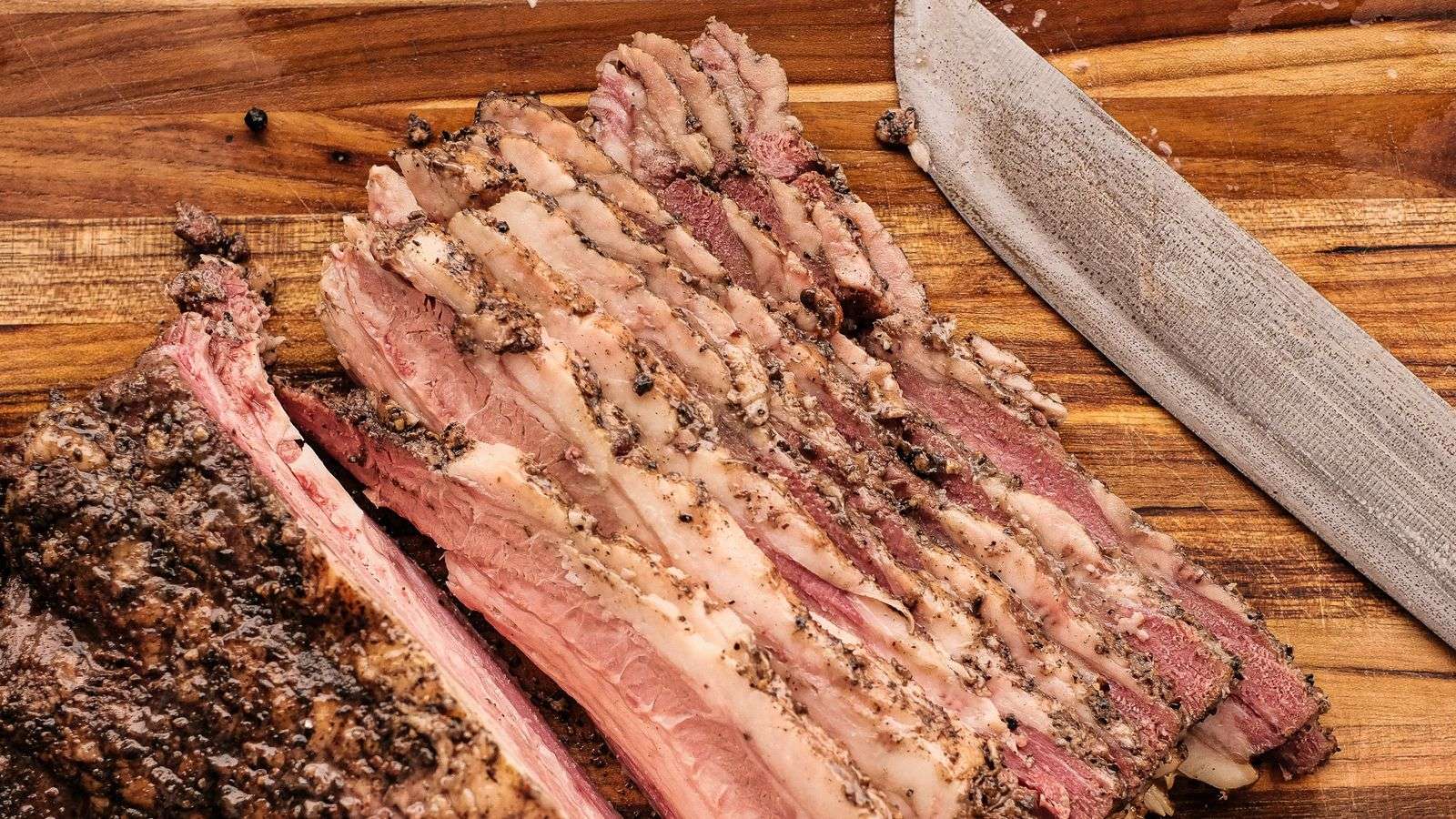
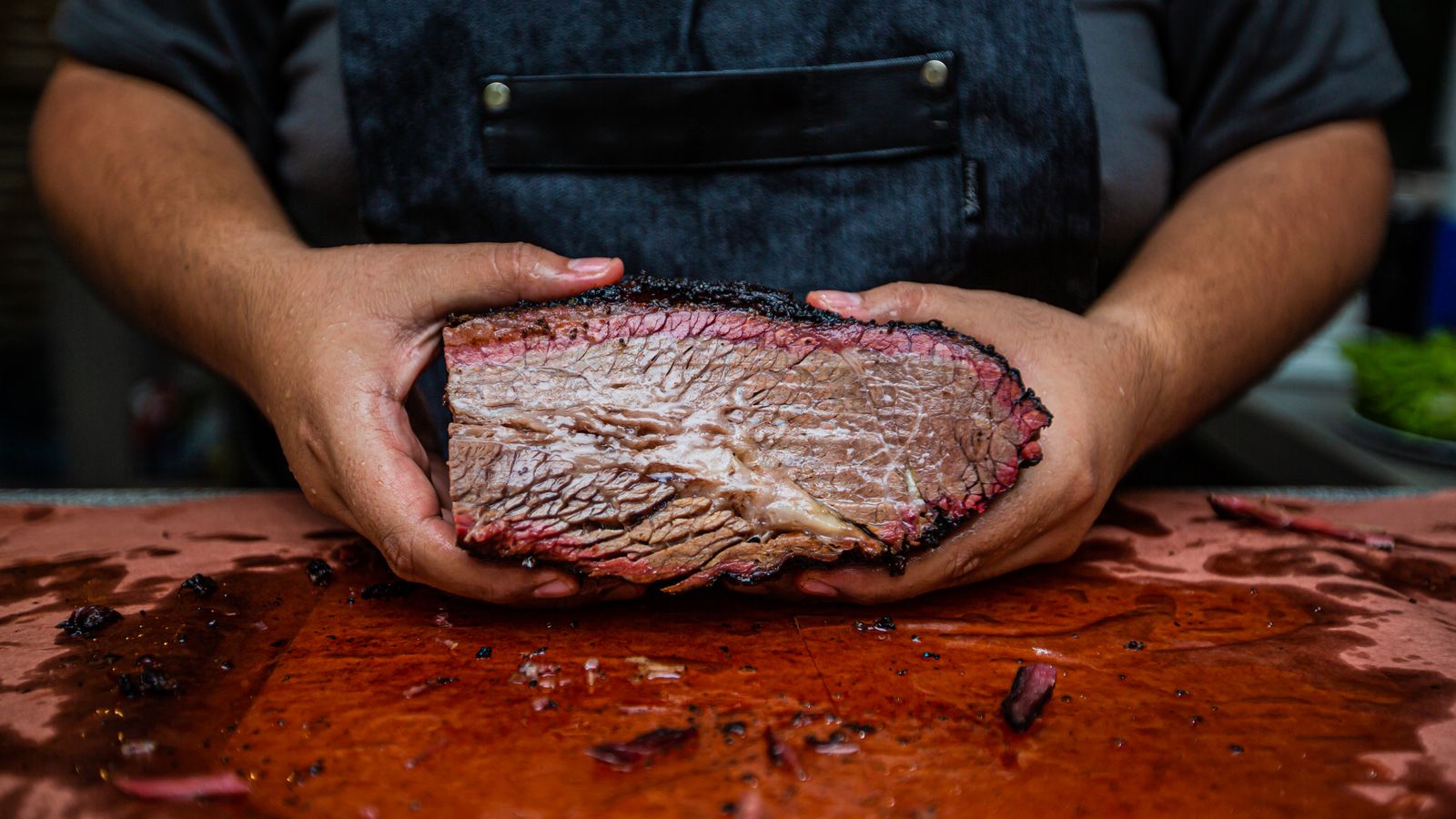
| Beef brisket | 195–203°F (91–95°C) | Probe glides through the thickest part of the flat with no resistance |
| Pork spare ribs | Not a number — the bend test | Lift the rack with tongs; it bows and the surface cracks |
| Baby back ribs | Bend test / toothpick | Meat pulls back from the bone tips ~¼ inch; probe slides between bones easily |
Notice the ranges. Pull a pork butt at 195°F and it'll slice; take it to 203°F and it shreds into pillowy pulled pork.
For brisket, feel beats numbers — when your probe pushes through the flat with the resistance of room-temperature peanut butter, it's ready, whether that's 198°F or 203°F.
Ribs never hit a reliable pull temp because the bones throw off the reading, so you use the bend test: pick up the rack in the center with tongs, and when it bends into a deep U and the top cracks, they're done. For a full reference on every cut, bookmark the meat temperature chart.
Grab the free doneness + wood-pairing cheat sheet →
These are planning numbers, not gospel. Use them to know when to fire up the pit, then let your thermometer make the final call. All figures assume a steady 225–250°F chamber.
| Cut | Rough Time | Typical Total |
|---|---|---|
| Brisket (whole packer) | ~1 to 1.5 hours per pound | 12–18 hrs for a 12–14 lb packer |
| Pork shoulder / butt | ~1.5 to 2 hours per pound | 10–14 hrs for an 8 lb butt |
| Spare ribs (St. Louis cut) | ~5 to 6 hours | Meatier, need longer |
| Baby back ribs | ~4 to 5 hours | Smaller and leaner, cook faster |
The per-pound math is a starting point, and it lies more the bigger the cut. A 14-pound brisket doesn't take twice as long as a 7-pound one because heat penetrates from all sides at once. Two identical butts on the same pit can finish an hour apart. That's normal.
Always build in a buffer — plan for the long end, because a finished cut can rest happily for two hours (more on that below), but a guest list can't wait on a stubborn brisket.
Somewhere around 150–170°F internal, your meat's temperature will flatline — sometimes for hours — even though the pit is cranking. This is the stall, and it panics every first-timer. It's not broken; it's evaporative cooling, the meat sweating like a runner.
You can wait it out or push through it by wrapping in foil or butcher paper (the "Texas crutch"). It matters so much to your timeline that it earns its own read: see the stall explained for exactly why it happens and how to beat it.
A dry brisket is often a stall-management failure — our brisket troubleshooting guide walks the other causes.
You can smoke low and slow on almost anything that holds a low temperature and makes clean smoke. What changes is how much babysitting you'll do. If you're still shopping, compare rigs in our smoker types breakdown and the best smoker for beginners rundown.
A kettle, bullet smoker, or drum burning lump charcoal with fist-sized wood chunks is the classic backyard setup and, frankly, hard to beat on flavor for the money. Lump lights fast and burns clean; you add a chunk or two of hickory, oak, or fruitwood for smoke. Master airflow with the vents and one chimney of coals arranged in a snake or minion layout can hold 250°F for 8+ hours. Expect to check it every hour or so.
The competition-and-Texas icon. An offset burns whole splits of seasoned hardwood in a side firebox, pulling clean smoke across the meat. It produces the deepest, most authentic smoke flavor and the best bark — and it's the most demanding.
You'll feed a fresh split every 30–45 minutes and learn to read a thin blue smoke (good) versus thick white or gray smoke (bitter, will ruin your food). This is a labor of love, not a beginner's first pit.
A pellet smoker runs like an outdoor oven. You set a digital temperature, an auger feeds compressed sawdust pellets, and a fan holds your target within a few degrees for 12 hours while you sleep.
Smoke flavor is milder than charcoal or stick, but the convenience is unmatched and the results are consistent — which is why it's the runaway favorite for new smokers. Brands are close enough that it comes down to features and budget; see our Traeger vs Pit Boss comparison.
Whatever you burn, run a water pan in the chamber. A pan of water acts as a thermal flywheel — it absorbs heat and steadies your temperature through swings, and the humidity keeps the meat's surface from drying so smoke sticks better and the stall is gentler. It's the cheapest upgrade in barbecue.
You don't need a dedicated smoker to start. Any kettle or gas grill can smoke low and slow with a two-zone fire — coals or lit burners on one side, meat on the cool side, lid down. Add a foil packet of soaked wood chips over the heat and you're smoking. It's how thousands of pitmasters cut their teeth.
Before the meat ever hits the grate, it wants a dry rub — at minimum coarse salt and cracked black pepper (the Texas "SPG" for brisket), or a fuller build for pork and ribs. Rub does more than season: the salt draws moisture that dissolves it into a paste, which then dries into that dark, craggy bark. Learn the ratios in our dry rub guide.
Then comes the part nobody wants to hear: you must rest the meat.
When you pull a brisket or butt off at 200°F, the muscle fibers are contracted and the juices are churning. Slice into it now and that liquid floods your board instead of your sandwich.
Resting lets the fibers relax and reabsorb their juices, and it lets the residual heat finish the last of that collagen conversion.
Rest large cuts at least 30–60 minutes; a big brisket is even better after two to four hours held in a dry cooler (no ice — the "faux Cambro" trick) wrapped in towels. Ribs need less — 10 to 15 minutes. Skipping the rest is the fastest way to undo twelve hours of patience.
Ready to put it all together on a real cook? Walk through a full packer brisket or an easier first-timer's Boston butt start to finish.