The quick version
Dry brisket comes down to seven fixable causes: over-trimming the fat cap (leave 1/4 inch), running the pit too hot (hold 225-250°F), pulling early during the 160-170°F stall, wrapping wrong, pulling at the wrong final temp, a lean cut or grade, and slicing too soon or with the grain. Pull at 195-205°F and probe-tender in the flat, rest 30-60 minutes, then slice against the grain. And if tonight’s brisket is already dry, a gentle simmer in warm beef broth brings most of it back.
You did the twelve-hour cook. You built the bark. You pulled it off the smoker looking like a trophy — and then you sliced in and got sawdust. Dry brisket is the single most common complaint in backyard barbecue, and the frustrating part is that it's almost never one big mistake. It's usually one small decision, made hours earlier, that quietly decided the outcome before you ever picked up the knife.
The good news: dry brisket has a short list of actual causes, and every one of them is fixable next time — and partly fixable even tonight, on the brisket you already ruined. Let's go through all seven, in the order they usually happen on the pit.
Fat doesn't render straight down into the meat like a baster with a syringe — that's a myth.
But a fat cap does two real jobs: it slows heat penetration from the top so the meat cooks more evenly, and as it renders it bastes the surface in fat and keeps that top layer of muscle from drying out and turning to jerky over a 10-14 hour cook.
Trim it down to the meat, or worse, trim through the cap into the muscle, and you've removed your only buffer against the smoker's heat.
The fix is simple: leave a 1/4 inch layer of fat across the top, tapering thinner over the flat's edges where it's already lean. Trim the hard, waxy deckle fat between the point and flat completely — that stuff never renders — but don't chase a razor-thin, competition-photo fat cap on a brisket you're feeding your family. Square off the edges, round the corners so they don't burn, and leave that quarter-inch blanket doing its job.
CEO TIP: Trim cold, straight out of the fridge. Firm fat is easier to shave evenly, and you're less likely to gouge into the meat chasing a wobbly, soft cap.
Cranking the pit to 300-325°F (150-163°C) to save time is the fastest route to a dry brisket. Brisket is loaded with tough collagen in the flat and connective tissue throughout, and that collagen needs time — not just temperature — to break down into gelatin.
Cook too fast and the surface fibers seize and expel moisture before the interior collagen has had a chance to convert. You end up with meat that hit temperature but never actually got tender; the juice is gone but the toughness stayed.
Hold your smoker at a steady 225-250°F (107-121°C) for the whole cook.
This is the range where low and slow smoking actually earns its name — slow enough that collagen has time to render into gelatin (which is what makes sliced brisket feel moist even though it's fully cooked), fast enough that you're not sitting at the pit for 20 hours.
A full packer (12-16 lb / 5.4-7.3 kg) at 225-250°F typically runs 10-14 hours, roughly 1-1.5 hours per pound, but time is always a guideline — temperature and feel are the real finish line.
| Pit Temp | What Happens | Verdict |
|---|---|---|
| 300-325°F (149-163°C) | Surface dries and sets before collagen renders | Fast, often dry |
| 250-275°F (121-135°C) | Workable, but less margin for error | Acceptable, watch closely |
| 225-250°F (107-121°C) | Collagen converts to gelatin gradually, bark builds steadily | Sweet spot |
| Under 210°F (99°C) | Stalls too long, food-safety risk if it lingers below 140°F too long before that | Avoid |
If you haven't nailed down your pit's actual temperature swings yet, that's step one before anything else — read the full packer brisket guide for trim-to-slice technique, or brush up on two-zone fire setup if you're still fighting hot spots on a kettle or offset.
Grab the free doneness + wood-pairing cheat sheet →Somewhere between 160-170°F (71-77°C), your brisket's internal temperature will stop climbing — sometimes for two or three hours straight. This is the stall, and it is completely normal: it's evaporative cooling, the same reason sweat cools your skin. Moisture is migrating to the surface and evaporating fast enough to counteract the smoker's heat input, and the temp just sits there.
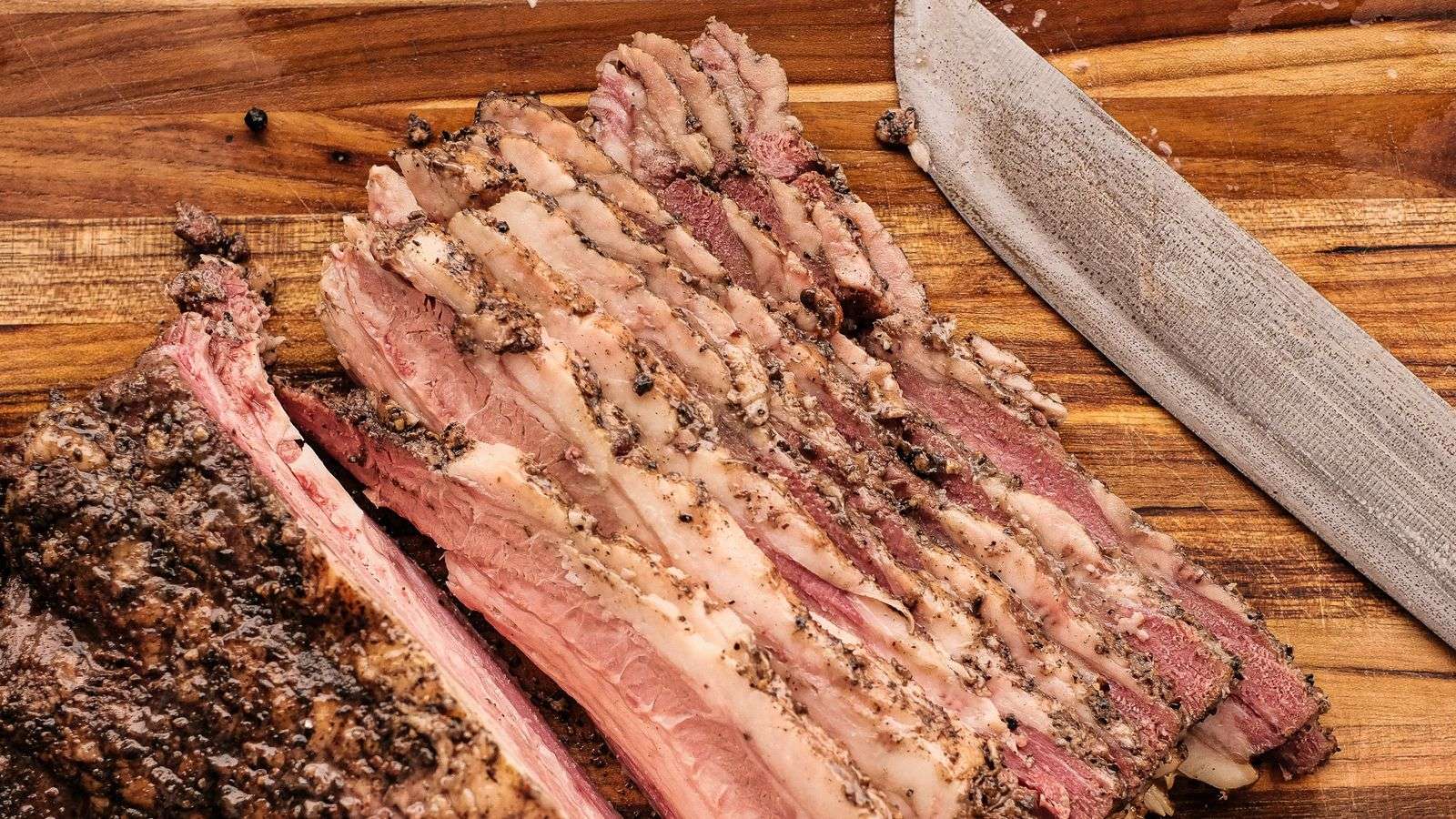
The mistake is reading a stalled 165°F as "it's done cooking" and pulling it early out of frustration or a tight dinner schedule.
A brisket pulled during the stall is nowhere near done — the collagen hasn't rendered, the connective tissue is still tough, and yes, it will also taste dry, because none of the fat and gelatin conversion that makes brisket moist has happened yet.
For the full physics of why this happens and exactly how long to expect it, see the stall explained — but the short version is: trust the process, not the clock.
Wrapping — the "Texas crutch" — is how most pitmasters push through the stall faster without losing bark quality. Wrap too early and you steam the bark into mush before it's set; wrap too late and you've already lost hours to evaporation the wrap could have prevented. The window is 150-165°F (66-74°C) internal, once the bark has color and doesn't smear when you press a finger into it.
If your brisket keeps drying out and you've been cooking naked the whole way, foil is your easiest fix. If you wrapped and it's still dry, check the next two causes first — wrapping doesn't rescue a brisket that was cooked too hot or pulled too early.
This is the cause that trips up people who did everything else right. Brisket does not follow the same doneness logic as a steak. There's no medium-rare here — the entire goal is to cook past "done" all the way to "tender," and that means going by feel, not just a number on the thermometer.
Target 195-205°F (91-96°C) in the thickest part of the flat, and confirm with the probe-tender test: your instant-read or probe thermometer should slide into the meat with almost no resistance, like pushing into softened butter or warm peanut butter.
If you feel any grab or resistance, it's not done yet — even if the number says 203°F.
Pulling at 180°F because "that's what the recipe said" almost always leaves collagen unrendered and the meat dry and tough; pulling at 190°F sharp without checking for probe-tenderness does the same thing to a lesser degree.
For a full breakdown of where every temperature milestone sits, bookmark the meat temperature chart — and if you're not fully confident in your thermometer's accuracy, that's worth ruling out too; see the meat thermometer guide for how to check calibration.
CEO TIP: Probe the flat in two or three spots. The point almost always renders fully first — it's fattier and more forgiving — but the flat is lean and unforgiving, and it's the flat that goes dry first if you pull based on the point's temperature alone.
Sometimes the brisket was fighting you before it ever hit the smoker. A flat-only cut (no point attached) has almost none of the point's marbling to protect it, so it dries out far more easily and forgives fewer mistakes in temperature or timing.
Grade matters too: Select grade briskets have noticeably less intramuscular marbling than Choice, and both sit well below Prime or Wagyu-influenced briskets for built-in moisture insurance.
None of this means you can't cook a great Select flat — but it means your margin for the other six mistakes on this list shrinks to almost nothing.
If you're consistently getting dry results even after fixing trim, temp, and pull temperature, look at what you're buying. A full packer, Choice grade or better, gives you the most forgiveness for a still-learning smoker.
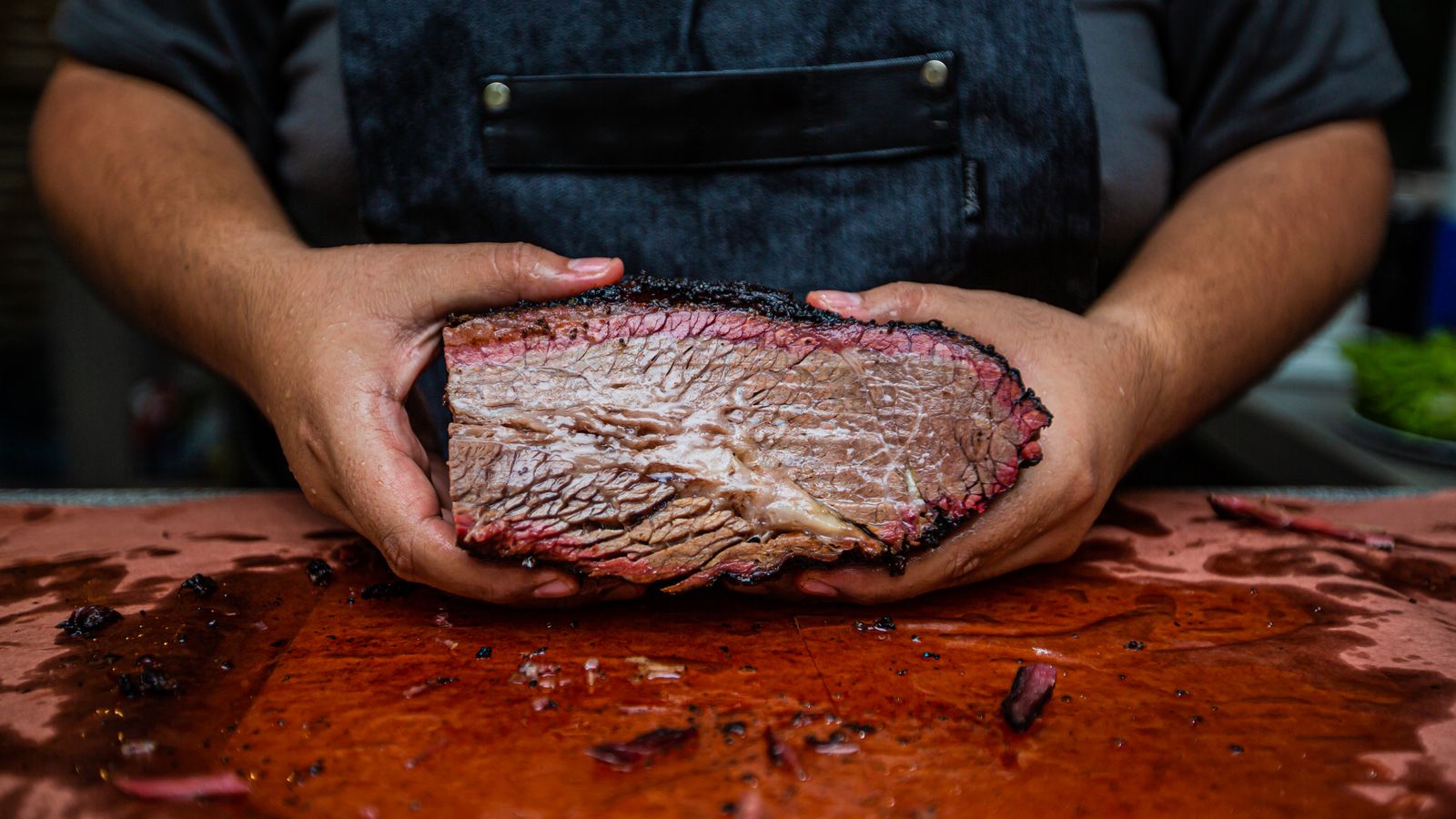
This is the cause that ruins otherwise-perfect briskets, and it's the one people skip because they're hungry and the brisket smells incredible. Two separate mistakes stack here:
A perfectly cooked brisket, rested properly, sliced the wrong direction, will taste dry and tough at the table. This is genuinely the most common way a good cook gets blamed for a bad slice.
If it's too late and dinner is already dry, don't throw it out — brisket rescues well.
Slice or chop the dry portions and simmer them gently in warm beef broth (with a splash of the drippings if you saved any) for 10-15 minutes, just enough to let the meat reabsorb liquid without falling apart further.
This works especially well for leftovers reheated the next day, since brisket dries out further in the fridge regardless of how it was cooked.
A shallow pan, broth barely covering the meat, covered with foil, at 300°F (149°C) in the oven for 20-30 minutes does the same job for a whole flat that needs saving before serving.
If it's dry enough that even broth won't save the texture, don't fight it — chop it fine, mix with a regional BBQ sauce of your choice, and turn it into chopped brisket sandwiches or baked beans. Dry brisket makes excellent chili or hash; it just doesn't make a good centerpiece slice.
Every one of these seven causes is preventable with the same three habits: trim to a quarter inch and no thinner, hold your pit steady in the 225-250°F range using a proper rub and consistent airflow, and pull based on probe-tenderness in the flat rather than the clock or a single number.
Do that consistently and the stall stops being scary, the wrap becomes routine, and the slice — against the grain, after a real rest — is where the whole cook finally pays off.