The quick version
The stall is evaporative cooling — moisture leaving the surface cancels the heat coming in — and it hits almost every brisket somewhere between 150°F and 170°F internal. Nothing is broken, and it can run 1 to 6 hours depending on cut size, humidity, and airflow. Ride it out unwrapped for maximum bark, or wrap in foil or peach butcher paper once the bark sets around 165°F to push through faster — then call it done when the flat probes like soft butter around 200–205°F, not when the display says so.
Four hours in, your brisket climbed steady from 40F to 150F, and you were feeling good. Then it stopped. Dead flat at 158F for the next ninety minutes while you stood there jabbing the thermometer in three different spots, convinced something broke. Nothing broke. You just met the stall, and every pitmaster who's ever run a full packer brisket low and slow has stood exactly where you're standing now.
The stall is the single most common reason people panic mid-cook and either crank the heat (mistake) or pull the meat early (bigger mistake). Understand what's actually happening inside that brisket and you'll stop fighting it and start using it.
The stall is evaporative cooling, full stop. It's the exact same reason sweat cools your skin. As your brisket's internal temperature climbs, moisture inside the meat migrates to the surface and evaporates into the smoker's airflow.
Evaporation absorbs heat energy — a lot of it — and for a window in the middle of the cook, that heat loss roughly matches the heat coming in from your smoker. The result: internal temp holds flat, sometimes even dips a degree or two, no matter how much smoke is rolling.
This happens almost every time somewhere in the 150F to 170F (66-77C) internal range. Below 150F the meat hasn't built up enough surface moisture flux to stall; above 170F most of that surface moisture has already wicked away and evaporative cooling can no longer keep pace with incoming heat, so the temperature breaks free and climbs again.
CEO TIP: If your brisket stalls anywhere outside 150-170F, don't assume something's wrong with the meat — check your smoker temp first. A stall at 130F usually means your pit is running cold; a "stall" past 180F is probably just a slow climb through the fat cap, not a true stall.
It isn't. Your smoker is doing exactly what it should. The stall is proof that moisture is actively leaving the meat's surface and forming the sticky, tacky pellicle that becomes bark.
Fighting the stall by opening vents wide or spiking pit temp to 300F+ just dries the exterior faster than the interior can catch up, and you'll end up with a brisket that's tough outside and undercooked inside. Patience is the technique here, not a workaround for one.
There's no fixed number of hours — the stall's length depends on three variables working together, and any one of them can add or subtract an hour or more.
| Variable | Shorter stall | Longer stall |
|---|---|---|
| Cut size | Flat only, 5-7 lbs | Full packer, 12-16 lbs |
| Ambient humidity | Dry climate, low humidity | Humid air, water pan in smoker |
| Airflow | Open exhaust, offset draft | Tight, choked-down pellet grill |
Put those together and a 6-lb flat in dry West Texas air with the exhaust wide open might stall for barely an hour. A 15-lb packer on a humid Gulf Coast night with airflow choked down can stall for 4 to 6 hours. Both are completely normal. This is also exactly why cook-time estimates ("1.5 hours per pound") are only ever ballpark — low and slow cooking runs on internal temp and feel, not the clock.
You have two legitimate strategies once the stall hits, and neither one is "wrong" — they're a tradeoff between bark and time.
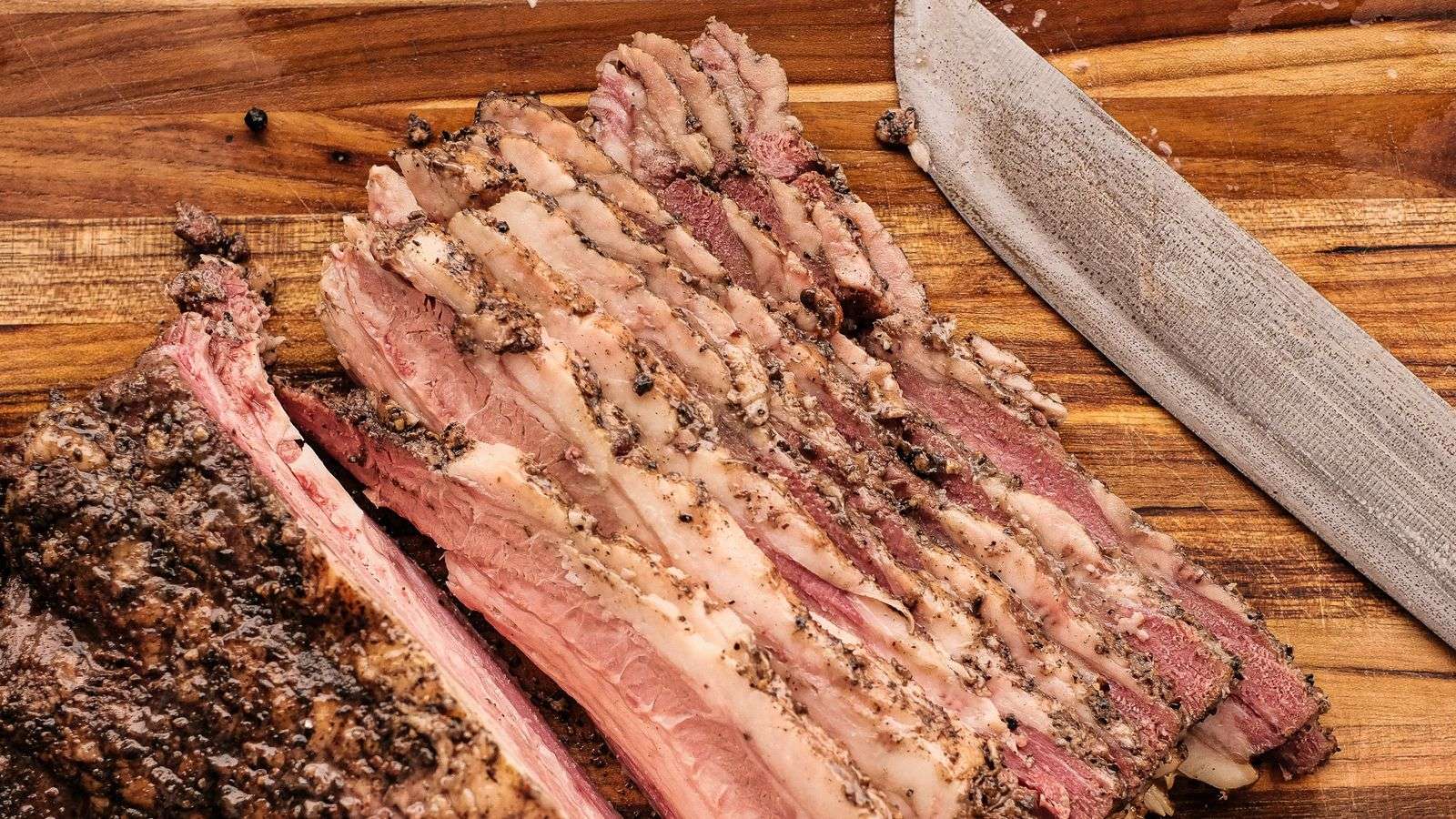
Leave the brisket naked on the grate and let the stall run its full course. This is the move if bark is your priority. The extended, uninterrupted exposure to smoke and dry heat builds a thicker, darker, more deeply rendered crust than any wrapped cook ever will.
The tradeoff is time and risk: a stubborn stall can add hours to your cook, and if you're feeding people at a set time, riding it out unwrapped with no cushion is how 6pm dinners become 9pm dinners.
If you go this route, hold your pit at a steady 225-250F (107-121C) and don't touch the vents to "help." Let physics finish its job.
Wrapping — the "Texas crutch" — traps steam against the meat's surface. That steam raises the humidity right at the bark, which slows evaporation and lets conductive heat (not evaporative loss) drive the internal temp back up. A wrapped brisket can blast through the stall in well under an hour instead of sitting flat for four to six.
The crutch isn't cheating. Texas competition and restaurant pits have used paper-wrapping for decades specifically because it's faster and more consistent without sacrificing much bark quality — more on that below.
Grab the free doneness + wood-pairing cheat sheet →Once you've decided to wrap, the material matters more than people think.
| Aluminum Foil | Peach Butcher Paper | |
|---|---|---|
| Speed through stall | Fastest — fully sealed, traps all steam | Fast, but slightly slower than foil |
| Bark texture | Softer, can turn slightly mushy/steamed | Stays firm and crisp — paper breathes |
| Moisture retention | Very high — can pool juices ("brisket boat") | Good, without waterlogging the crust |
| Best for | Tight timelines, stubborn stalls, competition speed | Backyard cooks prioritizing bark quality |
Foil is fully vapor-impermeable, which is why it's the fastest way through the stall — but that same seal steams the bark you spent six hours building, softening it toward mushy if you leave the brisket wrapped too long or too hot.
Peach butcher paper (unwaxed, breathable, food-grade — not parchment and not regular kraft paper) lets a small amount of steam escape while still knocking down the evaporative cooling enough to push through the stall efficiently.
That's the entire reason Central Texas joints standardized on it: near-foil speed, much closer to unwrapped bark.
If bark is non-negotiable for you, use paper. If you're racing a dinner deadline or feeding a crowd on a schedule, foil wins on raw speed.
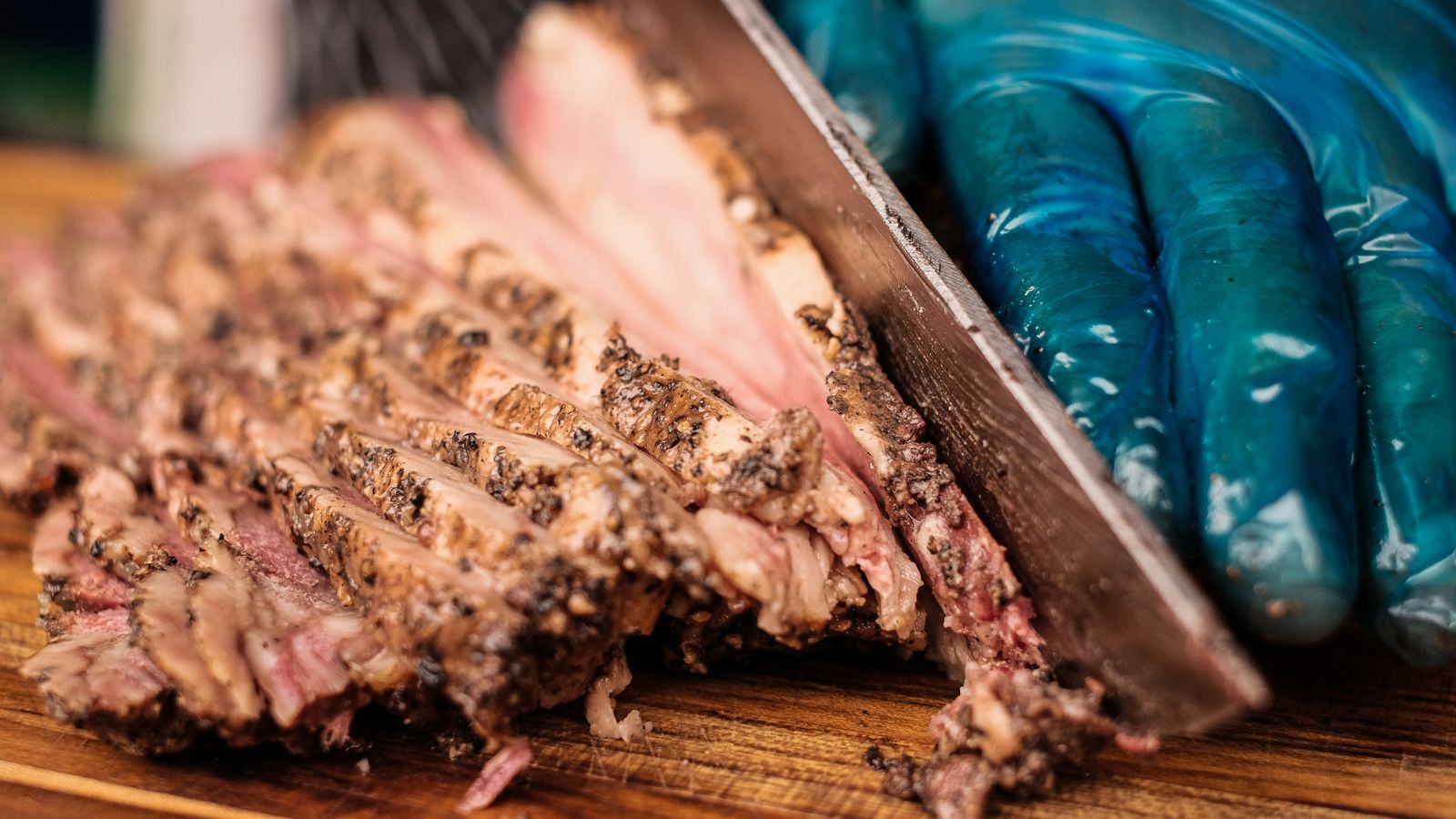
Timing the wrap matters as much as the material. Wrap too early and you steam a bark that hasn't set yet, trapping raw moisture against a surface that's still tacky and pale — you'll end up with a flabby, gray exterior no matter which material you use.
CEO TIP: Use a reliable leave-in probe thermometer and check two spots — the flat and the point separately. The point often runs several degrees ahead of the flat since it's fattier and thicker; wrap timing should follow the flat, since that's the leaner section most likely to dry out.
The single biggest mental shift that makes brisket easier: stop treating the number on the thermometer as the finish line. The stall proves your brisket is doing exactly what it should — building bark, rendering fat, breaking down collagen — even while the display says nothing's happening. Whether you ride it out or crutch through it, the number that finally matters isn't a temperature at all. It's texture.
Brisket is done when a temperature probe slides into the thickest part of the flat with the resistance of pushing into soft butter — no grab, no give-and-catch.
That usually lands between 200F and 205F (93-96C), but the range exists precisely because collagen breakdown depends on time-at-temp, not just the number.
Pull based on the doneness feel, not the digit, and you'll never again pull a brisket that reads "done" on paper but still fights back on the fork.
If a brisket comes out tough despite hitting target temp, that's almost always a stall-related timing issue worth running down in the brisket troubleshooting guide rather than a sign to abandon the method.