The quick version
Crispy skin comes down to two moves: flatten the bird and smoke it hot — 275–325°F, aiming for 300°F, never brisket-low 225°F where the fat stays rubbery. Dry brine it uncovered in the fridge 4 to 24 hours first, then pull the breast at 160–162°F and the thigh at 175–180°F; a 4 to 5 pound bird is done in 75 to 90 minutes. If the skin needs more crackle, give it 2 to 4 minutes skin-down over direct flame before a 10 minute rest.
Rubbery, pale, chewy skin is the number one reason backyard cooks give up on smoked whole chicken. They cook it too cold, too slow, and pull it off looking like a boiled bird in a wet sweater. The fix is two things done right: flatten the bird so it cooks evenly, and run your smoker hotter than you do for brisket. Do that, and you get skin you can hear from across the yard.
This is my go-to weeknight-into-weekend cook — a 4 to 5 pound whole chicken, spatchcocked, dry-brined, and smoked in about 75 to 90 minutes. No injection, no water pan drama, no wrapping. Just fire, salt, and a little patience. Here's exactly how I do it.
A whole trussed chicken is a geometry problem. The thighs are buried against the body where heat can't reach, so by the time they hit a safe 175°F, the breast is bone-dry at 180°F-plus. Spatchcocking — removing the backbone and flattening the bird — solves this by turning a lopsided ball into a flat, even slab. Everything sits in one plane, the thighs open up to the heat, and the breast and dark meat finish much closer together.
Flat also means maximum skin exposure. Every square inch faces up into the smoke and heat instead of hiding in a fold. That's the whole crispy-skin game right there.
You need a pair of sturdy kitchen shears — not scissors, real poultry shears. Pat the bird dry, then:
Don't have shears? A sharp chef's knife works, but you're cutting through rib bone with no guard — go slow and keep fingers clear. Shears are $15 to $20 and pay for themselves the first time you carve a turkey.
If crispy skin has a secret, this is it. A dry brine — salting the bird and letting it rest uncovered in the fridge — does two jobs at once.
The salt seasons the meat all the way through via osmosis, and just as important, it pulls moisture to the surface and then lets it evaporate, drying out the skin. Dry skin crisps. Wet skin steams. It's that simple.
If you want the full science on why this works, I break it down in my wet vs. dry brine guide.
Use kosher salt at roughly 1/2 teaspoon of Diamond Crystal per pound of bird (about 1/4 teaspoon if you're using the denser Morton's). For a 4.5 pound chicken that's around 2 to 2.5 teaspoons total. Season both under and over the skin:
Uncovered is the operative word — that fridge airflow is doing free work drying the skin. Hold your other rub ingredients (pepper, garlic, paprika, sugar) until you're ready to cook, and go light on sugar for a hot cook so it doesn't scorch. My dry rub guide has poultry-friendly blends if you want to build your own.
Grab the free doneness + wood-pairing cheat sheet →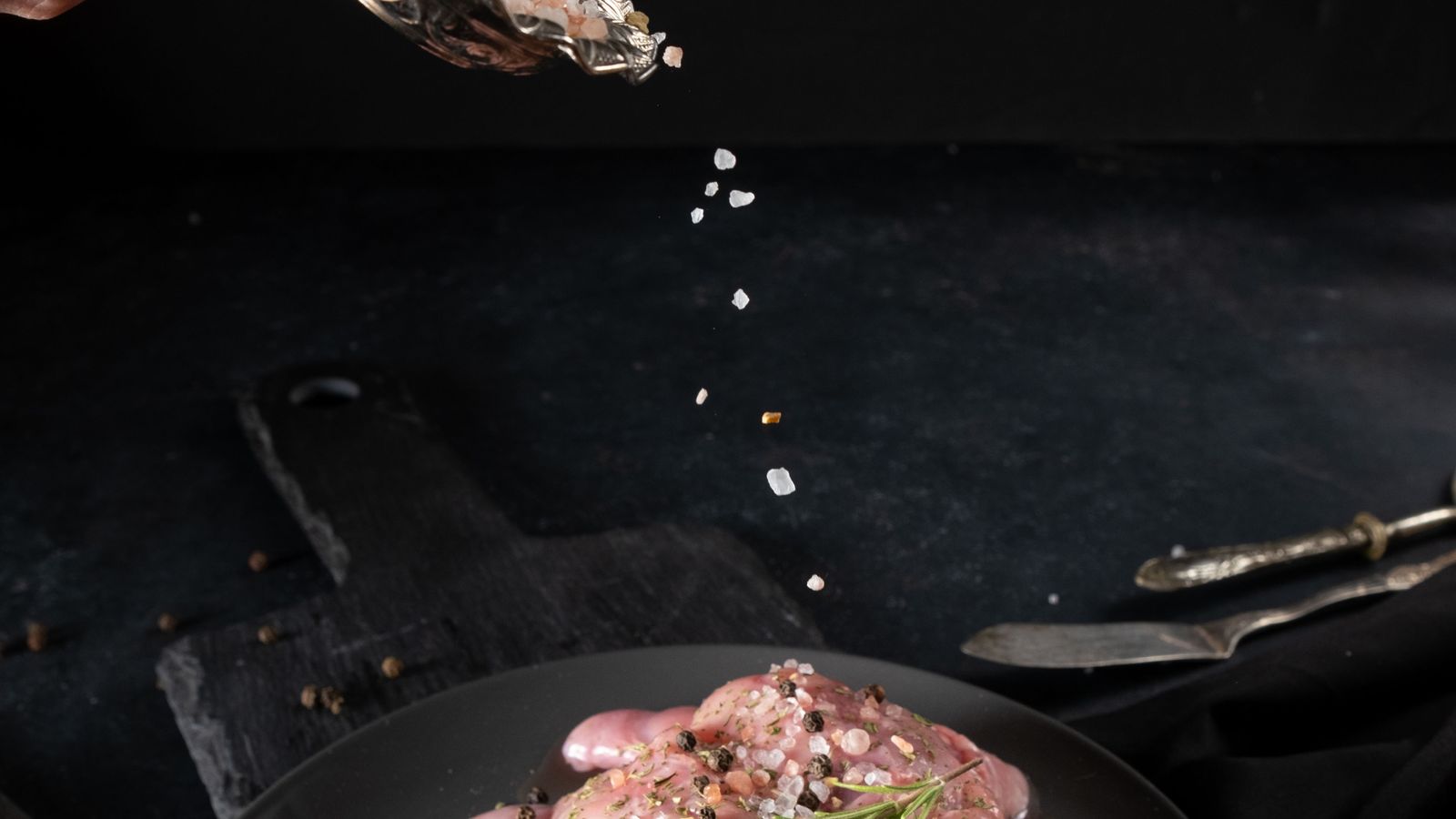
Here's where most people go wrong. Brisket and pork butt want low and slow at 225°F because they're loaded with collagen and fat that need hours to break down. Chicken skin is the opposite. At 225°F the fat under the skin never fully renders, so you're left with a flabby, rubbery layer no matter how long you wait.
Run your smoker at 275 to 325°F (135 to 165°C). I aim for 300°F. That heat renders the subcutaneous fat and drives off surface moisture fast enough to crisp the skin before the meat overcooks.
You still get real smoke flavor in that 75 to 90 minute window — you just get edible skin along with it. If your pit runs cool, dialing in your vents matters; my guide to mastering charcoal vents covers holding a steady 300°F on a kettle or kamado.
Chicken is mild and the skin is a smoke sponge, which means it turns bitter and acrid fast if you oversmoke it. This is not the meat for a full load of mesquite. Reach for:
Use thin blue smoke, not thick white billows. If the smoke rolling out of your stack looks like a house fire, you're building bitterness into that skin.
Cook to temperature, never to the clock — but here's a realistic map for a 4 to 5 pound bird at 300°F. Pull to your target the meat temperature chart confirms as safe and juicy, and lean on a good instant-read thermometer rather than guessing.
| Checkpoint | Target | Notes |
|---|---|---|
| Smoker temp | 275–325°F | Aim for 300°F (150°C) |
| Breast (pull) | 160–162°F | Carryover carries it to a safe 165°F (74°C) |
| Thigh (pull) | 175–180°F | Dark meat needs the extra heat to tenderize |
| Total time | 75–90 min | Varies with bird size and pit swings |
| Rest | 10 min | Loosely tented, not wrapped tight |
Probe the thickest part of the breast and the deepest part of the thigh, avoiding bone. The breast will always get there first, which is exactly why spatchcocking matters — the gap is small enough that both zones land in the window together.
Pull the breast at 160 to 162°F, not 165°F. Carryover heat during the rest pushes it the rest of the way to a safe 165°F while it's off the heat — pull at 165°F on the grill and you'll overshoot to 170°F-plus and dry it out.
If your skin isn't quite as crackly as you want when the meat hits temp, give it a direct-flame crisp pass. This is the optional move that takes good skin to great.
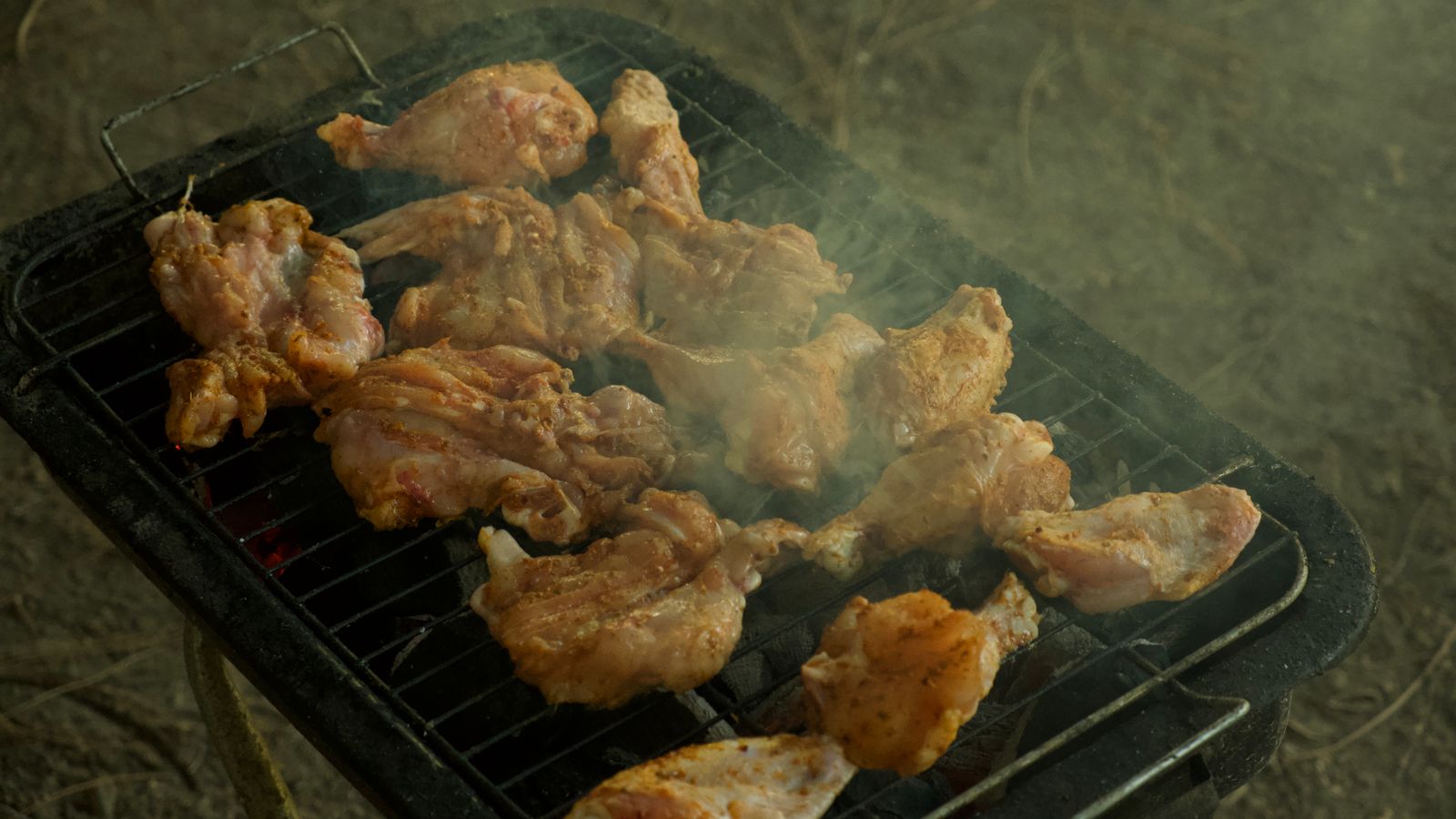
Set up a two-zone fire — coals or a burner raging on one side, nothing on the other. You've been cooking on the indirect side; for the last 2 to 4 minutes, slide the bird skin-side down over the direct heat. Stay right there and watch it — poultry skin renders fat that flares fast, and you can go from crisp to charred in 30 seconds. You're listening for the sizzle and looking for the skin to tighten and bronze.
On a pellet grill with no real flame, crank it to max (450°F-plus) for the final few minutes, or finish the bird skin-down in a screaming-hot cast iron pan on the stove. Same principle: a short blast of high, direct heat to render and crisp.
Rest the bird 10 minutes under a loose foil tent. Don't wrap it airtight — trapped steam will soften the skin you just worked for. Ten minutes lets the juices redistribute so they stay in the meat instead of running out on your board.
Carving a spatchcocked bird is easy because it's already flat:
Serve with a sharp vinegar sauce or an Alabama white — both cut poultry richness beautifully. My regional sauce guide has recipes for both. Once you've nailed this bird, the same hot-and-fast, crispy-skin approach carries straight over to smoked wings and a Thanksgiving turkey.