The quick version
Two fixes end dry turkey: dry brine 24 to 48 hours — about 1/2 teaspoon of kosher salt per pound, under and over the skin — and cook to numbers, not the clock. Run the pit at 250–325°F, never below 225°F for poultry, and pull the breast at 161–162°F and the thigh at 175°F; carryover lands the breast at a safe 165°F. Spatchcock it to cut around 30% of the cook time, then rest 20 to 30 minutes before you carve.
A dry Thanksgiving turkey is the most avoidable disaster on the American table, and it almost always comes down to two mistakes: skipping the brine and cooking to the clock instead of to a number. Fix those two things and you get a bird with mahogany skin, smoke-kissed dark meat, and breast meat that's still juicy when you carve it in front of everybody.
I've smoked turkeys on offsets, pellet grills, and kettles, and the method below works on all of them. The pit does the flavor; your thermometer does the saving. Let's get the bird right.
Thanksgiving turkey is a project that starts in your refrigerator, not on the pit. Rush this part and nothing you do later can rescue it.
A frozen or partially frozen turkey cooks unevenly and stalls in the danger zone. In the refrigerator, budget about 24 hours of thaw time for every 4 to 5 pounds. A 15-pound bird needs roughly 3 to 4 full days in the fridge. Pull it from the freezer the Saturday or Sunday before Thanksgiving and you'll be fine. Never thaw a turkey on the counter; the outside hits bacterial-growth temperatures long before the center gives up its ice.
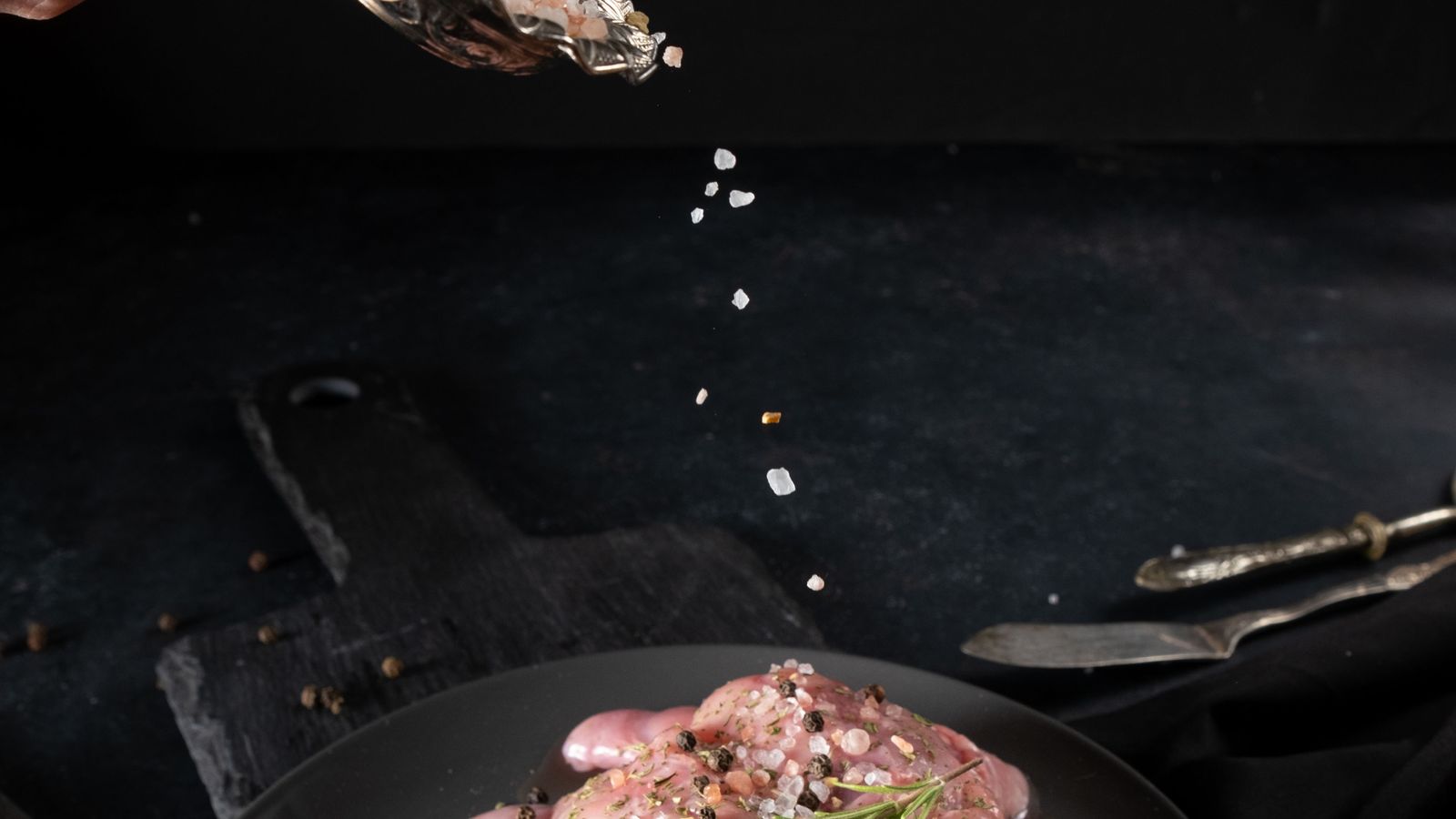
Forget the messy bucket of wet brine. A dry brine seasons deeper, gives you crispier skin (no added water to steam off), and doesn't hog fridge space. Salt pulls moisture out, that moisture dissolves the salt into a concentrated brine, and osmosis draws it right back in — now seasoned and better able to hold water through the cook. If you want the full science, see my wet vs. dry brine breakdown.
Use about 1/2 teaspoon of kosher salt (Diamond Crystal) per pound of turkey — the conservative end of the brining-guide ratio on purpose, because this bird sits 24-48 hours — closer to 1/3 teaspoon per pound if you're using finer Morton kosher salt, which packs denser. Pat the bird bone-dry, then:
Salt the bird and walk away — no rinsing at the end. Rinsing washes off your seasoning and splashes bacteria around your sink. The salt has already been absorbed; the surface is ready to brown.
Add aromatics if you like — cracked pepper, garlic powder, fresh thyme, a little baking powder in the salt mix for extra-crisp skin — but salt is the non-negotiable. Skip sugar-heavy rubs on the skin; they scorch over a multi-hour smoke.
Turkey is not a brisket, and you should not treat it like one. Poultry skin turns to rubber at low temperatures, and — more important — poultry should never be smoked below 225F (107C). Too cool and the bird lingers too long in the 40 to 140F range where bacteria multiply.
Run your pit at 250 to 325F (121 to 163C). My sweet spot is 275 to 300F: hot enough to render fat and firm up the skin, gentle enough to still lay down real smoke flavor. This is warmer than the classic low-and-slow approach you'd use for tough cuts, and that's by design — turkey is already tender, so your only job is moisture and safety, not breaking down collagen.
At that range, plan on roughly 25 to 30 minutes per pound as a planning estimate — but that number is only for scheduling your day. The bird is done when the thermometer says so, never when the clock does.
Grab the free doneness + wood-pairing cheat sheet →
| Turkey weight | Approx. time at 275-300F | Whole vs. spatchcock |
|---|---|---|
| 10 lb | ~4 to 5 hrs | Whole |
| 12 lb | ~5 to 6 hrs | Whole |
| 15 lb | ~6.5 to 7.5 hrs | Whole |
| 18 lb | ~8 to 9 hrs | Whole (consider spatchcock) |
| 12-15 lb | ~3 to 4 hrs | Spatchcocked |
Notice the spread. A 15-pound bird can swing an hour or more depending on your pit's real temperature, wind, how cold the turkey went on, and how often you open the lid. That's exactly why you build the schedule around a probe, not a stopwatch.
Here's the single biggest reason turkeys come out dry: people cook the whole bird to 165F, but the breast and thigh finish at different temperatures. Breast meat dries out fast past 165F, while dark meat isn't truly tender until closer to 175F. Cook to one number and one of them loses.
Instead, probe them separately and lean on carryover cooking — the meat keeps climbing 3 to 5 degrees after it leaves the pit:
Because the breast usually finishes before the thighs, position the bird with the legs pointing toward the hotter side of your pit, or tent the breast with foil once it nears temp so the thighs can catch up. If you want the full safe-minimum-versus-perfect-doneness picture for every cut, keep the meat temperature chart handy at the pit.
Buy a good leave-in probe and an instant-read, and use both. Set the leave-in alarm on the breast for 158F so you're standing there before it overshoots, then confirm the thigh by hand. If you're shopping, my thermometer guide breaks down which type does what.
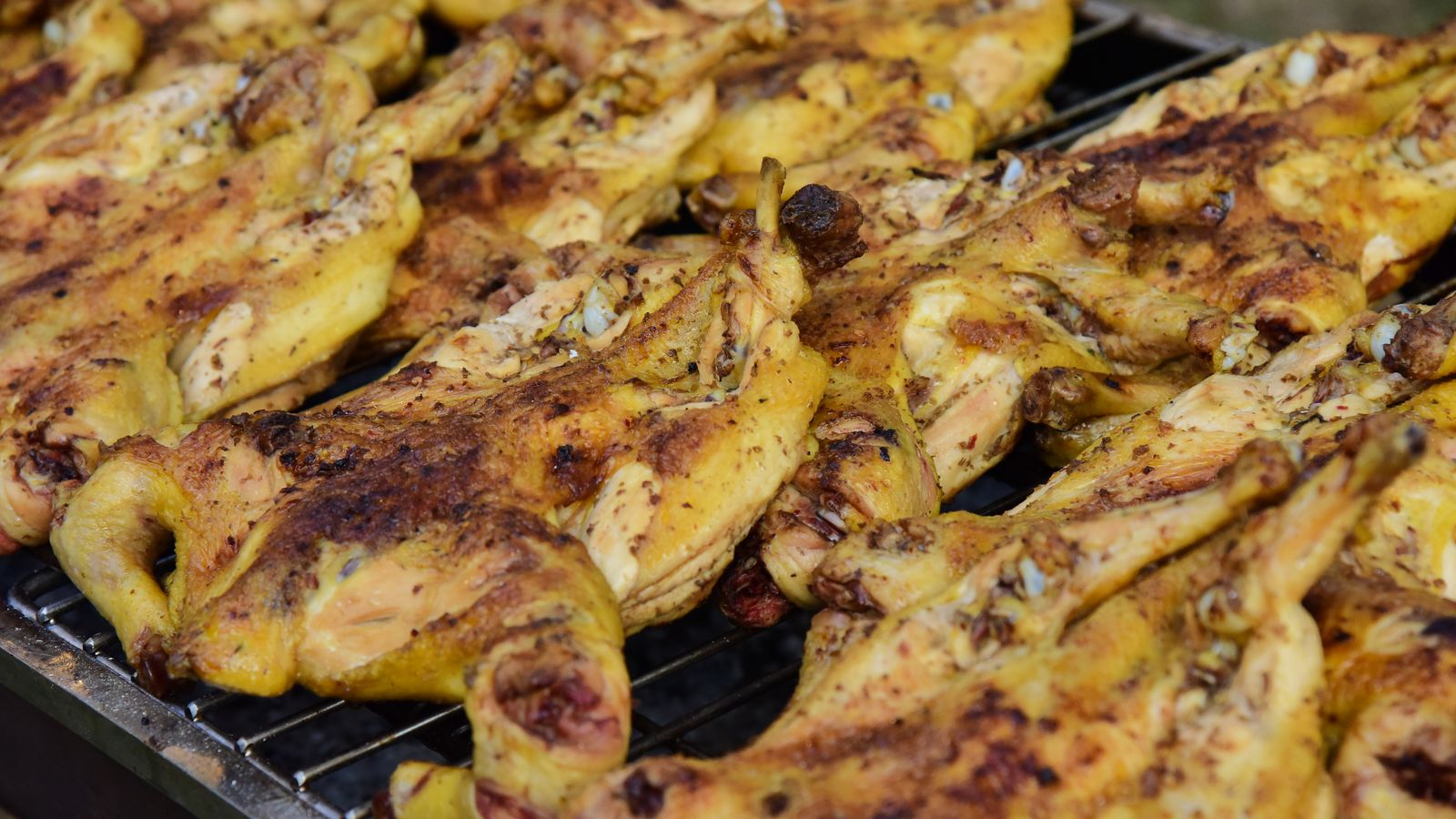
If you want the fastest route to even cooking and crisp skin, spatchcock the turkey — remove the backbone with kitchen shears and press the bird flat. It's the same trick that makes a spatchcocked chicken so reliable, scaled up.
Spatchcocking does three things for you:
The tradeoffs: you lose the Norman Rockwell whole-bird presentation, and a flat turkey needs more grate real estate. For a big pellet grill or a 22-inch kettle it's no problem; on a small bullet smoker you may need to cook it in two halves. If you value a stress-free Thanksgiving over the tableside reveal, spatchcock every time.
Turkey is delicate, so skip aggressive hardwoods. Go with fruitwood — apple, cherry, or peach — or pecan, which is nutty and forgiving. Cherry adds beautiful color; apple keeps it clean and sweet. A little hickory in the mix is fine, but don't build the fire on it or the bird turns bitter and hammy. Turkey takes smoke fast, so you need less than you think.
If the skin is browning hard before the meat is done — common past the two-hour mark — tent the bird loosely with foil and keep cooking. The foil blocks direct radiant color while the inside catches up. Setting your pit at 300 to 325F rather than 250F also helps render and firm the skin.
Set your expectations honestly here: smoked turkey skin is not deep-fried skin. A smoker runs too cool to shatter the skin the way 350F oil does. What you get instead is bronze, bite-through, flavor-soaked skin — and dramatically better, smokier meat underneath. If shatter-crisp skin is the whole point for your crowd, deep-fry; if you want the best-tasting bird, smoke it.
When the breast hits 161F and the thigh 175F, pull the turkey and rest it 20 to 30 minutes, loosely tented. Resting lets the juices redistribute instead of flooding your cutting board, and carryover finishes the breast safely at 165F. Carve too soon and you'll literally watch the moisture you worked days to protect run out onto the counter.
Smoking a turkey builds the same instincts that carry over to a brisket or a batch of pulled pork: control your fire, trust your probe, and respect the rest. Nail it once and you'll never volunteer to make anything else on Thanksgiving again. Round out the plate with a few killer BBQ sides and you've got the whole table handled.