| Style | St. Louis-cut ribs, pork steak, and old-school snoot — a river-city hybrid of Southern smokehouse and Midwestern tavern grilling |
|---|---|
| Signature meat | St. Louis-cut spare ribs, pork steak (shoulder blade steak), pork snoot |
| Wood | Apple and cherry most common; some old-school joints still run hickory |
| Sauce | Sweet, tomato-and-molasses based, sticky-thick, applied heavy and often simmered on the smoker |
| Classic sides | Cheesy potatoes, coleslaw, baked beans, Provel-topped anything, Ted Drewes frozen custard for dessert |
| Iconic joints | Pappy's Smokehouse, Bogart's Smokehouse, C&K Barbecue, Roper's Ribs, Salt + Smoke |
| Price band | $10–$16 for a plate lunch, $20–$35 for a full rack or family platter |
| Best season/events | Memorial Day through Labor Day for backyard pork steak season; late spring/early fall for line-friendly weather at the smokehouses |
Ask a St. Louisan what barbecue means and you won't hear brisket first. You'll hear pork steak — that thick, bone-in slice cut straight across the shoulder, thrown on a grill over charcoal, basted in sauce, and finished low until it's tender enough to cut with a fork but still has a little chew to it. This is a city that turned a butcher's afterthought into a civic identity, and it did it in backyards, not competition circuits.
St. Louis barbecue lives at the intersection of Southern smokehouse tradition and Midwestern tavern grilling. You get true low-and-slow smoked ribs and pulled pork downtown, and you get charcoal-grilled pork steak and snoot in the neighborhoods, often at the same cookout.
If you want the fundamentals of the low-and-slow side of that equation, our low and slow smoking guide and two-zone fire setup guide cover the same principles these pitmasters use every day.
St. Louis was, for much of the 20th century, one of the largest meatpacking and butchering hubs in the country, sitting at the crossroads of Midwestern grain-fed hog production and the river and rail routes that moved that meat east and south.
That industrial base shaped the barbecue that grew up around it in two distinct ways. Downtown and in the packing districts, whole hog and rib trimming created standardized cuts — the St. Louis-cut rib chief among them — that made their way into commercial smokehouses.
In the neighborhoods, especially on the north side, cheap and abundant shoulder cuts and pig parts that didn't have a home elsewhere — steaks off the blade end, snoots, ears, tails — became the backbone of backyard and tavern cooking.
Both traditions used sauce heavily, both leaned on charcoal as much as offset smokers, and both still coexist today: you can get a slow-smoked, no-sauce-needed rack at a place like Pappy's, then drive fifteen minutes to a neighborhood spot doing snoot and pork steak exactly the way it's been done since the 1950s and 60s.
Unlike Texas or the Carolinas, St. Louis barbecue never fully organized itself around a single smoking method.
It's as much a grilling culture as a smoking culture, which is part of why pork steak — a grill-first, finish-low cut — sits at the center of the local identity instead of a smoked whole muscle.
That flexibility is also why the city's barbecue scene supports both old-school carryout counters and newer, brewery-adjacent smokehouse-restaurants without much friction between them.
The "St. Louis cut" is now the default rib shape at butcher counters and steakhouses nationwide, and it was born here as a practical solution. Packing houses in St.
Louis, serving the city's once-massive meatpacking industry, trimmed spare ribs into a neat rectangle by removing the rib tips, the sternum bone, and cartilage. The result cooks more evenly and looks better on a platter than a full, irregular spare rib.
Local joints smoke that trimmed rack low and slow, typically 5 to 6 hours, then finish it with a heavy coat of sweet sauce, sometimes glazed briefly over direct heat to set a lacquer.
If you want to build a comparable rack at home, our competition-style ribs breakdown and meat temperature and doneness chart will get you to the same bend-test tenderness.
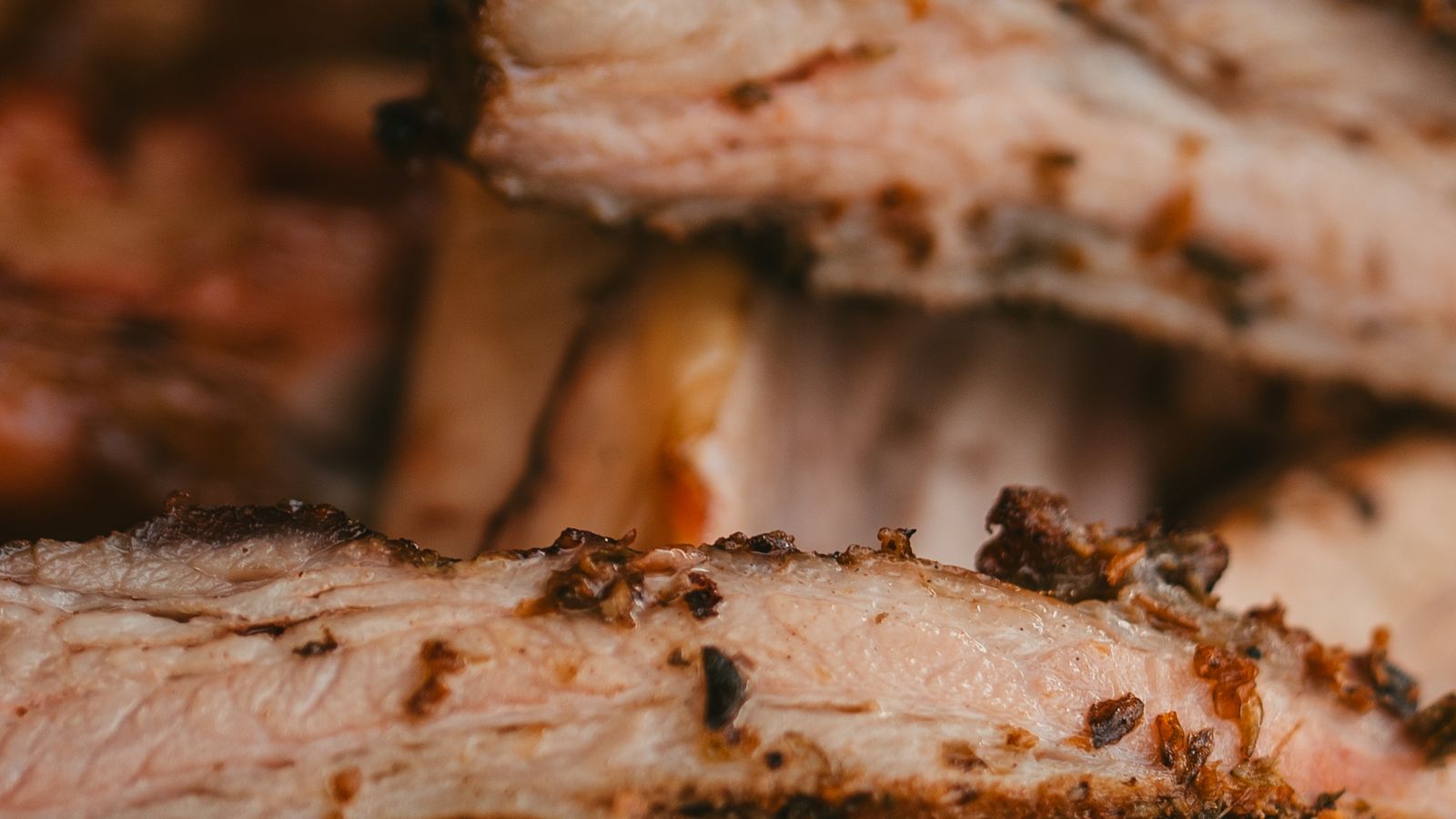
Pork steak is cut across the shoulder (the same primal as pork butt), roughly three-quarters of an inch thick, bone-in. It's inexpensive, forgiving, and built for a charcoal grill rather than a smoker.
The classic method: sear it hard over direct coals to get color, then move it to indirect heat and braise it in a pan of barbecue sauce and beer or water until it's fall-apart tender, usually 45 minutes to over an hour depending on thickness. That braising step is what separates St.
Louis pork steak from a quick-grilled pork chop — it's really a hybrid of grilling and low-temperature cooking.
If you're used to thinking about pulled pork as the only way to use the shoulder, this is the fast, direct-heat cousin; our smoked pulled pork and pork butt guide shows the low-and-slow version of the same cut.
Pig snoot — the snout, scored and grilled or smoked until crisp — is the dish that separates St. Louis barbecue tourists from St. Louis barbecue locals.
It's mostly cartilage and skin, so the texture is crunchy on the edges with a chewy, gelatinous center, usually chopped and doused in sauce, sometimes served on white bread. It's a legacy dish from north St.
Louis City's Black barbecue tradition, particularly associated with the Grand-Natural neighborhood's old rib joints, and it's much harder to find today than ribs or pork steak. A handful of old-school spots still make it to order.
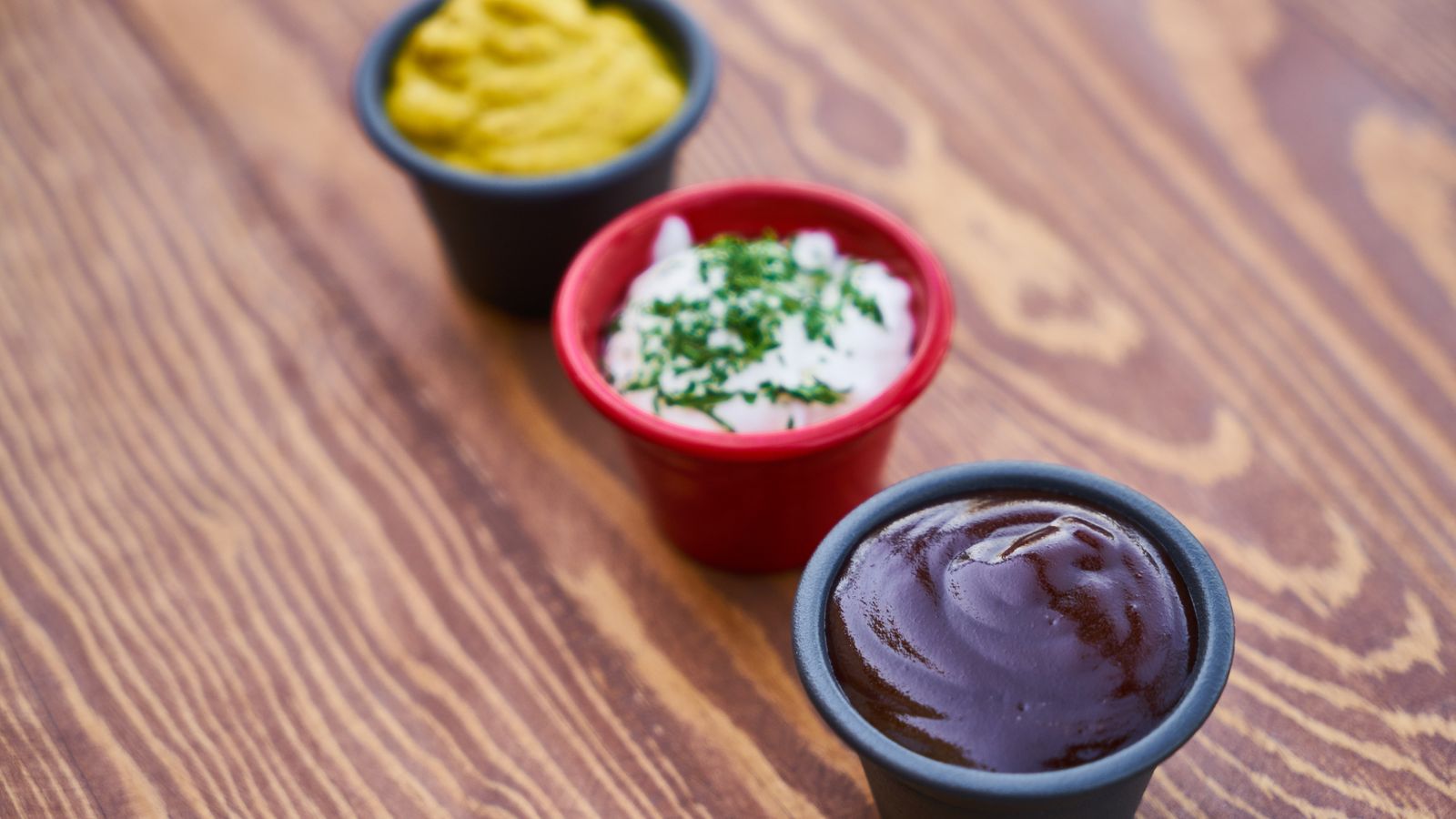
St. Louis sauce leans sweeter and thinner-bodied than Kansas City's but not as vinegar-forward as the Carolinas.
Molasses and brown sugar carry the sweetness, tomato paste and vinegar balance it, and most versions are thin enough to baste with a brush repeatedly during the cook rather than just glaze at the end. It's a working sauce, meant to be reduced onto the meat over time, not a finishing condiment.
For a broader map of how this compares to other American traditions, see our regional BBQ sauce guide and American regional BBQ styles guide.
Pappy's is the tourist-and-local consensus pick, and for good reason: dry-rubbed spare ribs smoked for around 14 hours over fruitwood, no sauce needed at the table though it's on offer.
Order the full slab if you're hungry, the pulled pork if you want to see the rub technique done right, and the cheesy corn on the side. Expect a line out the door most days — they sell out early, especially on weekends, so get there close to opening.
From the same family as Pappy's, Bogart's runs a Memphis-inflected menu with St. Louis ribs, burnt ends, and pastrami that regularly gets ranked among the city's best by local review aggregators. It's counter service, cafeteria-style tray, and popular items sell out by mid-afternoon on busy days. Get the burnt ends if they're still available, and the pit ham if you want something less common on St. Louis menus.
C&K is the old-school, no-frills carry-out joint where snoot is still a regular menu item, not a novelty. It's been serving the same neighborhood for decades. Order the snoot chopped and sauced if you want the full experience, or stick with rib tips and a side of spaghetti, a genuinely St. Louis pairing you won't find written up in national barbecue coverage.
Family-run for more than 40 years, Roper's is another spot where snoot is a mainstay rather than a gimmick, alongside rib tips that regulars call out as some of the best in the city — tender, meaty, and generously sauced. It's a small, unfussy operation, so call ahead if you're set on a specific cut.
Salt + Smoke is the newer-generation, higher-production operation with several locations across the metro, smoking brisket over post oak for around 16 hours alongside St. Louis-cut ribs and pulled pork.
It's a good stop if you want a fuller sit-down bar-and-restaurant experience rather than a counter-service tray, with a broader beer list to match. Order the St. Louis ribs and the smoked trout dip to start — and if you want a second opinion before you go, watch: is Salt + Smoke worth the hype?
Sugarfire built a small regional chain out of a single smoker and a folding table, and it still runs a serious program: brisket, ribs, and a rotating list of sandwiches, with a build-your-own plate format that makes it easy to sample several cuts in one visit. Good option if your group can't agree on one style of St. Louis barbecue — and watch: a St. Louis BBQ review of Sugarfire if you want a menu walkthrough before you order.
The single biggest technique lesson from St. Louis backyards: pork steak is not a quick-grill cut, even though it looks like one. Sear it directly over coals first for color and a little char, then transfer it to a foil pan with sauce, beer, or even just water, cover, and let it cook low and slow on indirect heat until it shreds easily at the edges. Skipping the braise step is the most common reason home cooks find pork steak tough.
If you're buying whole spare ribs at the store, ask the butcher to square them St. Louis-style, or do it yourself: remove the rib tips, the sternum bone, and the cartilage flap, leaving a rectangular rack that cooks evenly end to end.
It's a five-minute job that noticeably improves how consistently the rack renders. Pair it with a rub built for pork's fat content rather than a beef-forward blend; our ultimate BBQ dry rub guide covers how to balance sugar and salt for pork specifically.
Local pitmasters apply sauce in layers throughout the cook rather than saving it all for a final glaze, letting each layer tack up before adding more. That's how you get the sticky, lacquered bark St. Louis ribs are known for without the sauce sliding off or burning. If you're smoking a full brisket and want the same principle applied to beef, our how to smoke a brisket guide walks through timing a wrap and glaze the same way.
Provel cheese — the processed, tangy provolone-cheddar-swiss blend unique to St. Louis — shows up melted over cheesy potatoes or baked into a side dish at several of these joints. It's an acquired taste for out-of-towners, but it's genuinely regional and worth trying once alongside the meat.
Ask for blade-end pork steak, bone-in, cut about three-quarters of an inch thick — thinner and it dries out during the sear, thicker and the braise takes too long to catch up.
If your butcher only sells whole shoulder, you can cut your own steaks with a sharp knife across the grain of a boneless butt, though you'll lose some of the connective tissue that makes the bone-in version so forgiving.
Local grills favor lump or briquette charcoal banked to one side, giving a hot zone for the initial sear and a cooler zone to hold the steaks while they braise in a foil pan of sauce.
That two-zone setup is the same logic behind any good backyard cook; see our two-zone fire setup guide if you haven't built one before.
Some home cooks in the metro have started applying a reverse-sear approach to thicker pork steaks — cooking low and slow first to bring the interior up gently, then finishing with a hard sear over direct heat right before serving to set the bark. It's not the traditional St.
Louis method, but it produces a more evenly cooked steak with less risk of drying out the edges while you wait for the center to catch up, and it borrows directly from the logic in our reverse sear steak guide.
Most of the city's best-known smokehouses, Pappy's and Bogart's included, are counter-service operations that sell out of popular cuts by mid-afternoon, so plan to arrive within the first hour or two of opening if you have your heart set on a specific rack or brisket.
Several close on Mondays or Tuesdays, so check hours before making a special trip. Cash and card are both standard at every spot listed here, and none require reservations, though Salt + Smoke's downtown location can get a wait on weekend evenings given its bar business. If you're building a full St.
Louis barbecue day, pair a smokehouse lunch with a Ted Drewes frozen custard stop for dessert — it's practically mandatory local etiquette. Parking is metered downtown and in Soulard; neighborhood spots like C&K and Roper's have their own small lots.
Pork steak season peaks from Memorial Day to Labor Day, when grocery butchers keep the cut in the case; outside that window you may need to ask specifically or find a specialty butcher.
This guide is part of the City BBQ Series — every barbecue city we’ve covered, one page →