The quick version
Five regions, five playbooks. Central Texas is salt-and-pepper brisket over post-oak at 250–275°F; Kansas City smokes everything and finishes it in thick, sweet tomato-molasses sauce, with burnt ends as the crown jewel; Memphis is pork ribs dry or wet, about 5–6 hours at 250°F; the Carolinas run whole hog and shoulder under vinegar-pepper or mustard “Carolina Gold”; Alabama dunks hot-smoked chicken in mayo-based white sauce. Pick one to start — a pork butt for beginners, brisket for the wow, Alabama chicken when you’re short on time.
Ask ten people what "real BBQ" is and you'll start a fight. That's because there isn't one American barbecue — there are five distinct traditions, each shaped by the wood that grew nearby, the livestock that got raised, and a hundred years of stubborn local pride. Central Texas swears by naked brisket. The Carolinas argue about whole hogs and vinegar. Alabama puts mayonnaise on chicken and dares you to laugh.
Here's the good news: once you understand why each region cooks the way it does, you can nail any of them in your own backyard. This is the map — the meats, the woods, the rubs, the sauces, and the exact temps and times that separate one style from the next.
Central Texas barbecue was born in the German and Czech meat markets of towns like Lockhart and Elgin. Butchers smoked the cuts that didn't sell, wrapped them in butcher paper, and handed them over with a knife — no plate, no sauce. That's still the ethos: if the meat needs sauce, the pitmaster failed.
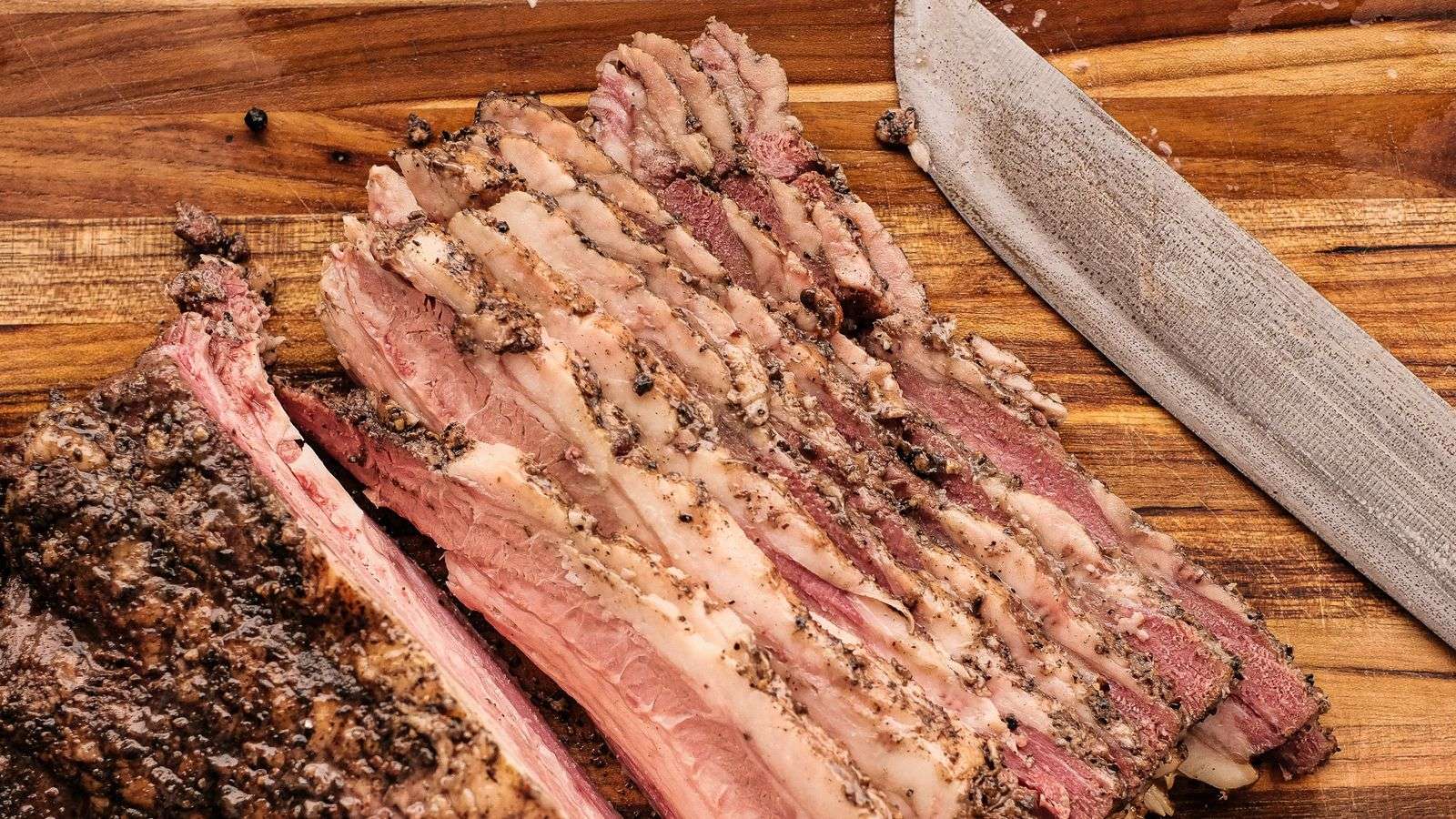
The signature is beef brisket, cooked whole as a "packer" (flat plus point, 12–16 lbs before trimming). The rub is famously simple — a "Dalmatian rub" of coarse black pepper and kosher salt, roughly 50/50, sometimes leaning heavier on pepper. No sugar, because sugar burns over a long cook and Texas cooks long.
The wood is post-oak, a dense, mild hardwood that burns clean and steady. It gives a mellow smoke that won't bully the beef the way mesquite can.
Smoke your brisket at 250–275°F (121–135°C), plan on 1 to 1.5 hours per pound, and wrap in unwaxed butcher paper once bark sets and you hit the stall around 165°F internal. Pull it when the thickest part of the flat probes 203°F (95°C) and feels like soft butter, then rest at least an hour.
Full walkthrough in my complete packer brisket guide.
The other Texas staple is hot-gut sausage — coarse-ground beef (and sometimes pork) links, a direct inheritance from those German butchers. Serve it alongside the brisket, with white bread, pickles, onions, and maybe a bowl of thin sauce on the side for the tourists.
Grab the free doneness + wood-pairing cheat sheet →If your only smoker is a kettle or pellet grill, don't chase mesquite. Post-oak or a plain oak/hickory blend gives you that clean Central Texas profile without the bitter, creosote edge mesquite leaves on a long cook.
Kansas City is where everything comes together. Sitting at a rail crossroads, KC pulled influences from every direction, so its pits smoke anything — brisket, ribs, pork, chicken, turkey, and its crown jewel, burnt ends.
Burnt ends are the fatty point of the brisket, cubed after the flat is done, tossed in rub and sauce, and put back in the smoker at 250°F (121°C) for another 1.5–2 hours until the edges caramelize into candy. What was once a butcher's throwaway is now the most requested item on the menu.
The rub here is more complex than Texas — salt, pepper, paprika, and brown sugar as the base — because KC embraces sweet. Wood is usually a blend of hickory and oak, hickory bringing that classic bacon-y punch.
But the true KC signature is the sauce: thick, sweet, tangy, tomato-and-molasses based, meant to be brushed on at the end or served at the table. This is the sauce most Americans picture when they hear "barbecue sauce" — it's what fills the bottles at the grocery store. Unlike Texas, KC sauce is central to the experience, not an apology. I break down the exact ratios in my regional BBQ sauce guide.
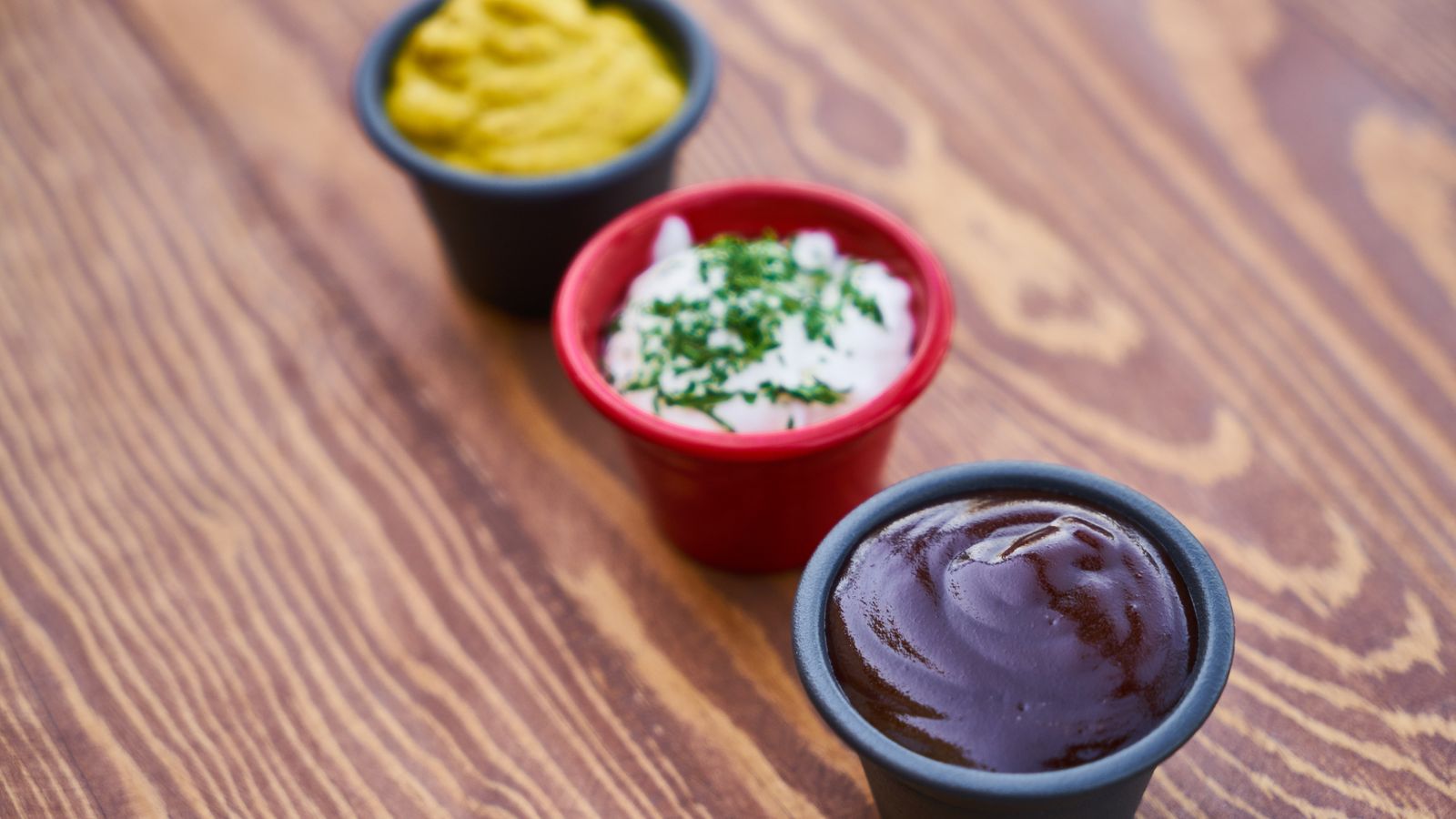
Memphis built its reputation on pork ribs, and the city is split into two camps: dry and wet.
Dry ribs — the style Memphis is most famous for — are coated in a paprika-forward spice rub before the smoke and dusted again after, with no sauce at all. The bark is the flavor. Smoke St. Louis-cut spare ribs at 250°F (121°C) for about 5–6 hours, or baby backs for 4.5–5 hours, until the meat pulls back from the bone and probes tender around 200–203°F.
Wet ribs get mopped and glazed with a tomato-based sauce that's thinner and tangier than Kansas City's. If you're chasing that fall-tender, glazed look for a party, my competition-style rib method shows how to wrap and glaze without turning them to mush.
Beyond ribs, Memphis is whole-hog country and the home of the classic pulled pork sandwich — chopped shoulder piled on a soft bun and topped, non-negotiably, with a scoop of tangy coleslaw right inside the sandwich. The slaw adds crunch, acid, and moisture in one move. If you're starting with a single cut, a smoked Boston butt gets you 90% of the way there at a fraction of the effort of a whole hog.
The Carolinas are where barbecue means pork, and pork means whole hog or shoulder — but the sauce changes dramatically as you move across the state lines.
Eastern NC cooks the whole hog and dresses the chopped meat with a thin vinegar-and-pepper sauce — apple cider vinegar, crushed red pepper, black pepper, a little salt, and no tomato whatsoever. It's sharp, cutting, and designed to season fatty pork without smothering it. (Head west into the Lexington/Piedmont style and you'll find a splash of tomato added, but the vinegar backbone stays.)
Cross into South Carolina's midlands and the sauce turns bright yellow. "Carolina Gold" is a mustard-based sauce — yellow mustard, vinegar, a touch of sugar and spice — a legacy of German immigrants who settled the region. It's tangy and slightly sweet, and it clings to pulled pork beautifully.
For either style, smoke a pork shoulder at 250°F (121°C) for roughly 1.5 hours per pound, pushing to a pull temp of 203°F (95°C) so the collagen fully renders and the meat shreds with two forks. Confirm doneness with the meat temperature chart rather than the clock — shoulders finish on their own schedule.
Vinegar sauces taste harsh straight from the jar. Mix yours a day ahead and let it sit — the raw bite mellows and the pepper blooms overnight. Same trick works for Carolina Gold.
Alabama gave barbecue its most surprising sauce. In the 1920s, a pitmaster in Decatur started dunking smoked chickens in a tangy mayonnaise-based white sauce, and North Alabama never looked back.
Alabama white sauce is mayo, apple cider vinegar, black pepper, and a little horseradish or lemon — creamy, sharp, and peppery. It's built for smoked chicken: the classic move is to dunk a whole smoked bird in the sauce right off the pit, or brush it on in the last few minutes.
Smoke chicken hotter than your big cuts. Run the pit at 300–325°F (149–163°C) to render fat and crisp the skin, and pull the bird when the breast hits 160°F (it carries to 165°F resting) and the thighs read 175°F. Low-and-slow chicken gives you rubbery, flabby skin — this is one meat where you want more heat. A spatchcocked whole chicken cooks faster and more evenly, and the white sauce turns it into something people remember.
| Region | Signature Meat | Wood | Sauce | Pit Temp | Cook Time |
|---|---|---|---|---|---|
| Central Texas | Brisket, hot-gut sausage | Post-oak | None (salt-pepper rub) | 250–275°F | 1–1.5 hr/lb |
| Kansas City | Burnt ends, ribs, all meats | Hickory + oak | Thick tomato-molasses, sweet | 250°F | Brisket 1–1.5 hr/lb; burnt ends +1.5–2 hr |
| Memphis | Pork ribs, whole hog | Hickory | Dry rub or thin tomato (wet) | 250°F | Spare ribs 5–6 hr |
| Carolinas | Whole hog, pork shoulder | Hickory/oak | E-NC vinegar-pepper; SC mustard "gold" | 250°F | ~1.5 hr/lb |
| Alabama | Smoked chicken | Hickory/pecan | Mayo-based white sauce | 300–325°F | ~1.5–2 hr (whole bird) |
Don't try to master all five at once. Match the region to your skill and your rig:
Whatever you pick, the fundamentals underneath every region are the same: clean fire, steady temperature, and a good thermometer. Get comfortable with a proper two-zone fire and the low-and-slow basics, and you can cook any of these five styles on the rig you already own.