The quick version
Central Texas barbecue is salt, coarse pepper, post oak and time — and the 35-mile run between Austin and Lockhart is where it lives. Austin brings the modern boom, three Michelin stars and lines before dawn at Franklin; Lockhart brings the history, with Kreuz and Smitty’s tracing straight back to the 1900 meat market and Black’s family-run since 1932. Budget a whole afternoon for the Lockhart loop, split plates across two or three stops, and skip the sauce on your first bite of brisket — if it needs sauce, something upstream went wrong.
| Style | Central Texas market-style — salt-and-pepper crust, meat-market roots, minimal sauce |
|---|---|
| Signature meat | Beef brisket, hot guts (sausage), pork ribs, shoulder clod |
| Wood | Post oak, almost exclusively |
| Sauce | Optional, thin and tangy, served on the side or skipped entirely |
| Classic sides | White bread, pickles, raw onion, potato salad, pinto beans |
| Iconic joints | Franklin Barbecue, Kreuz Market, Smitty's Market, Black's Barbecue, InterStellar BBQ |
| Price band | $18-$32 per person for a plate; brisket typically $24-$32/lb |
| Best season/events | Year-round smoking; Texas Monthly BBQ Fest hits Lockhart every November |
If you want to understand American barbecue, you start here. Not Kansas City, not Memphis, not the Carolinas — Central Texas, and specifically the 35-mile stretch between Austin and Lockhart.
This is the region that took German and Czech meat-market traditions, married them to post oak and a butcher's counter, and produced something that didn't need sauce to be great. Salt, pepper, smoke, time. That's the whole recipe, and it's taken places most of the country still hasn't caught up to.
Austin gets the visibility — the Michelin stars, the food-truck booms, the lines around the block. Lockhart gets the history. It's been calling itself the Barbecue Capital of Texas since long before that was a marketing line, and nobody serious has ever challenged the claim.
This guide covers both, because you can't really understand one without the other. We've eaten at every place listed here, we've talked to the pitmasters, and every joint below is open right now — not "open as of some blog post from 2019."
For the fundamentals behind what these pitmasters are doing, see our brisket guide and our breakdown of American regional BBQ styles — Central Texas is one of four or five distinct traditions in this country, and it plays by its own rules.
What's striking when you actually drive the loop between the two cities is how little the fundamentals have shifted even as the scene around them has exploded.
Austin's barbecue boom over the last fifteen years brought national press, food trucks turned brick-and-mortar, and three Michelin stars awarded to barbecue for the first time in the guide's history.
Lockhart, meanwhile, has mostly stayed exactly what it was — a handful of family-run meat markets that never needed to reinvent themselves because they got it right a century ago.
Visiting both in the same trip is the best way to see the full arc of this style, from its founding principles to its modern, hyped-up expression.
Most American barbecue traditions grew out of whole-hog pit-cooking and sauce-forward pork culture. Central Texas grew out of butcher shops.
German and Czech immigrants who settled Caldwell and Travis counties in the 1800s ran meat markets, and smoking was originally just a way to move product that hadn't sold — cook it low and slow over oak coals so it wouldn't go to waste.
Kreuz Market and Smitty's Market in Lockhart both trace back to that exact lineage; Smitty's occupies the original Kreuz building from 1900, brick pits and all.
That market origin explains a lot of what's still true today: meat served on butcher paper, not plates. No forks at some of the old-school spots — you eat with your hands or a knife. Sauce as an afterthought, sometimes not even offered, because a shop selling quality meat off the market floor didn't need to mask anything.
The rub here is famously minimal — often nothing more than coarse salt and coarse black pepper, sometimes with a touch of garlic or cayenre worked in. That's it. No brown sugar, no paprika-heavy blends.
The whole philosophy is that you're seasoning the crust, not flavoring the meat — the meat's flavor should come from the animal and the smoke. If you're used to sweet, spice-heavy rubs, read our dry rub guide to see how far the other end of the spectrum goes.
Post oak is non-negotiable in this region. It burns cleaner and milder than hickory or mesquite, which lets the beef stay the star instead of getting steamrolled by smoke.
Cook temps run a little hotter than some regions — many Central Texas pits run 275-325°F rather than a flatter 225°F — which is part of why bark development here is so aggressive.
For the mechanics of low-temperature, long-duration cooking generally, see our low and slow guide, and for how to manage a fire that behaves like these pits do, our two-zone fire setup guide is a good primer, even though most of these joints are running offset brick or steel pits far larger than anything in a backyard.
Brisket wasn't always king here — clod and ribs mattered more historically — but for the last two decades brisket has become the meat people drive hours for, largely because of what Franklin Barbecue did to expectations starting in 2009.
A great Central Texas brisket has a near-black, peppery bark, a distinct smoke ring, and enough rendered fat that a slice barely holds together.
Knowing your target internal temps and how they map to texture matters here more than in styles that lean on sauce to cover mistakes — our meat temperature chart covers the doneness windows pitmasters are chasing.
The place that changed what people expect from brisket in America.
Aaron Franklin's East 11th Street trailer-turned-restaurant still draws lines that start forming before dawn, and the brisket remains the standard everyone else gets measured against — deep bark, a pull-apart fatty end, and a smoke ring you could teach a class from.
Order the brisket plate and don't skip the beef rib if it's available; it usually sells out first. Open Tuesday through Sunday from 11am until sold out, typically by early-to-mid afternoon.
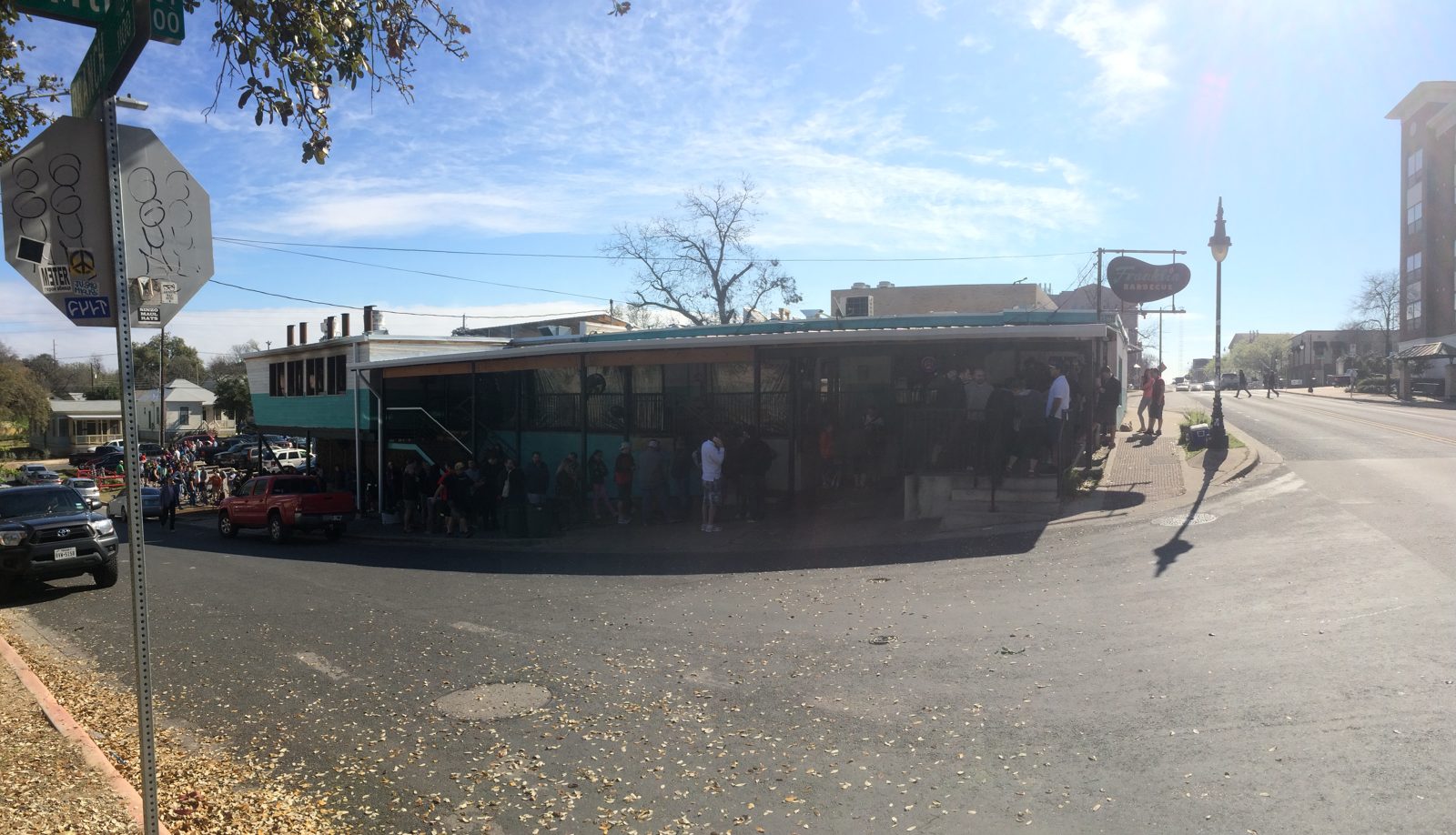
Started as a trailer parked outside Franklin's original spot and has since become one of three Austin barbecue operations to earn a Michelin star — the first time Michelin has ever recognized barbecue anywhere. Get the brisket, but also the beef rib and the "Freaking Fantastic" sausage, which has been on the menu long enough to earn the name. Open Wednesday through Sunday, 11am to 6pm, at 2401 E. Cesar Chavez.
Recently moved from its long-running East Austin trailer into a brick-and-mortar spot in a converted 1940s church off Springdale Road, but the food hasn't lost a step. The brisket is excellent and the sausage program — jalapeño cheese, in particular — is one of the best in the city.
Less of a wait than Franklin or la Barbecue, which is exactly why locals steer visitors here when time is tight — Mad Scientist BBQ's watch: Austin Barbecue Tour at Micklethwait shows exactly why. Open Thursday through Sunday, 11am to 8pm.
The newest of Austin's Michelin-starred barbecue spots and, for many locals, the most complete menu in the city right now — the brisket is excellent, but the sides and the pork ribs get just as much love.
Set back in Northwest Austin off Ranch Road 620, it draws a smaller crowd than the East Austin spots despite the accolades, which makes it one of the better ratio-of-quality-to-wait options in town — watch: an Interstellar BBQ review from Fatty's Feasts backs that up.
Open Wednesday through Sunday, 11am to 4pm.
Founded in 1900 and still one of the two or three most important barbecue addresses in Texas. No sauce, no forks, no barbecue sandwiches — this is meat-market barbecue in its purest surviving form, sold by the pound off butcher paper, eaten standing at long communal tables.
The prime rib special and the shoulder clod are things you won't find at most other joints on this list, and the all-beef and pork sausage links, made in-house, are worth ordering alongside whatever brisket you get. Open Monday through Saturday 10:30am-8pm, Sunday 10:30am-6pm, at 619 N Colorado St.
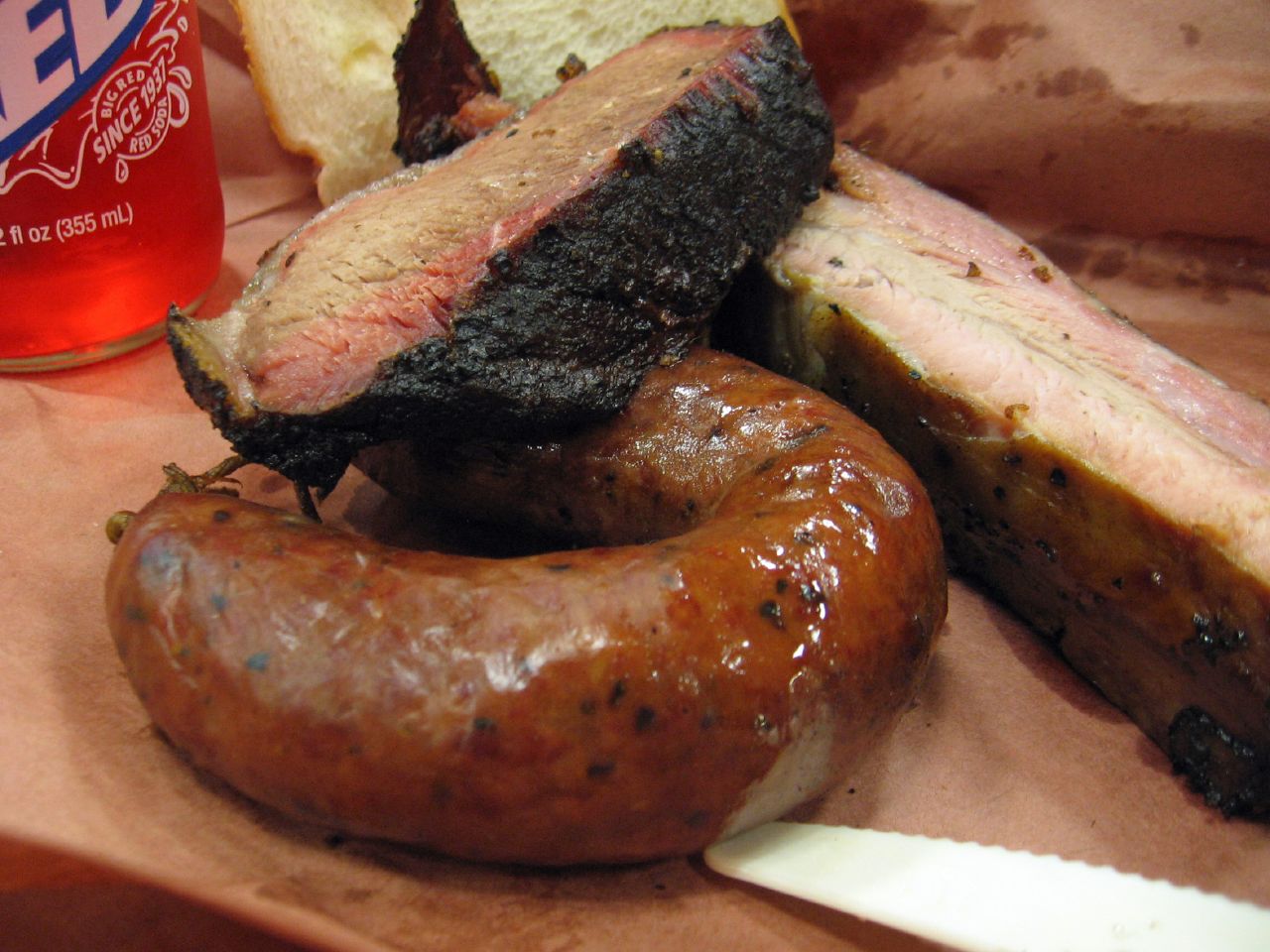
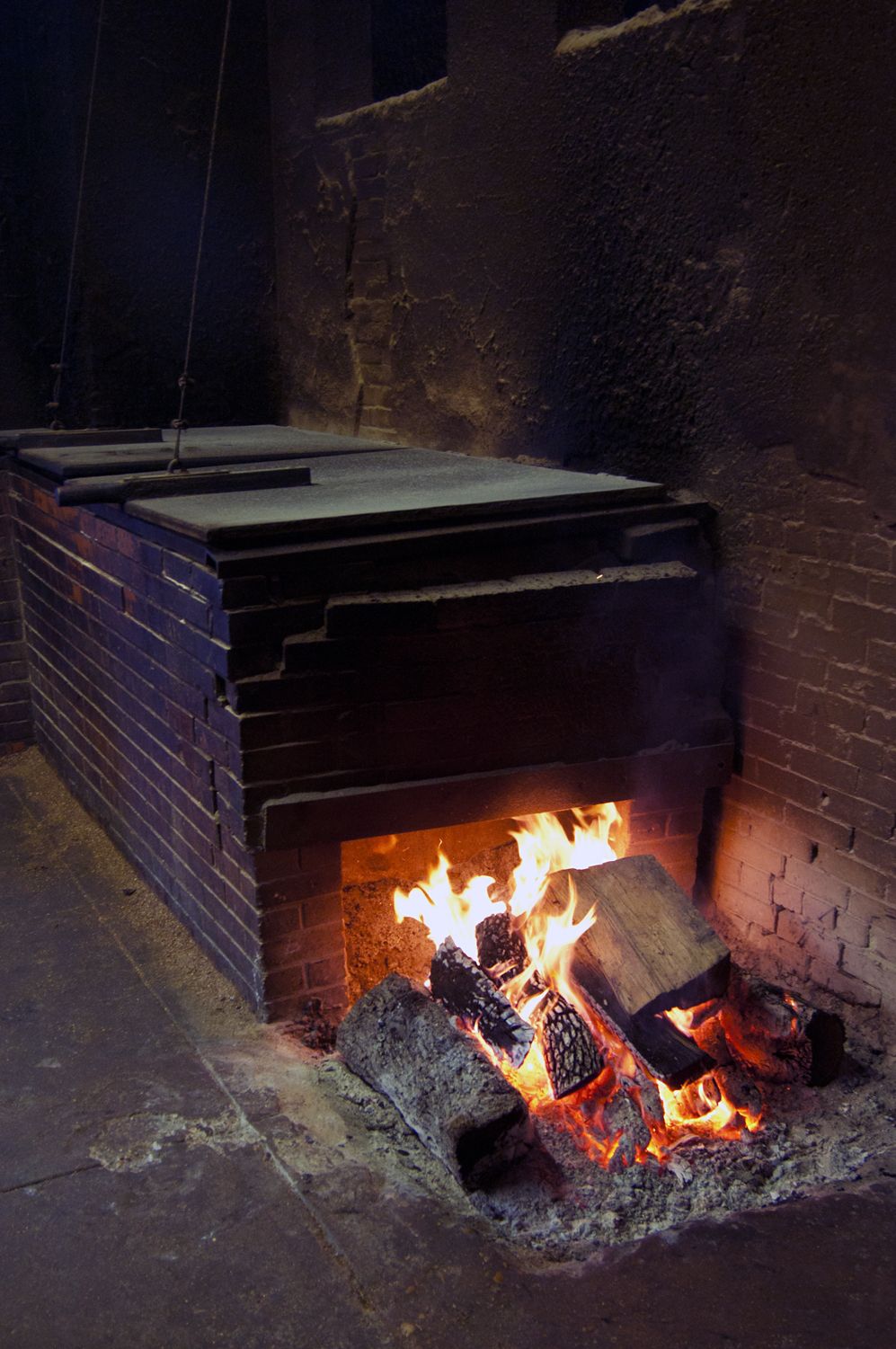
Occupies the original 1900 Kreuz Market building, brick pits and all, after a family split sent one branch of the Schmidt family here and the other to found the current Kreuz location down the road.
Walking into the pit room through the dark, smoke-blackened front hallway is one of the great sensory experiences in American food. Brisket and pork chops are the calling cards — watch: a Smitty's Market BBQ tour for a look inside that same pit room.
Open daily, roughly 7am-6:30pm depending on the day, at 208 S Commerce St.
The oldest barbecue business in Texas still run by the same family, dating to 1932.
Less austere than Kreuz or Smitty's — you'll get sauce if you want it, and a fuller menu — but the brisket and the beef ribs hold their own against anyone in town, and the prime rib on weekends is a local secret weapon — one reviewer's watch: Black's BBQ Lockhart review puts it right up against Franklin.
Open daily, 10am-8pm (until 8:30pm Friday and Saturday), at 215 N Main St.
If you're making the Lockhart run, budget the whole afternoon and split plates across two or three stops rather than filling up at the first one — it's a fifteen-minute drive between Kreuz, Smitty's, and Black's, and comparing them back-to-back is the entire point of the trip.
These same principles apply whether you're working brisket, pulled pork, or ribs — see our pulled pork guide and competition-style ribs guide for how the low-and-slow logic translates across cuts, and our reverse sear guide if you want to see the same heat-management thinking applied to a quick-cook steak instead of an all-day smoke.
Whether you're new to this style or just refreshing the fundamentals, our brisket guide and regional styles guide are the best starting points for bringing a little bit of Lockhart and Austin home to your own smoker.
This guide is part of the City BBQ Series — every barbecue city we’ve covered, one page →