The quick version
Every fire culture on earth runs on the same four elements — fuel, cut, seasoning, and ritual — and this tour crosses six continents to show how each place remixes them: Texas brisket and Carolina whole hog, Argentine asado and Brazilian churrasco, Jamaican jerk over pimento wood, South Africa's braai, Japan's binchotan yakitori, India's 900°F tandoor, Australia's backyard barbie. The word "barbecue" itself traces to the Taino barbacoa. The most transferable lesson of the whole trip: clean, ashed-over coals beat rushed coals, everywhere.
Every cuisine on earth has a fire story. Before we had ovens, stoves, sous-vide baths or air fryers, we had a pile of burning wood and a piece of meat, and we figured out that the two belonged together.
Anthropologists argue about the exact date, but the practice is old enough that it may have helped shape the human animal itself — the theory goes that cooking pre-digested our food, freed up calories, and let our brains grow.
Whether or not you buy that, the point stands: fire is the oldest kitchen there is, and grilling is the oldest recipe. Everything else came later.
What I love about live-fire cooking is that it's simultaneously universal and fiercely local. Walk into any culture that has fire and animals, and you'll find a way of putting the second over the first. But the details — those are where the personality lives.
The same four elements are always in play: fuel (what you burn — post oak, quebracho, coconut husk, binchotan, dried vine cuttings), cut (a whole hog, a beef rib, a skewer of heart, a coil of sausage), seasoning (bare salt, a wet chili marinade, a peanut spice crust, a saffron-yogurt bath), and ritual (who tends the fire, who carves, who's invited, what day of the year it happens on).
Change any one of those and you've traveled to a different country.
The word we English-speakers use — barbecue — is itself a souvenir from that travel. It comes to us through Spanish from barbacoa, a word the Taino people of the Caribbean used for a wooden framework set over a fire.
From a rack of green sticks in the islands to the neon of a Korean grill house, it's all one lineage. So this is a tour, not a ranking. I've eaten my way through a good chunk of it and read hard about the rest, and I'll tell you what makes each tradition itself.
Get the names right, respect the people who built these methods over centuries, and you'll taste more. Let's follow the smoke.
We start in the hemisphere that gave the practice its English name. The Americas run the full range of live-fire cooking — from the patient, all-day smoke of the U.S. South to the roaring wood fires of the Southern Cone, the underground pits of Mexico and the Pacific, and the street-corner charcoal of the Andes. Different animals, different fuels, one continent-spanning obsession.
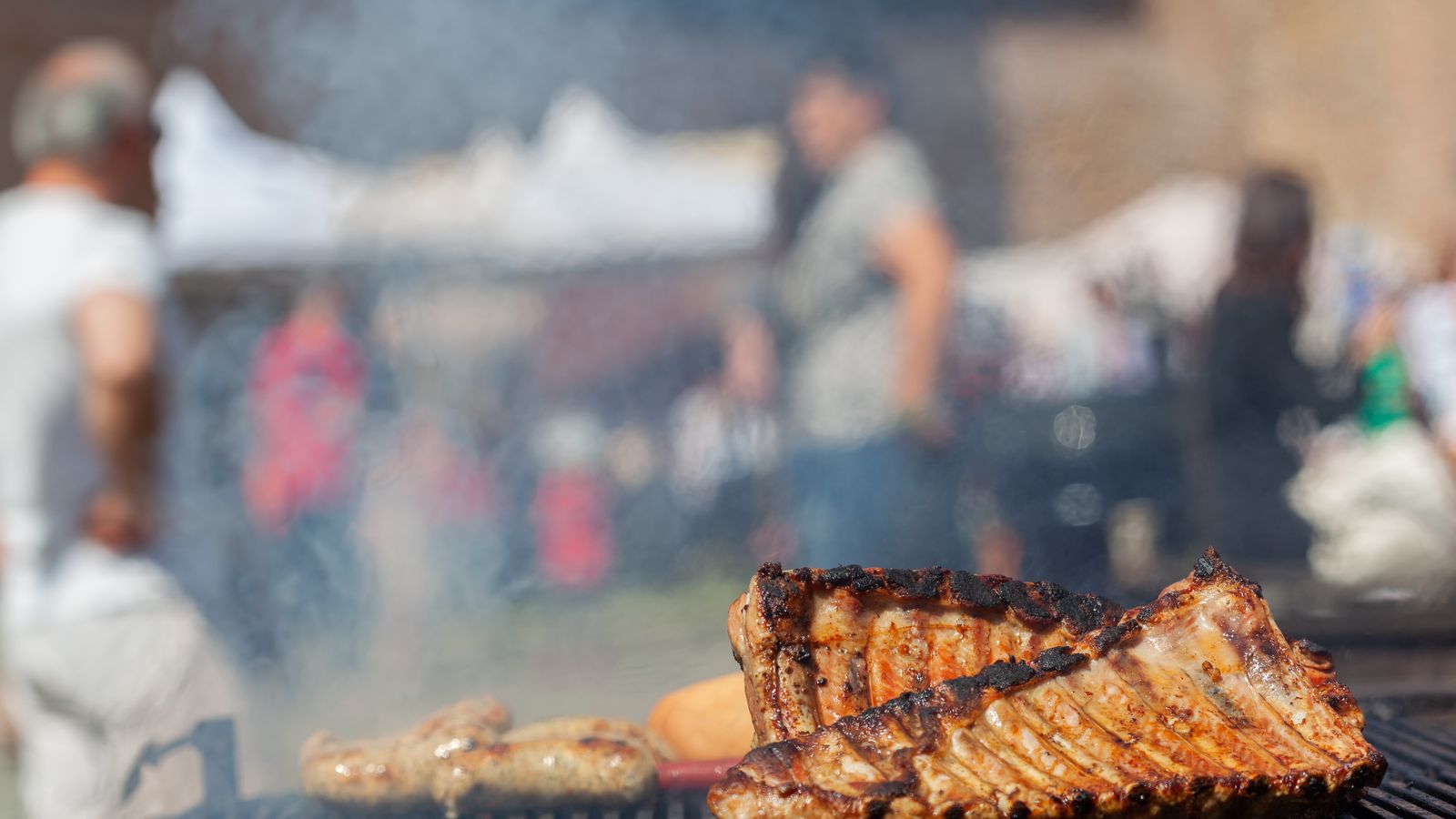
American barbecue — capital-B, the noun, not the verb — is a specific discipline: low and slow. You take a tough, cheap, collagen-rich cut, and you cook it for hours in the indirect heat and hardwood smoke of a pit until the connective tissue melts to gelatin and the meat pulls apart.
It's a technique born of poverty and patience, and it fractured into fiercely defended regional churches.
In Central Texas, beef is king: brisket and hot-gut sausage smoked over post oak, seasoned with nothing but coarse salt and black pepper, and if you ask for sauce a Hill Country pitmaster may quietly judge you.
In the Carolinas it's whole-hog country — an entire pig cooked over coals, then chopped and dressed with a thin East-North-Carolina vinegar-and-pepper mop, or, over in South Carolina, the tangy mustard-based “Carolina Gold.” Kansas City is the ecumenical one: every meat, a thick sweet tomato-and-molasses sauce, and the glorious accident of burnt ends — the caramelized point of the brisket.
Memphis lives for pork ribs, often served dry with a rub rather than wet. And Alabama gave the world its wonderfully strange white sauce — mayonnaise and vinegar — mopped over smoked chicken. Each is a real place with real convictions.
I've gone deep on all of them in the American regional BBQ styles guide, and the sauces get their own map in the regional BBQ sauce guide. If you take one thing from the American way, it's this: barbecue rewards the cook who's willing to wait.
CEO TIP: Low-and-slow only works if you keep the heat off the meat. Build a two-zone fire — coals banked on one side, food on the other — so you're cooking with warm smoky air, not direct flame. That single move is the difference between barbecue and a burnt roast. The full method is in the low-and-slow smoking guide.
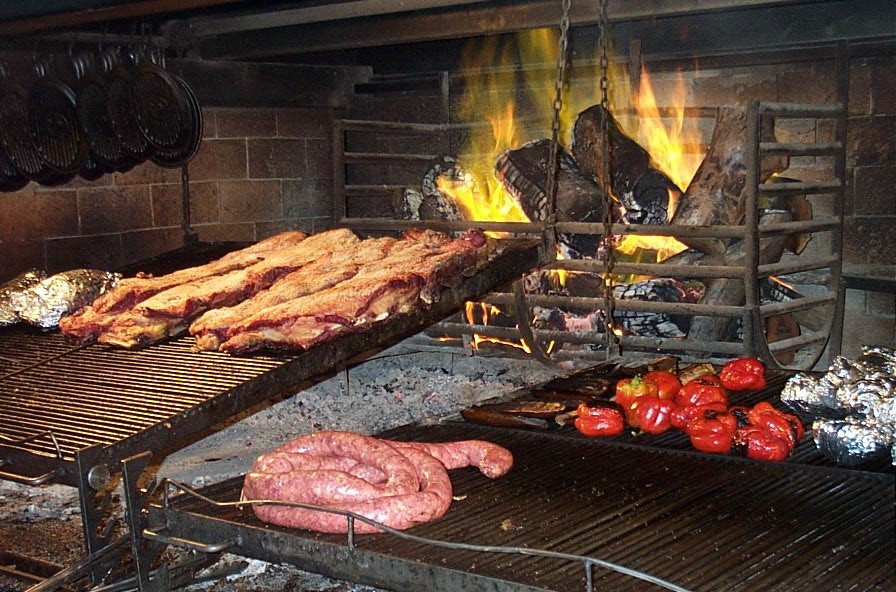
If American barbecue is a discipline, the Argentine asado is a whole social contract. The word means both the meal and the event, and at its center stands the asador — the one person entrusted with the fire, a role of real honor. You do not casually take the tongs from the asador.
The method is beautifully analog: a wood fire (leña, often dense quebracho) burns down at the side, and the cook rakes glowing embers under a parrilla, the iron grill, feeding fresh coals as needed so the heat stays gentle and steady.
For a feast, the meat may instead be splayed on an iron cross — asado a la cruz — and leaned toward an open bonfire to roast for hours.
The cuts are a tour of the whole steer: tira de asado (crosscut short ribs), vacío (flank), entraña (skirt), alongside chorizo and blood sausage (morcilla) to graze on while the big cuts come up. And the seasoning? Coarse salt. That's it.
The famous chimichurri — parsley, garlic, oregano, vinegar and oil — arrives at the table, not on the grill. The genius of asado is restraint: great beef, honest fire, unhurried time. I lay out the fire management and cuts in the Argentine asado guide.
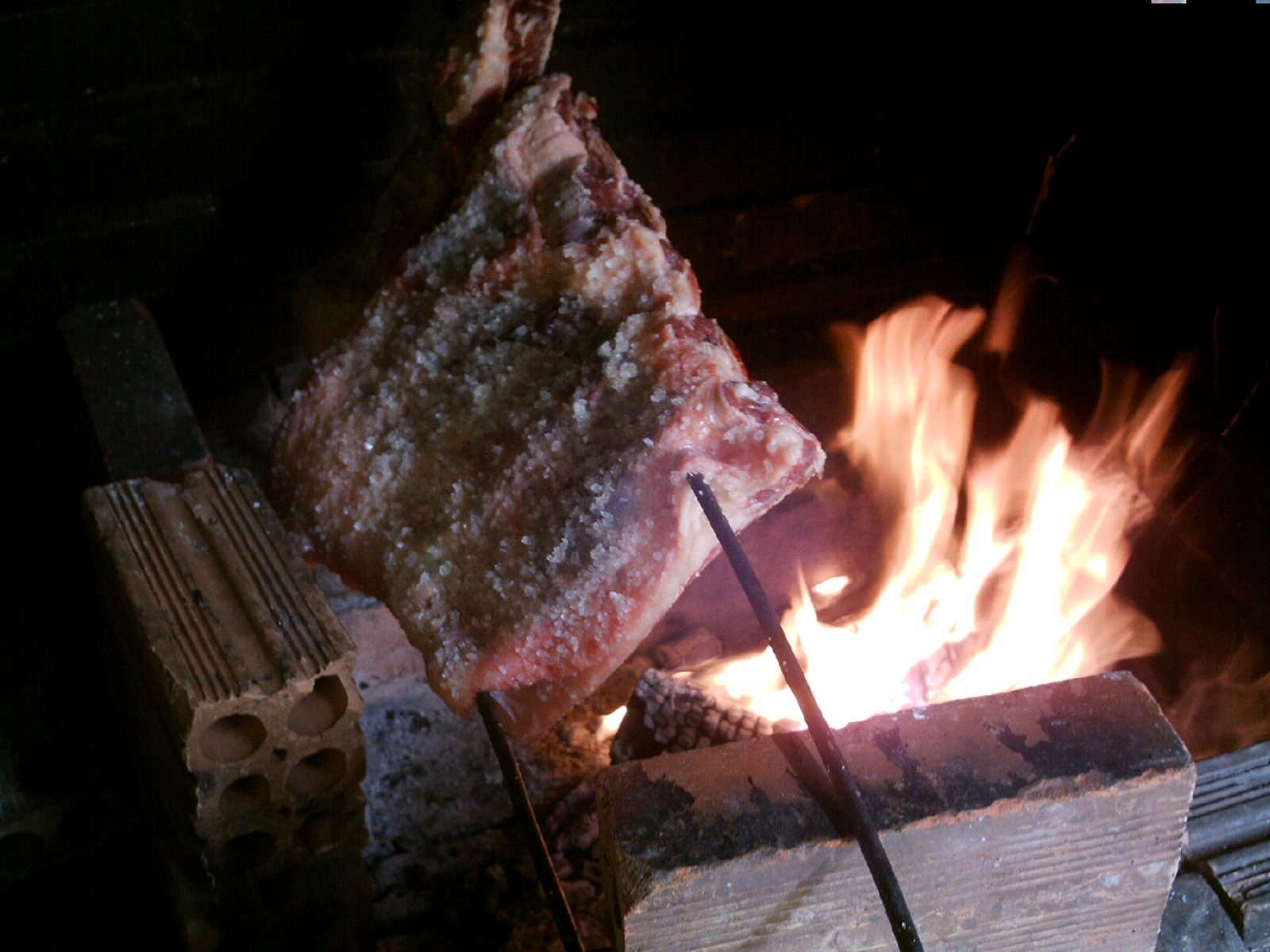
Cross the border into southern Brazil and the fire gets bigger and the skewers get longer. Churrasco is the tradition of the gaúchos, the cowboys of Rio Grande do Sul, and its signature tool is the espeto — a long metal sword.
Big cuts of meat are threaded onto these skewers and cooked over wood or charcoal, seasoned with nothing but coarse rock salt pressed onto the surface, where it forms a savory crust and then largely falls away.
The undisputed icon is picanha, the top sirloin cap with its thick fat lid — sliced into fat horseshoes, salted, and grilled fat-side working to render into the meat. For a proper occasion, a whole costela (beef rib) is set beside the fire and roasts slowly for hours, the fat basting it from within.
In the churrascaria restaurants, this all comes to you as rodízio: waiters circulate with the espetos and carve slice after slice straight onto your plate until you flip your little token to red and beg for mercy. It's abundance as a cuisine, and it is very hard to argue with.
Mexico deserves a bow, because this is where the whole family got its name.
Barbacoa — from that same Taino root — is the ancestral method: in central Mexico, lamb or goat is wrapped in the broad leaves of the maguey (agave) plant and lowered into a stone-lined pit in the ground, then covered and left to steam-roast on smoldering coals overnight.
What emerges is meat so tender it barely holds together, traditionally eaten on a Sunday morning with the rich consomé that collected in the pit below. That's pit cooking in its oldest, most literal form — no grill, just earth, stone, fire and leaf.
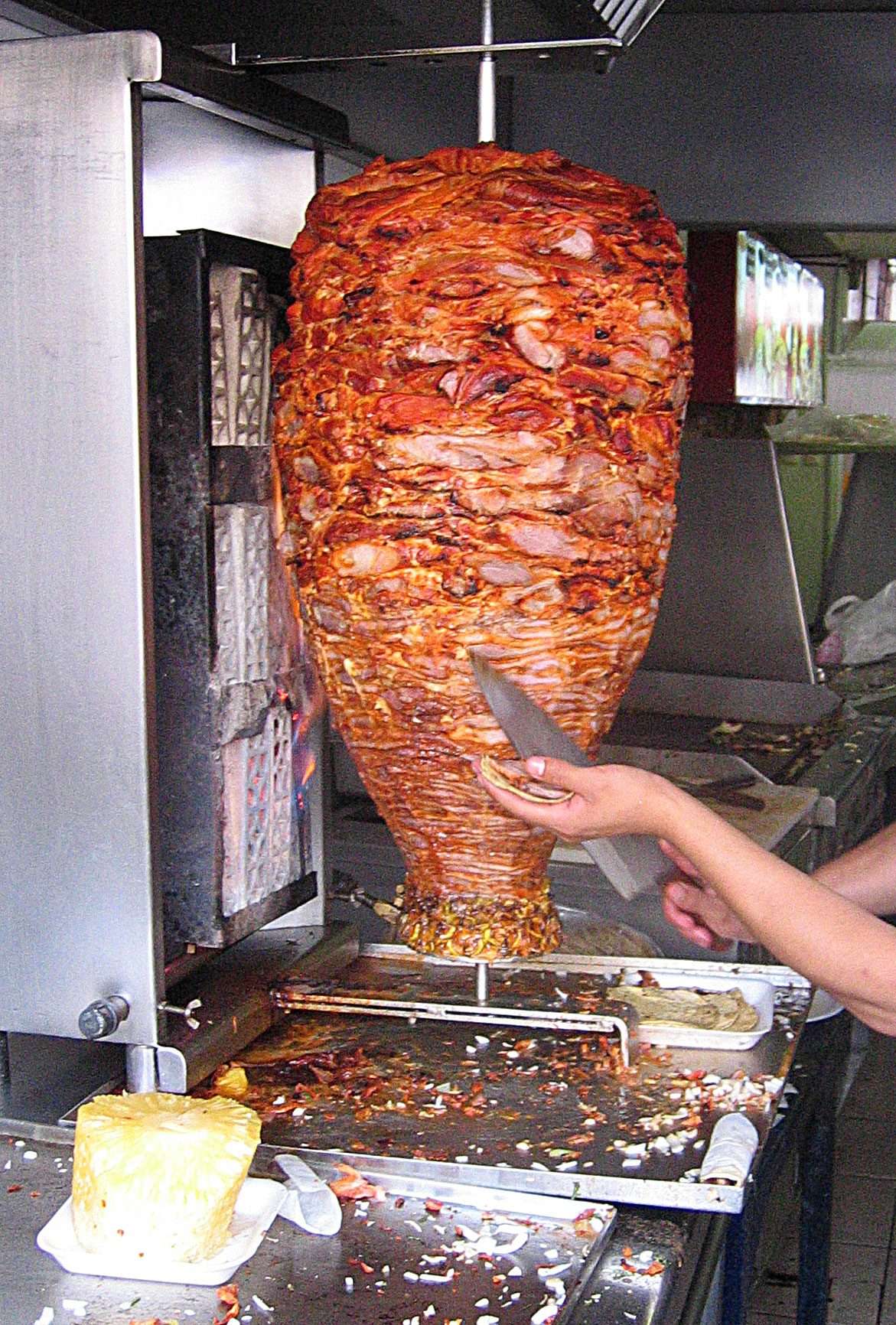
Then there's the other Mexican icon, which is a beautiful piece of culinary history: al pastor.
When Lebanese immigrants brought vertical-spit shawarma to Mexico in the 20th century, cooks married the technique to local flavor — pork marinated in dried chilies and achiote, stacked high on a vertical trompo, crowned with a whole pineapple, and slow-roasted by its own turning face.
The cook shaves off the crisped edges into small corn tortillas and, with a flick of the knife, flips a chunk of that caramelized pineapple on top. Migration on a plate.
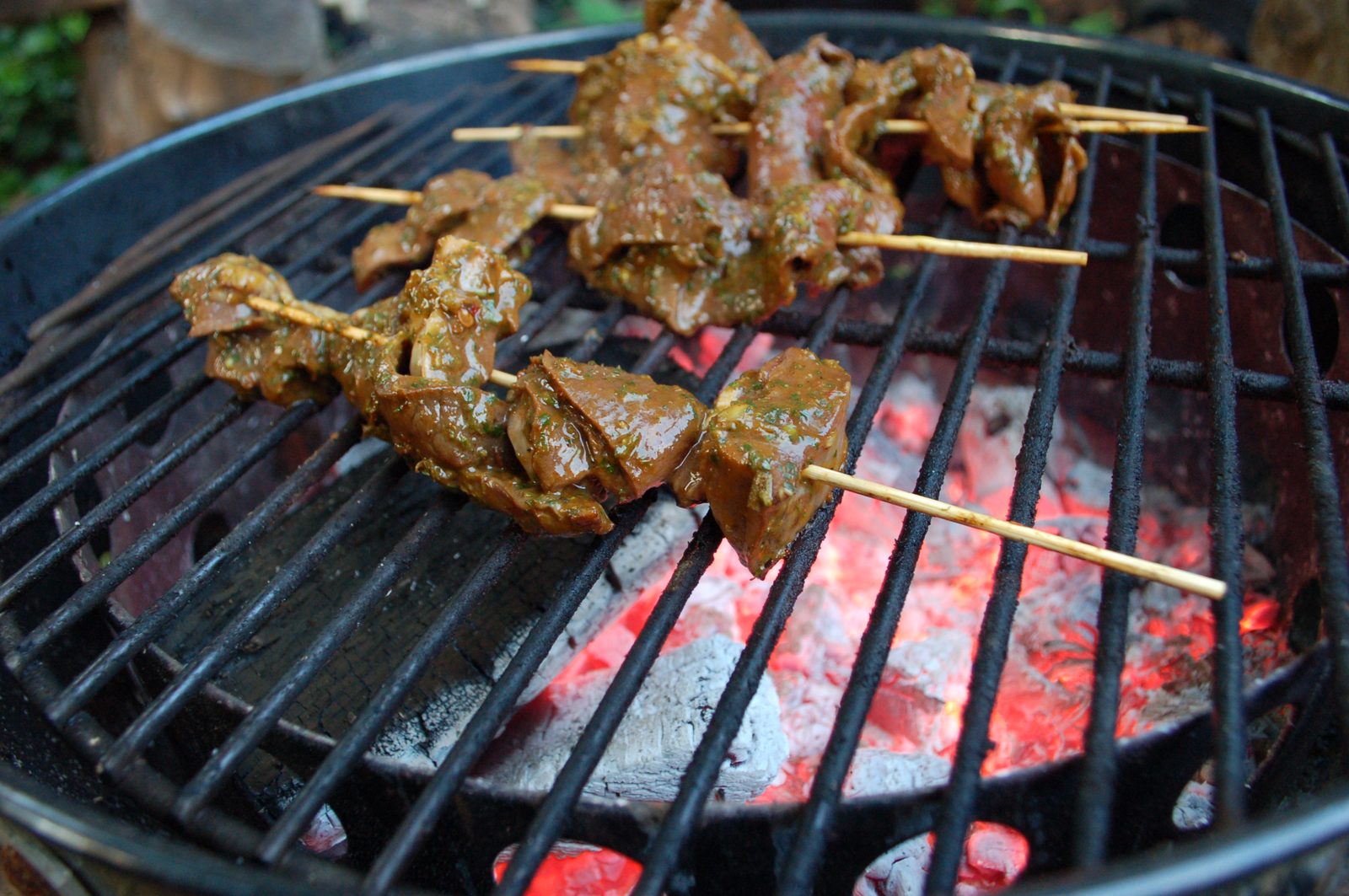
Peruvian street corners fill with a particular smoke at dusk, and it's coming off anticuchos — skewers of marinated beef heart (corazón) grilling over charcoal.
Don't flinch at the heart; it's lean, dense, mineral-rich muscle, and grilled hot and fast over coals it eats like the best steak you've had, with a clean, deep flavor.
The marinade is unmistakably Peruvian: ají panca (a mild dark-red chili), garlic, cumin and vinegar, which both seasons the meat and tenderizes it.
The dish has pre-Columbian roots — Andean peoples were skewering and grilling long before contact — but it took its modern form after the Spanish brought cattle, and the cheap, tough heart became the cut of the people.
It's a cousin to the pachamanca, the Andean feast where meats, potatoes and corn are buried with fire-heated stones to cook in the earth — the same underground-oven idea we'll meet again on the other side of the Pacific.
Two faces of Peruvian fire: one fast and smoky on the street, one slow and buried in the mountains.
Jamaican jerk is one of the great flavor systems on earth, and it was born of resistance. Its roots trace to the Maroons — communities of escaped enslaved Africans who took to the island's interior and needed to cook and preserve meat while living free and mobile.
What they developed is a fiery seasoning paste built on two pillars: the searing heat of the Scotch bonnet pepper and the warm, clove-and-cinnamon perfume of allspice — known in Jamaica as pimento — rounded out with thyme, scallion, ginger and more.
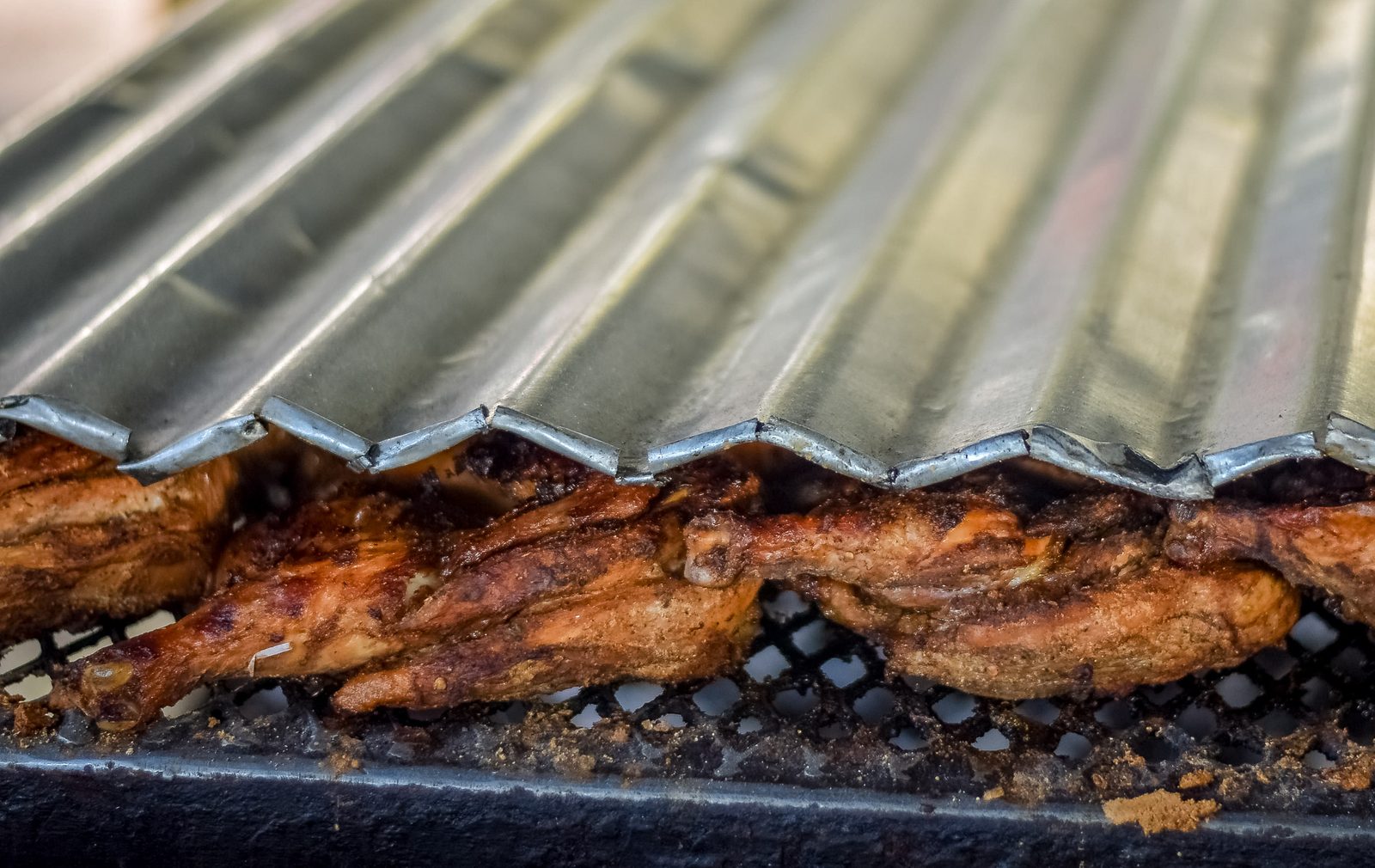
The meat, classically chicken or pork, is coated and then smoke-roasted low and slow over green pimento wood, whose smoke is part of the flavor. And the setup is pure ingenuity: a fire pit covered with sheets of corrugated zinc, or a steel oil drum split lengthwise and hinged into a lidded smoker.
The zinc traps the smoke and turns the whole thing into a low oven. The result is layered — hot, sweet, herbal, smoky, all at once. I walk through building the paste and managing that low smoke in the Jamaican jerk chicken guide.
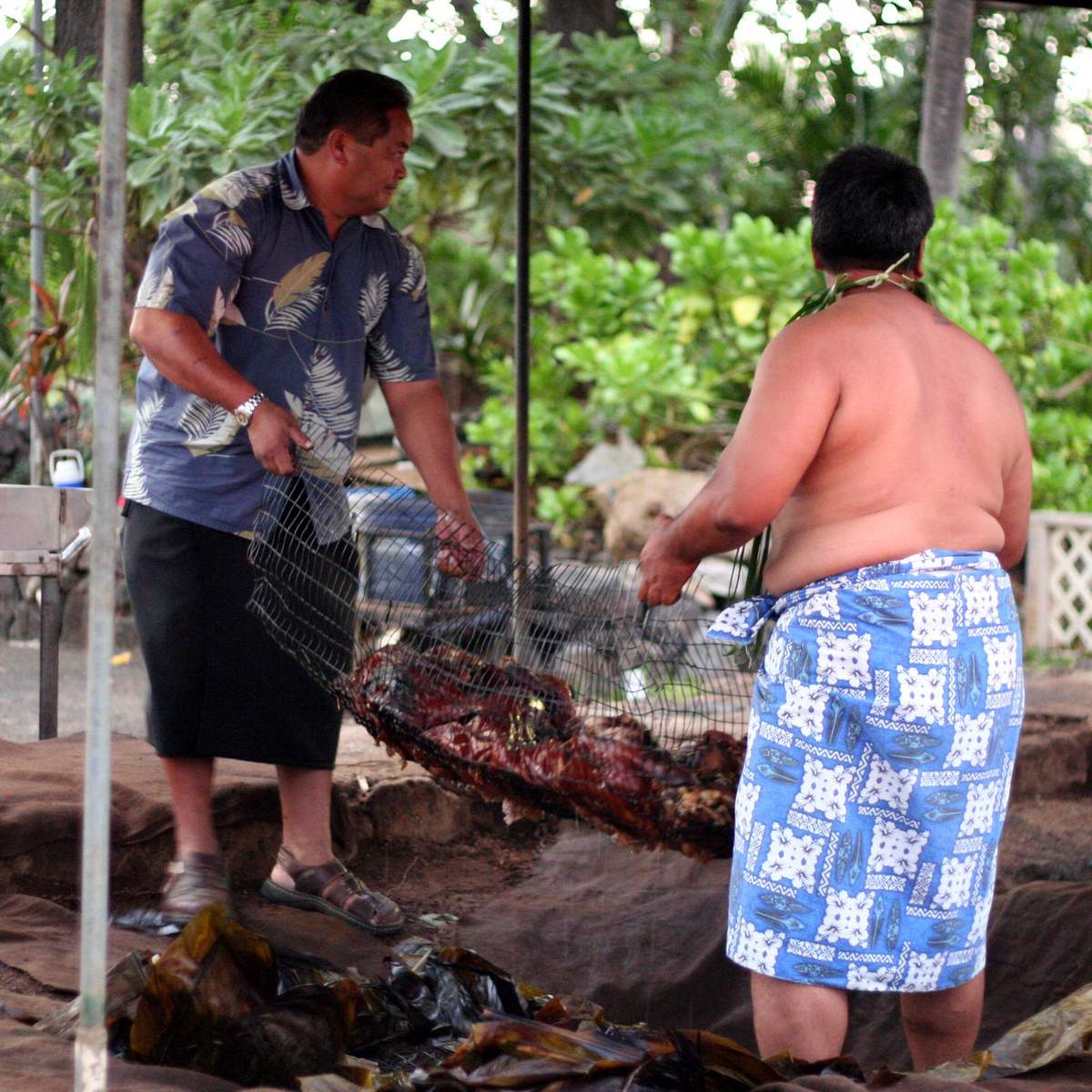
Now we go underground again, in the middle of the Pacific. The Hawaiian imu is an earth oven, and building one is a day's work of its own. You dig a pit, build a fire in it, and heat porous volcanic stones until they glow.
Then the fire is raked back, the hot stones lined with banana stumps and ti leaves, and a whole pig (pua'a), often with hot stones tucked inside its cavity too, is laid in, covered with more leaves, wet burlap and earth, and sealed.
The trapped steam and stone-heat cook it for many hours into kalua pig — smoky, salty, falling-apart tender — the centerpiece of a lū'au feast. What moves me about the imu is that it isn't unique; it's one branch of a vast Pacific earth-oven family carried across the ocean by the Polynesian voyagers.
The Māori of New Zealand cook the same way in a hāngī; Samoans use an umu, though theirs is built above ground. Same fundamental idea — hot stones, leaves, steam, patience — spread across thousands of miles of open sea. Fire and earth doing the work together.
Europe's live-fire cooking tends to be leaner and quicker than the great slow-smoke traditions — more skewer and grill than pit — but it runs deep, from Atlantic islands to the Balkans. Wood embers, garlic, salt and a whole lot of conviviality.
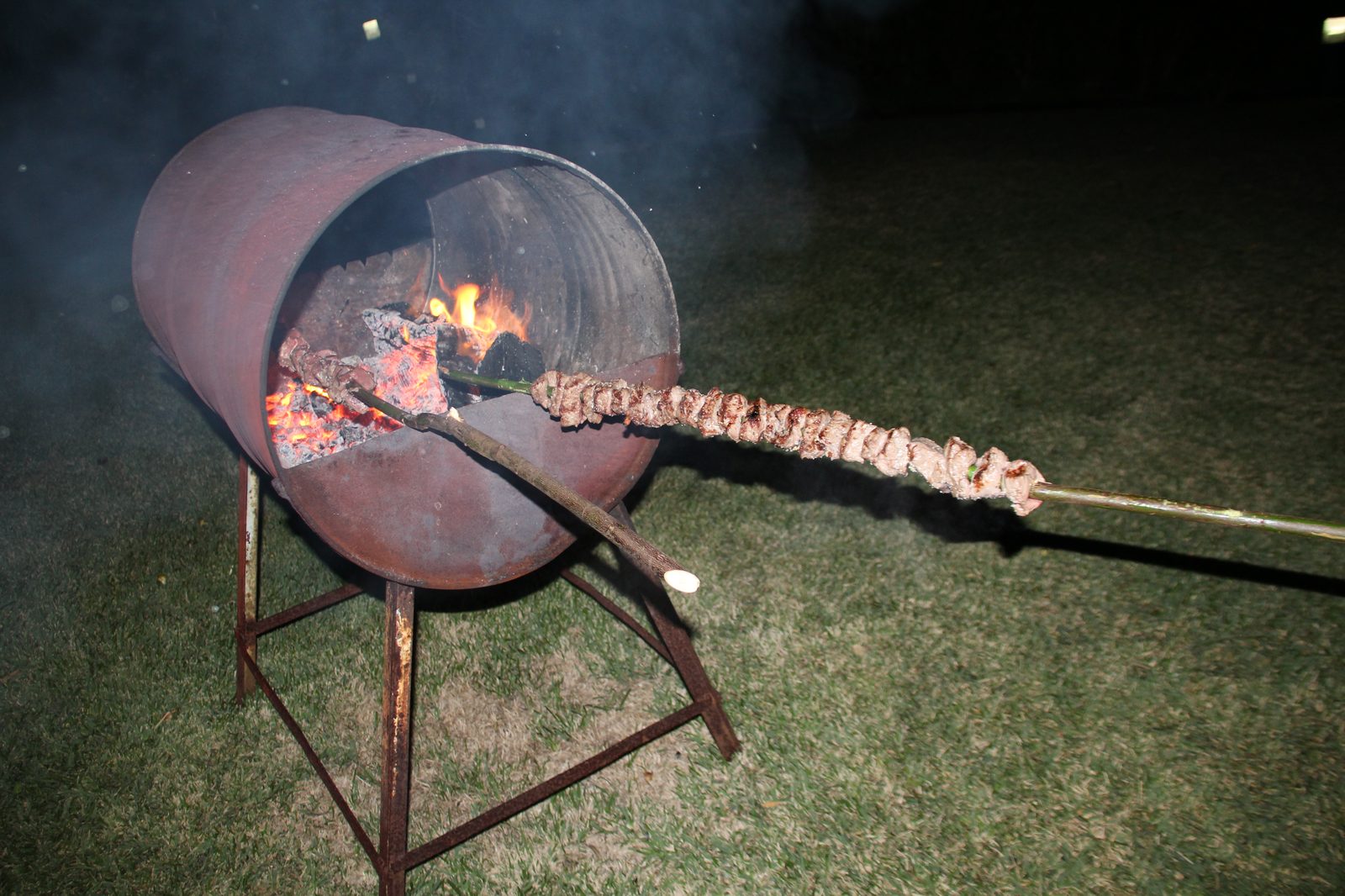
On the Atlantic island of Madeira, the local grill classic is espetada, and it comes with a botanical secret.
Chunks of beef are rubbed with garlic and salt, then threaded not onto metal but onto a skewer of fresh bay-laurel wood (loureiro), which perfumes the meat from the inside as it cooks over wood embers.
Traditionally the loaded skewer is hung vertically from a stand at the table, dripping its juices onto slabs of bolo do caco flatbread set below to catch them. It's a small, brilliant piece of design.
Madeira is just one window onto Portugal's broader devotion to open fire: on mainland summer nights, whole sardinhas assadas — fat sardines — hiss over charcoal in the streets during the saints' festivals, eaten with bread and little else; and frango piri-piri, chicken butterflied and grilled under a lash of that fierce little African bird's-eye chili, is a national treasure that Portugal, via its old trade routes, sent out into the wider world.
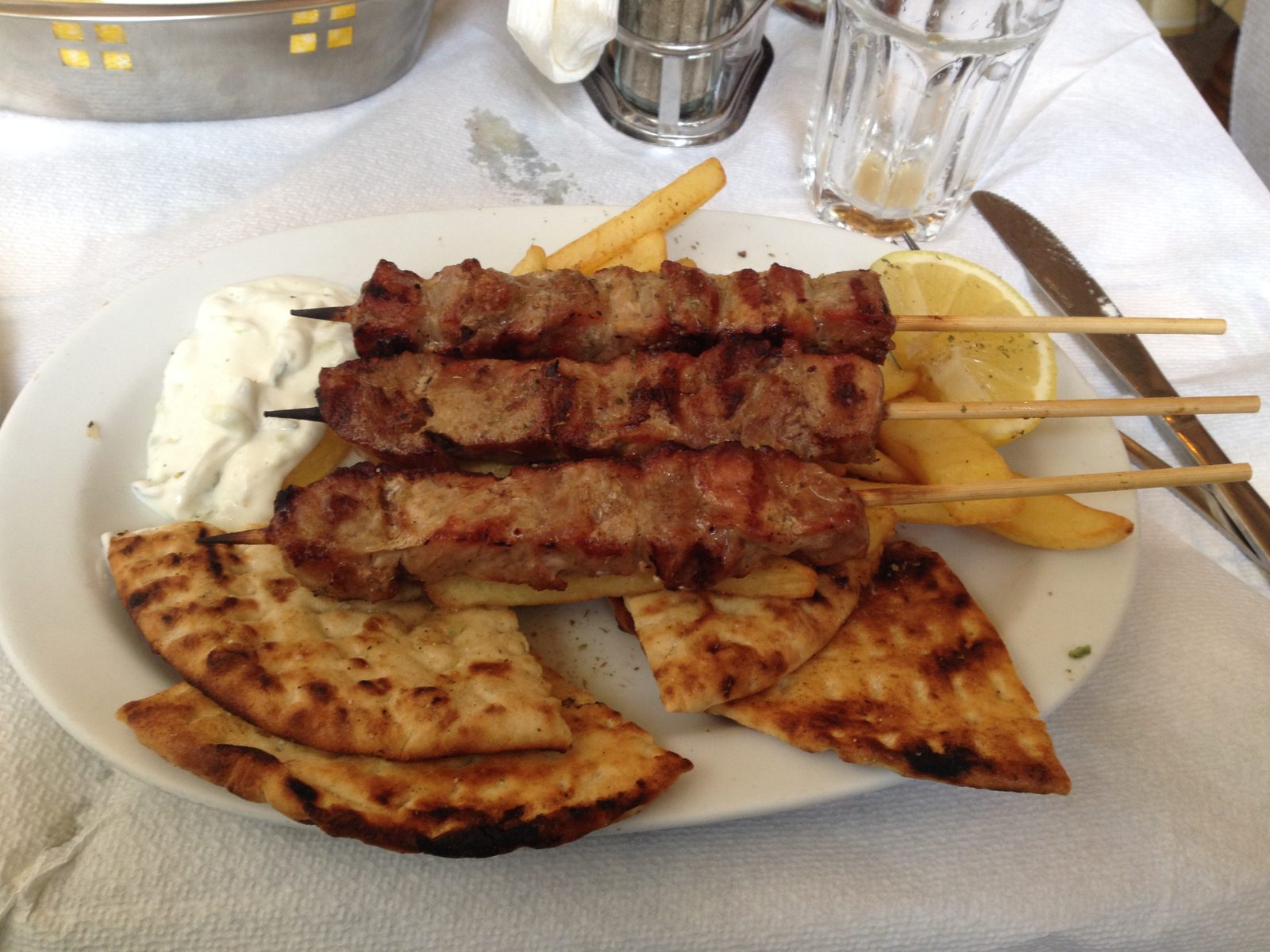
Greek souvlaki is charcoal grilling at its most democratic: small cubes of pork or chicken threaded on skewers, cooked hot over coals until the edges char, and served with warm pita, cool tzatziki, tomato, onion and a squeeze of lemon.
Its big brother is the gyros, meat stacked and roasted on a vertical spit — that same shawarma DNA that traveled the eastern Mediterranean and gave Mexico its al pastor. Push north into the Balkans and the grill takes on a Yugoslav accent.
The undisputed star is ćevapi (ćevapčići) — little fingers of grilled minced meat, usually beef and lamb, seasoned simply and cooked fast over charcoal so they stay juicy inside with a crisp exterior.
Alongside them you'll find pljeskavica, a big flat patty of the same idea, and the whole thing is served in a warm lepinja flatbread with a smear of rich kajmak (a clotted dairy cream), roasted-pepper ajvar, and raw onion.
It's grill food as an entire way of eating, and once you've had a proper plate of it you understand why every Balkan family has opinions about whose is best.
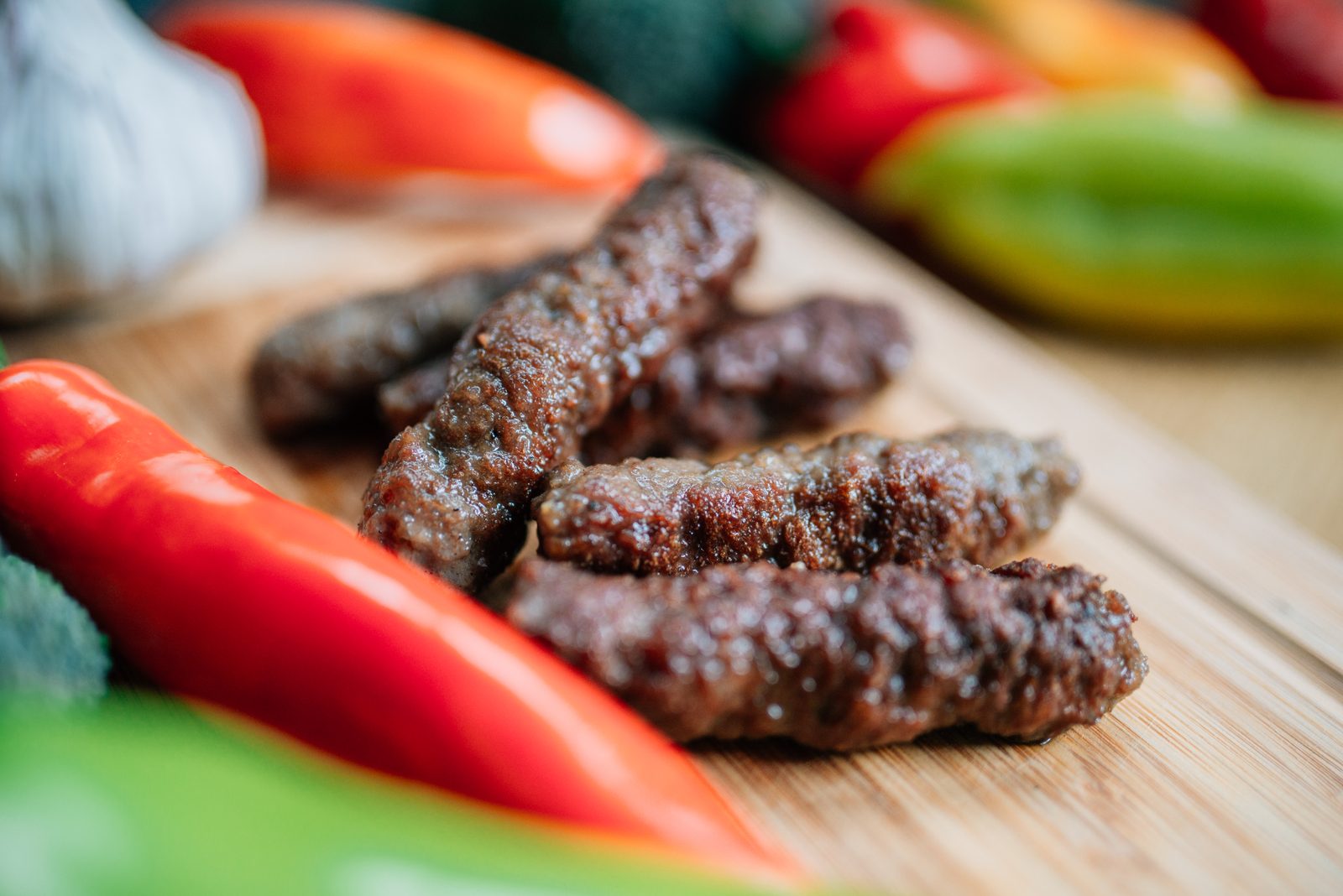
CEO TIP: Minced-meat grill items — ćevapi, kafta, Adana kebab, koobideh — all share one enemy: falling apart on the bars. The fix is the same everywhere. Work the meat until it's slightly sticky and paste-like (that's the protein binding), rest it cold before grilling, and don't touch it until it's seared enough to release cleanly. A clean, well-oiled, properly hot grate does the rest.
Across Africa, grilling is public, social and gloriously spiced — from the coal grids of the South African backyard to the peanut-crusted skewers of the West African street. Two traditions, a continent apart, both built entirely around the fire.
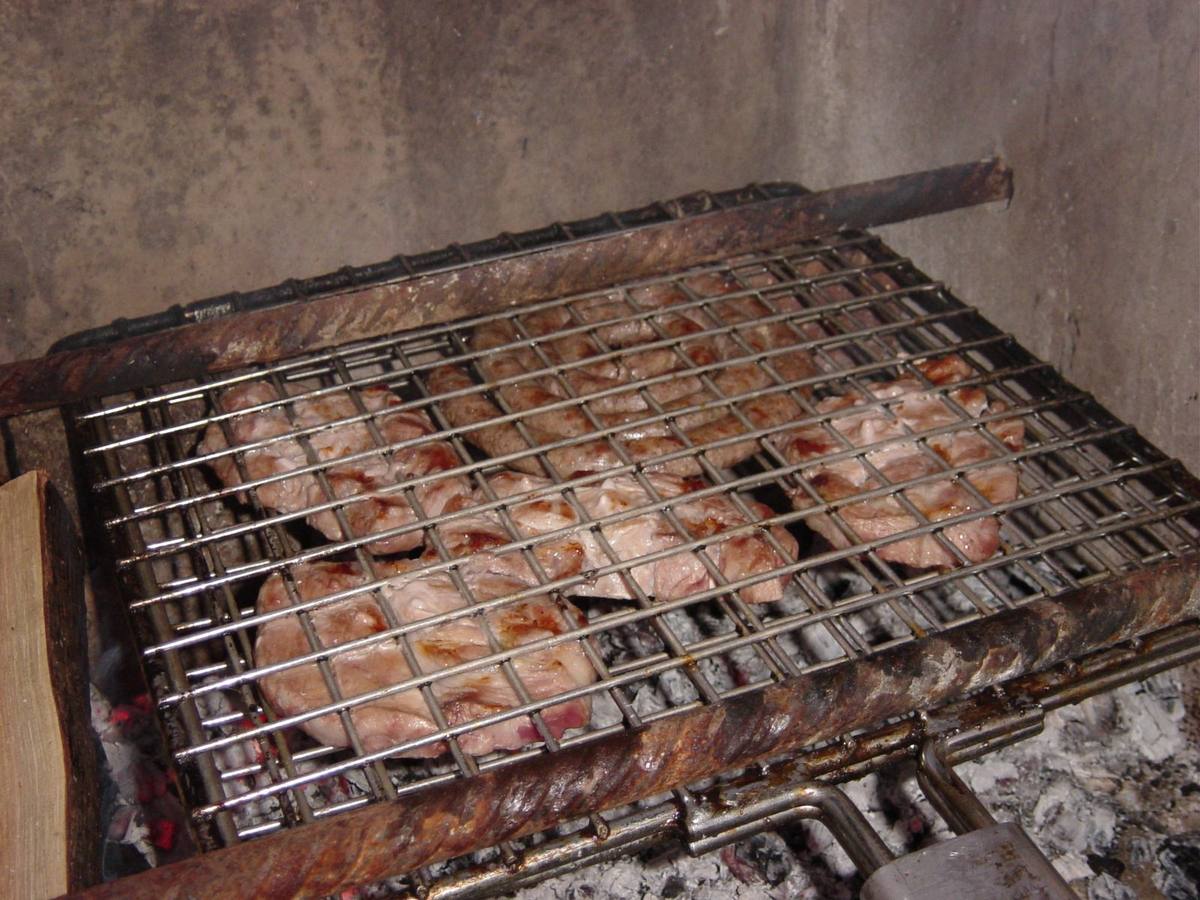
In South Africa, the braai isn't a cookout — it's practically a civic institution. It's so woven into national identity that Heritage Day, on 24 September, is affectionately celebrated as National Braai Day, a moment the whole rainbow of the country can gather around a single common fire.
The setup is a wood or charcoal fire and a grid (the braai itself), and the tending of it is serious business.
The signature is boerewors — a long coiled farmer's sausage, coriander-forward, laid on the grid in its spiral — joined by sosaties (Cape-Malay marinated skewers, often with dried apricot and curry spice, a legacy of the Cape's Southeast Asian heritage), lamb chops, and steak.
And you can't talk about the braai without the shisa nyama — literally “burn the meat” — the township grill spots where you buy raw meat, hand it over to be cooked over communal coals, and eat shoulder-to-shoulder with the neighborhood.
It's some of the most social eating on the planet, and the fire is always the reason everyone's there.
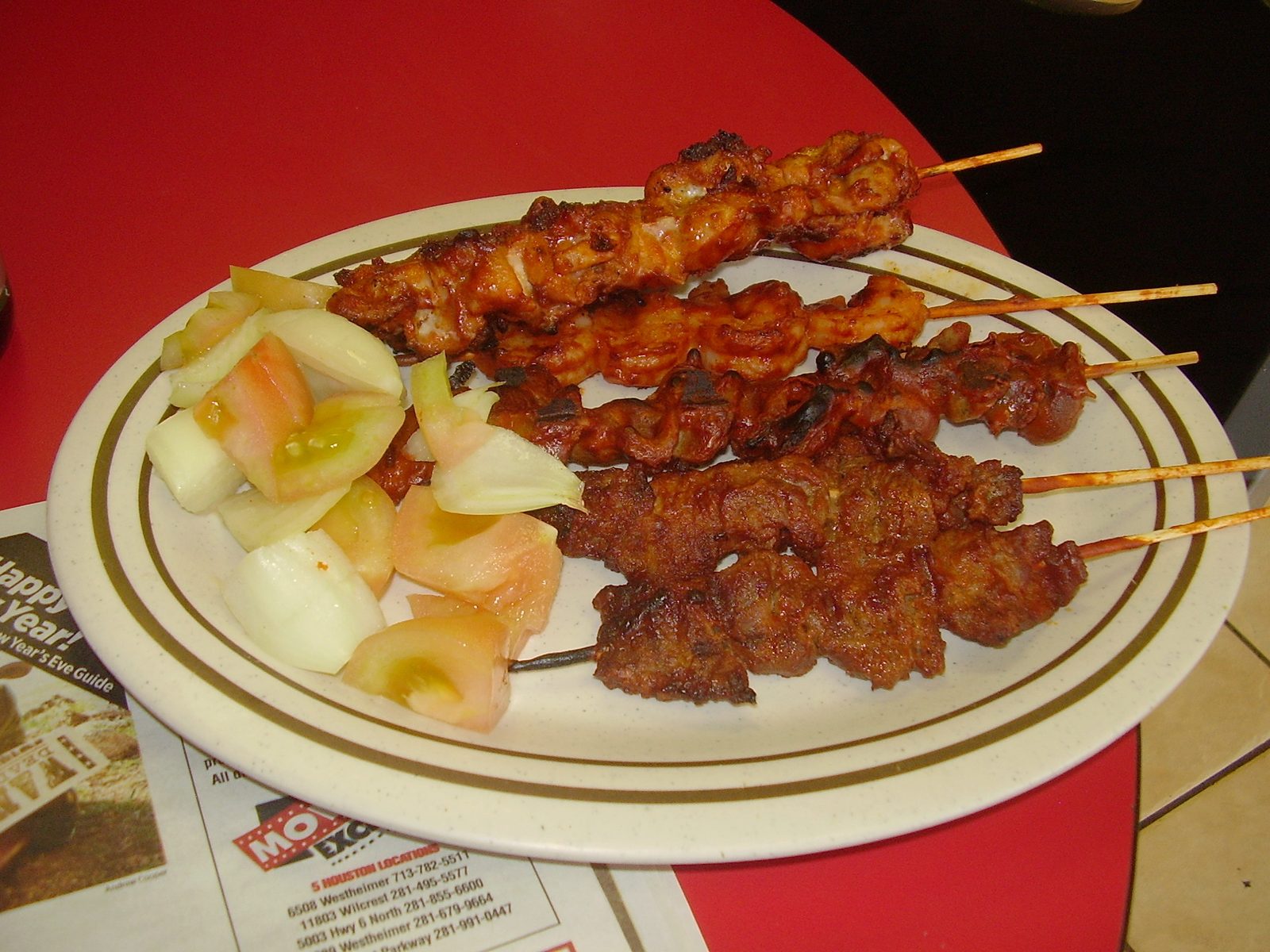
Suya is Hausa street food out of northern Nigeria and the wider Sahel, and it may be the most addictive grilled thing I've eaten.
Thin slices of beef (or offal — liver, kidney) are threaded onto skewers, and here's the magic: they're coated in yaji, a dry spice mix whose backbone is ground roasted peanuts, blended with chili, ginger, and other spices.
The peanut powder toasts and crusts on the meat over the charcoal or wood fire, giving suya its unmistakable nutty, spicy, savory char — a completely different route to depth than a wet marinade.
It's grilled fast, dusted with more yaji at the end, and served with raw onion, tomato and sometimes cabbage to cut the heat. Vendors, called mai suya, set up as the evening comes on, and the dish (also known as tsire) is a genuine unifier across the region's cities.
Dry-spice crusting like this is a technique worth stealing for any grill cook — proof that you don't always need a marinade to build flavor.
From the Bosphorus to the steppes, this is the great skewer belt of the world — charcoal, flat metal spikes, marinated lamb and chicken, and a genius for spicing minced meat. If there's a homeland of the kebab, it's here, and its dialects run for thousands of miles.
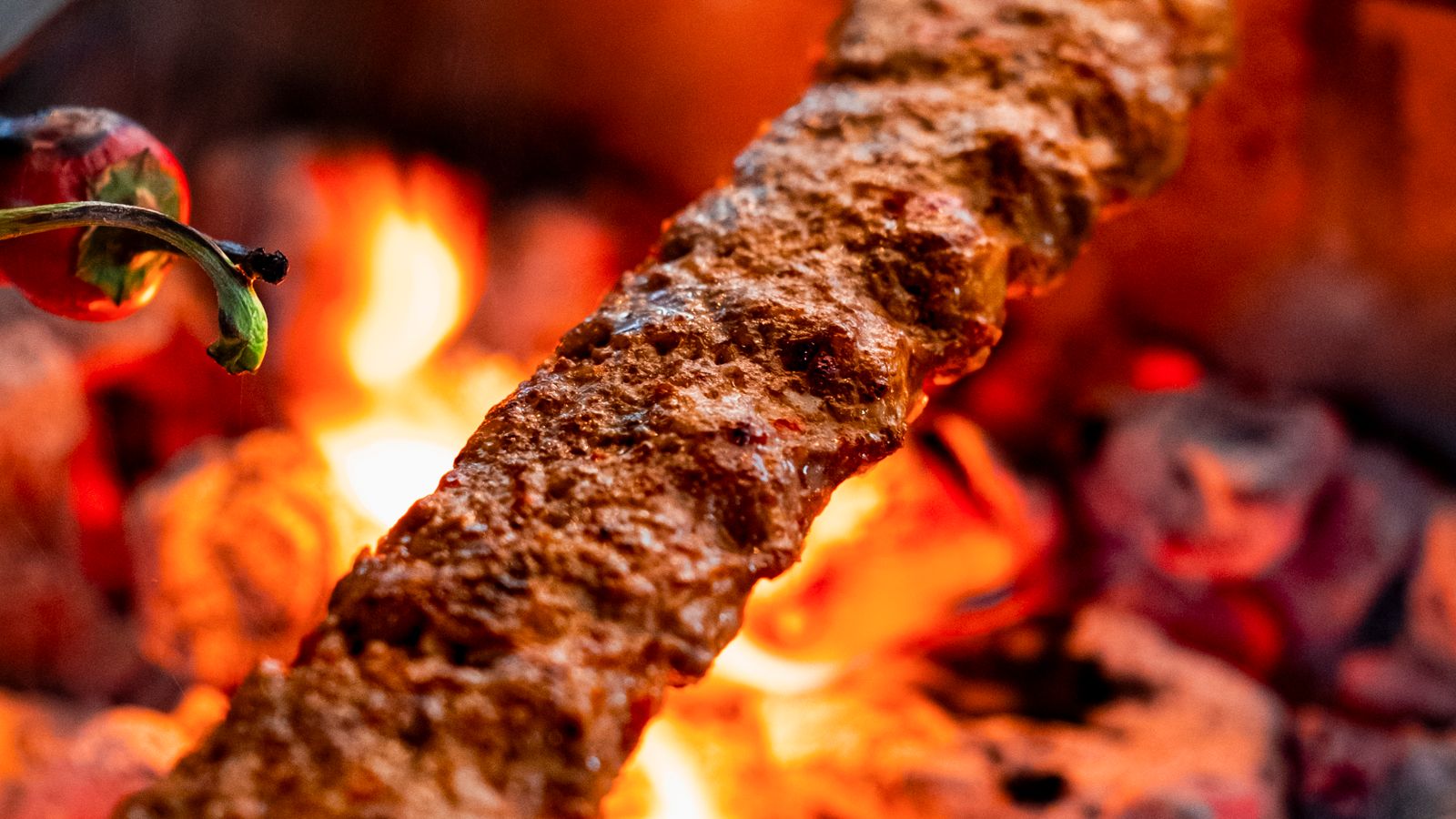
Turkey grills over the mangal, the charcoal brazier, and in dedicated grill houses at the ocakbaşı — literally “at the fireside,” where you sit around the coals and watch the cook work. The Turkish kebab is not one thing but a family.
Şiş kebab is cubed marinated meat on the skewer, the form most of the world pictures.
But the true art is in the minced kebabs: the long, gently spiced Adana and the chili-forward Urfa, each a rope of hand-minced, hand-seasoned lamb pressed onto a wide flat metal skewer whose shape helps the meat grip and cook evenly over the fire.
Those flat skewers are a tell — they conduct heat into the center of the meat and keep dense minced kebabs from spinning loose.
And of course there's the döner, the vertical spit of stacked, seasoned meat turning beside a wall of heat, shaved as it crisps — the original from which the gyros, the shawarma and al pastor all descend.
Charcoal, flat steel, and a whole lot of fragrant smoke: that's the Turkish grill in three notes.
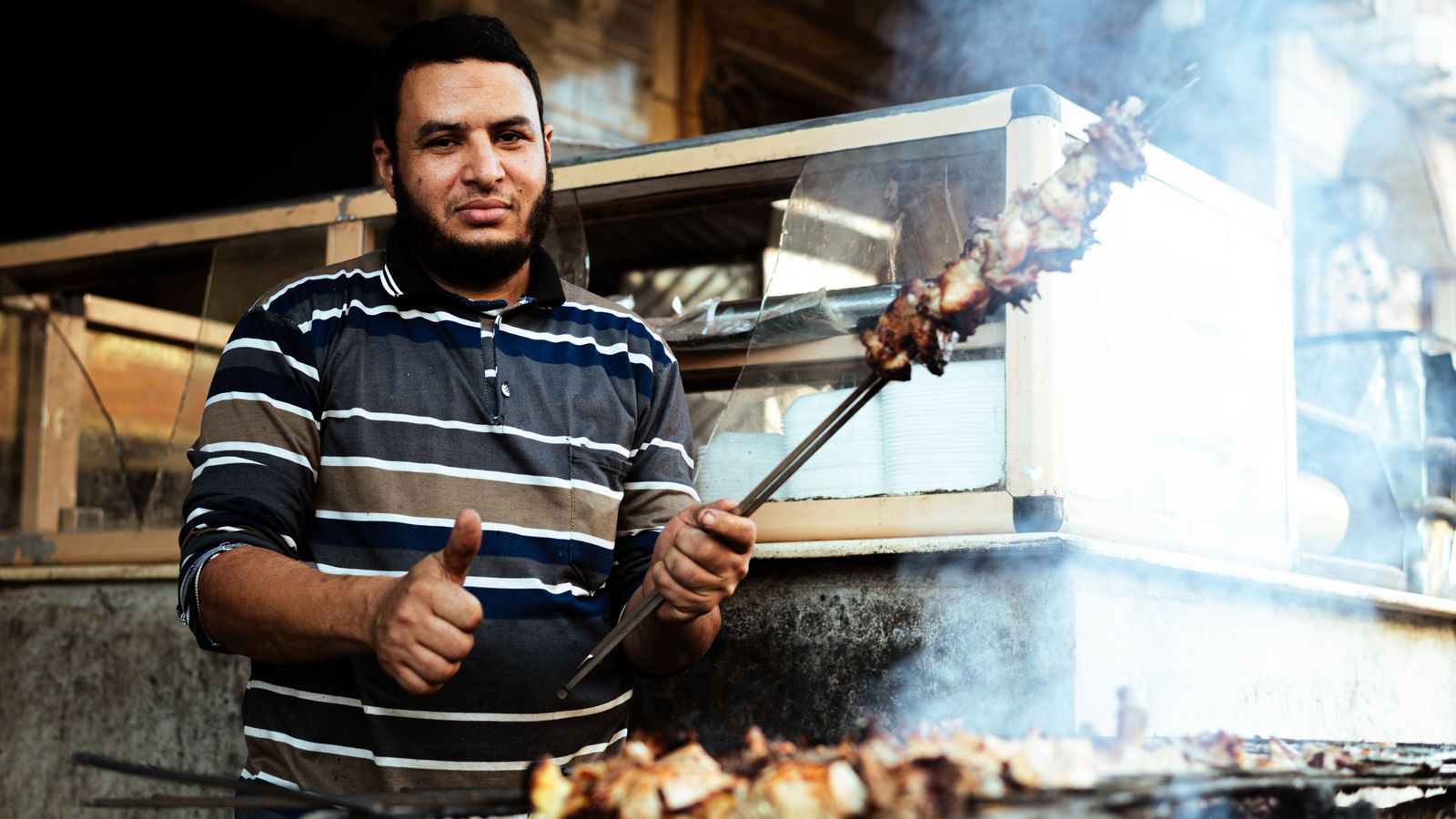
Through the Levant — Lebanon, Syria, Jordan, Palestine — the grill comes as mashawi, the mixed grill, a generous spread rather than a single skewer.
You'll get shish taouk (chicken marinated in garlic, lemon and yogurt until it's impossibly tender), kafta (minced lamb or beef mixed with parsley, onion and spice, molded onto skewers), and cubes of lamb, all cooked over charcoal and torn into warm flatbread with garlic sauce and grilled tomato.
Cross into Iran and the kabab reaches a kind of refinement.
Jujeh kabab is chicken bathed in saffron and yogurt until it glows golden; kabab koobideh is minced lamb or beef, seasoned with onion, pressed by hand onto wide flat skewers and grilled over glowing charcoal — often with the cook fanning the coals to keep the heat fierce and even.
It's served with chelow (buttered saffron rice), a whole grilled tomato, and a pat of butter melting into the rice. Saffron and smoke together is one of the great flavor pairings, and the Persian grill is where you go to understand it.
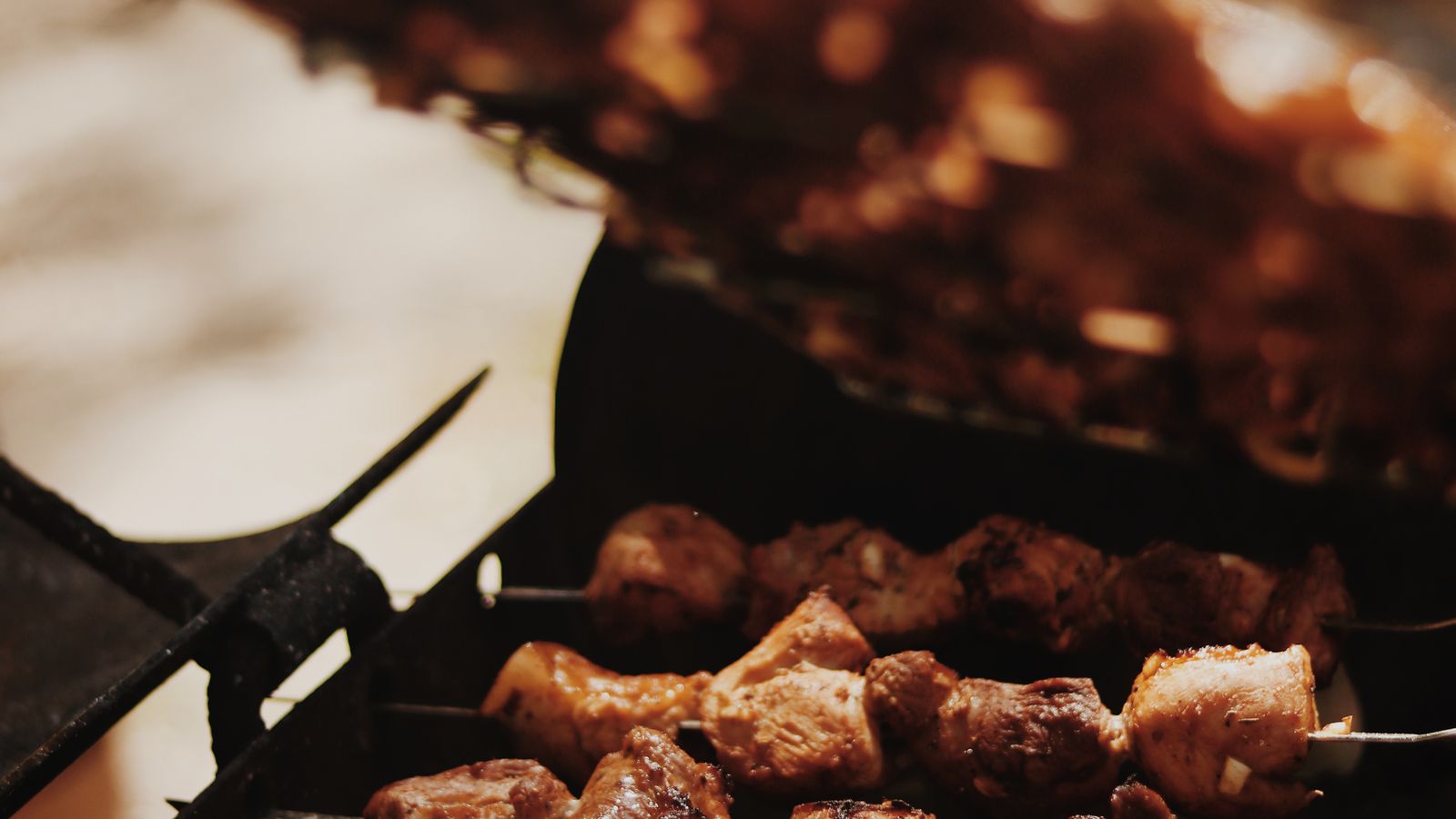
Keep heading east and north — through the Caucasus mountains and out across the steppe — and the skewer picks up a Russian-inflected name: shashlik.
This is the barbecue of a vast region, from Georgia and Armenia across the whole former Soviet world, and it's the default way to celebrate a spring weekend at the dacha.
Cubes of marinated mutton or lamb are threaded onto skewers, and crucially, cooks alternate the lean meat with chunks of tail fat from fat-tailed sheep, which renders down and bastes everything around it as it cooks over the coals of a mangal.
The marinade varies by household and argument — onion, vinegar or wine, sometimes pomegranate, plenty of black pepper — and the meat usually sits in it overnight.
It's worth noting the linguistic thread running through this whole region: the word shish, as in shish kebab, simply means “skewer.” From Istanbul to Tashkent, half the dishes on this leg of the journey are, at heart, just “meat on a stick, done properly.” The genius is in the details.
East and Southeast Asia turned grilling into something intimate and precise — meat cooked at the table, chicken grilled nose-to-tail over impossibly clean charcoal, skewers over troughs of coals, and a clay oven that hits temperatures a backyard pit can only dream of. This is the most technical leg of the trip.
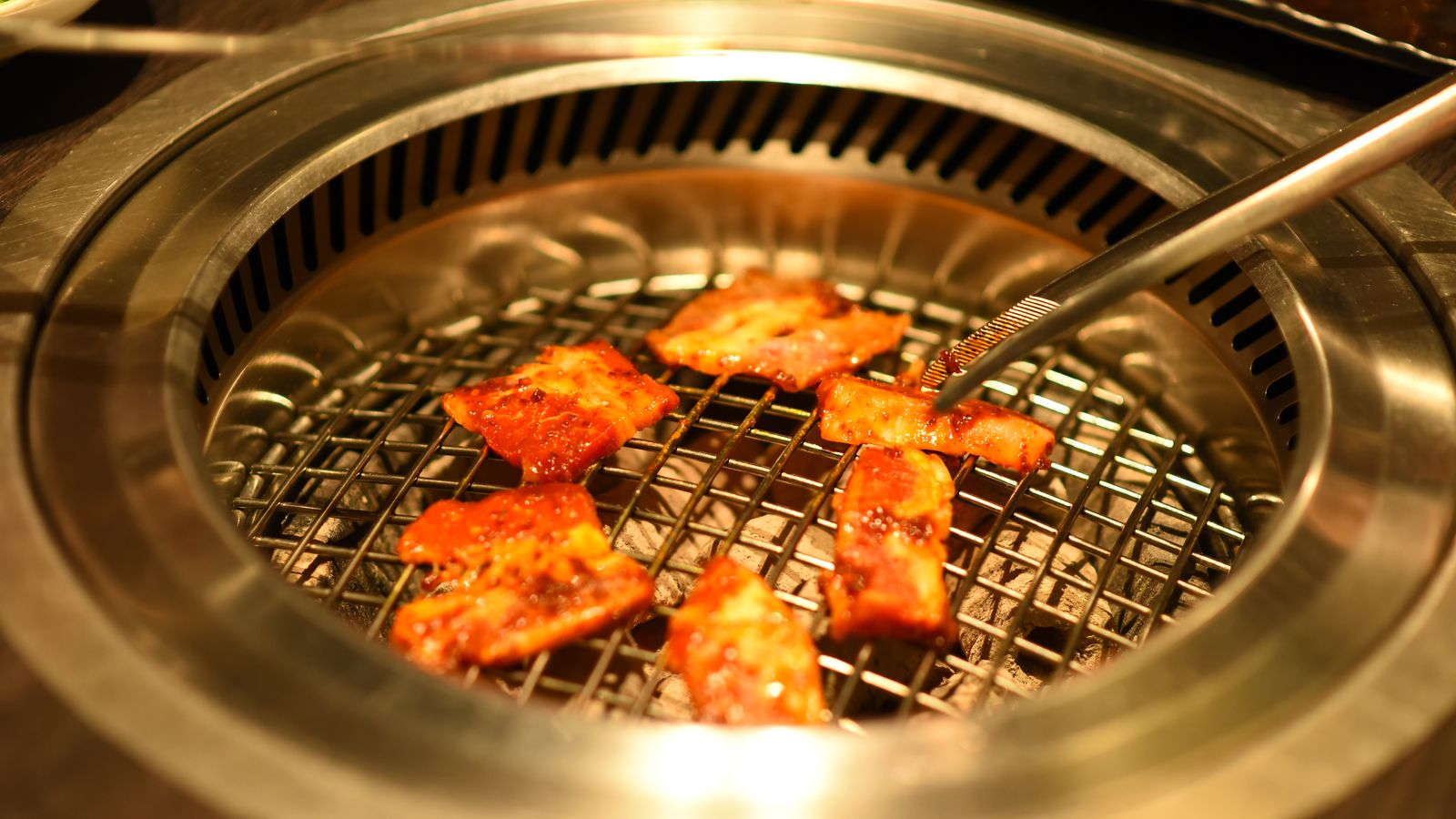
Korean barbecue — gogi-gui, “meat grilling” — moves the fire to the middle of the table and hands you the tongs. A charcoal brazier or gas grill is set right into the table, and you cook your own, which turns dinner into a participatory, hours-long affair.
The greatest hits: bulgogi, thin slices of beef marinated in a sweet-savory mix of soy, sugar, sesame, garlic and pear; galbi, short ribs cut and marinated the same rich way; and samgyeopsal, thick slices of pork belly grilled plain, no marinade, until the fat crisps. But the meat is only half of it.
The real ritual is the ssam — the wrap. You take a leaf of lettuce or perilla, lay in a piece of hot grilled meat, add a dab of ssamjang (a funky, savory soybean-and-chili paste), maybe a slice of raw garlic or a bit of grilled kimchi, and eat it in one bite.
All of it is anchored by banchan, the constellation of little side dishes that never stops being refilled. It's the most communal, hands-on grilling on this whole tour, and it travels beautifully to a home setup — I show you how in the Korean BBQ at home guide.
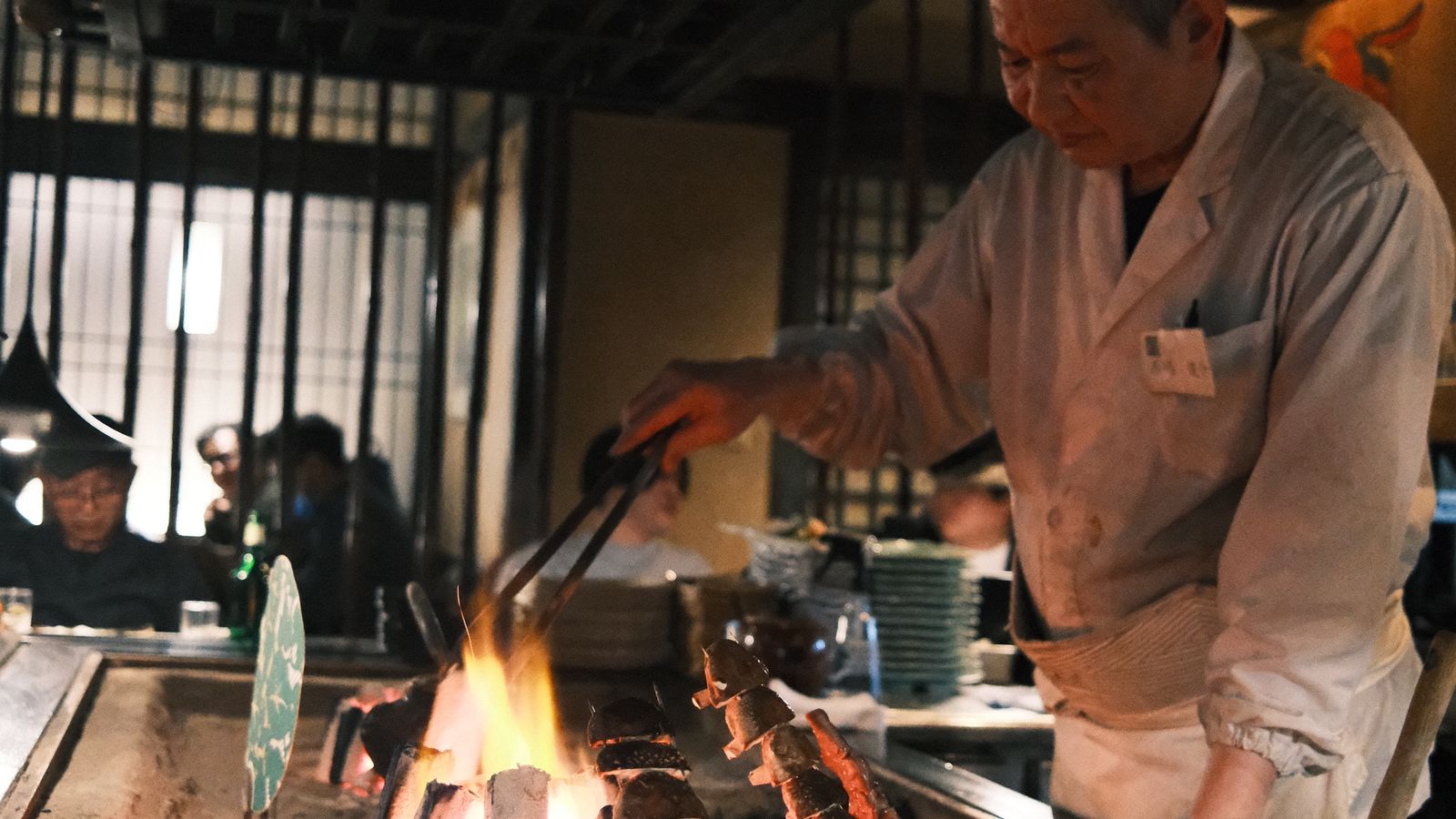
Japan approaches the grill the way it approaches most things: with precision and reverence for the material. Yakitori — grilled chicken skewers — is a masterclass in respect for the whole bird.
A serious yakitori cook uses every part, nose to tail: thigh, breast, skin, liver, heart, gizzard, the little oyster of meat, the tail, even the soft cartilage, each cut its own skewer cooked its own precise way.
The fuel is the point: binchōtan, a hard white oak charcoal that burns intensely hot, long, and almost smokeless, radiating a clean heat that sears without acridity.
The skewers are finished one of two ways — shio (just salt, to let the chicken speak) or glazed in tare, a sweet-savory soy-and-mirin sauce built up over years of dipping.
Beyond yakitori, Japan gives us yakiniku — a Korean-influenced tabletop grill of bite-size beef, hugely popular in its own right — and robatayaki, hearthside grilling where the cook works over a broad open fire and passes food to guests on long wooden paddles.
If you want to understand grilling as a craft measured in millimeters and seconds, start with the Japanese yakitori guide.
CEO TIP: Binchōtan is the lesson here even if you never buy any: cleaner fuel makes cleaner food. Let your charcoal burn until it's ashed-over and glowing before the meat goes on. That gray coat means the volatile smoke has cooked off and you're getting pure radiant heat — the flavor of the meat, not the fuel. Rushing this step is the number-one home-grill mistake.
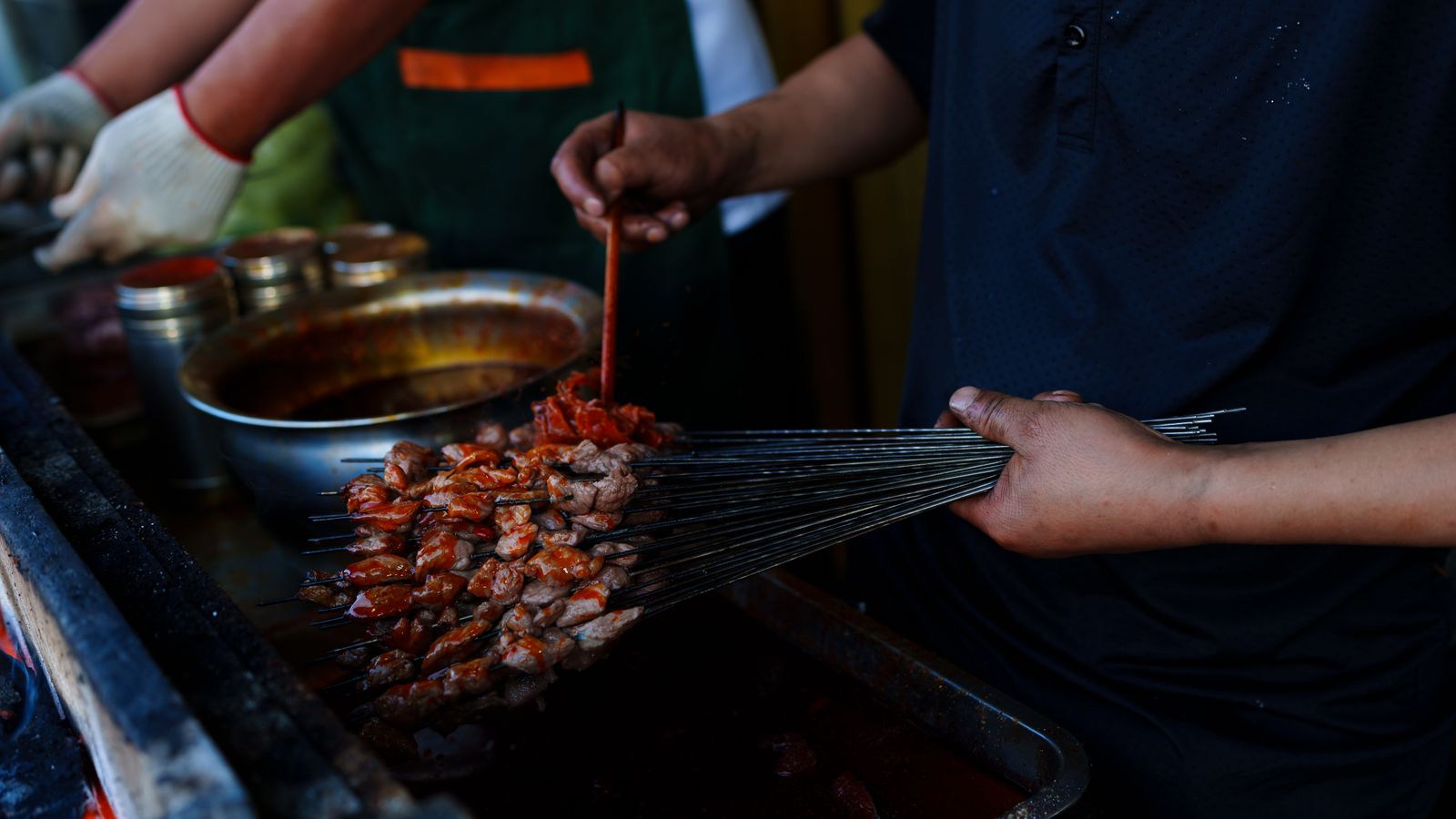
China's great contribution to open-flame street grilling comes from its far northwest. Yáng ròu chuàn — lamb skewers, the -r a Beijing-ish diminutive that gives you chuàn'r — is Uyghur food out of Xinjiang, and it has conquered the whole country.
Small cubes of lamb, alternated with pieces of fat, are threaded onto thin skewers and grilled over a long, narrow charcoal trough — a clever design that lets a vendor cook dozens of skewers side by side, rolling them across the coals.
The seasoning is unmistakable and unforgettable: heavy on ground cumin and dried chili flakes, dusted on as the fat drips and flares.
On a summer night in almost any Chinese city, you'll find these grills smoking on the sidewalk beside cold beer, and the smell of cumin and lamb fat is the smell of the season.
One note for clarity, because it trips people up: this open-grilled chuàn'r is a different thing from Cantonese char siu — that gorgeous red barbecued pork is roasted in an oven or hung in a pit, not grilled over open coals. Both are wonderful; only one belongs on this particular tour.
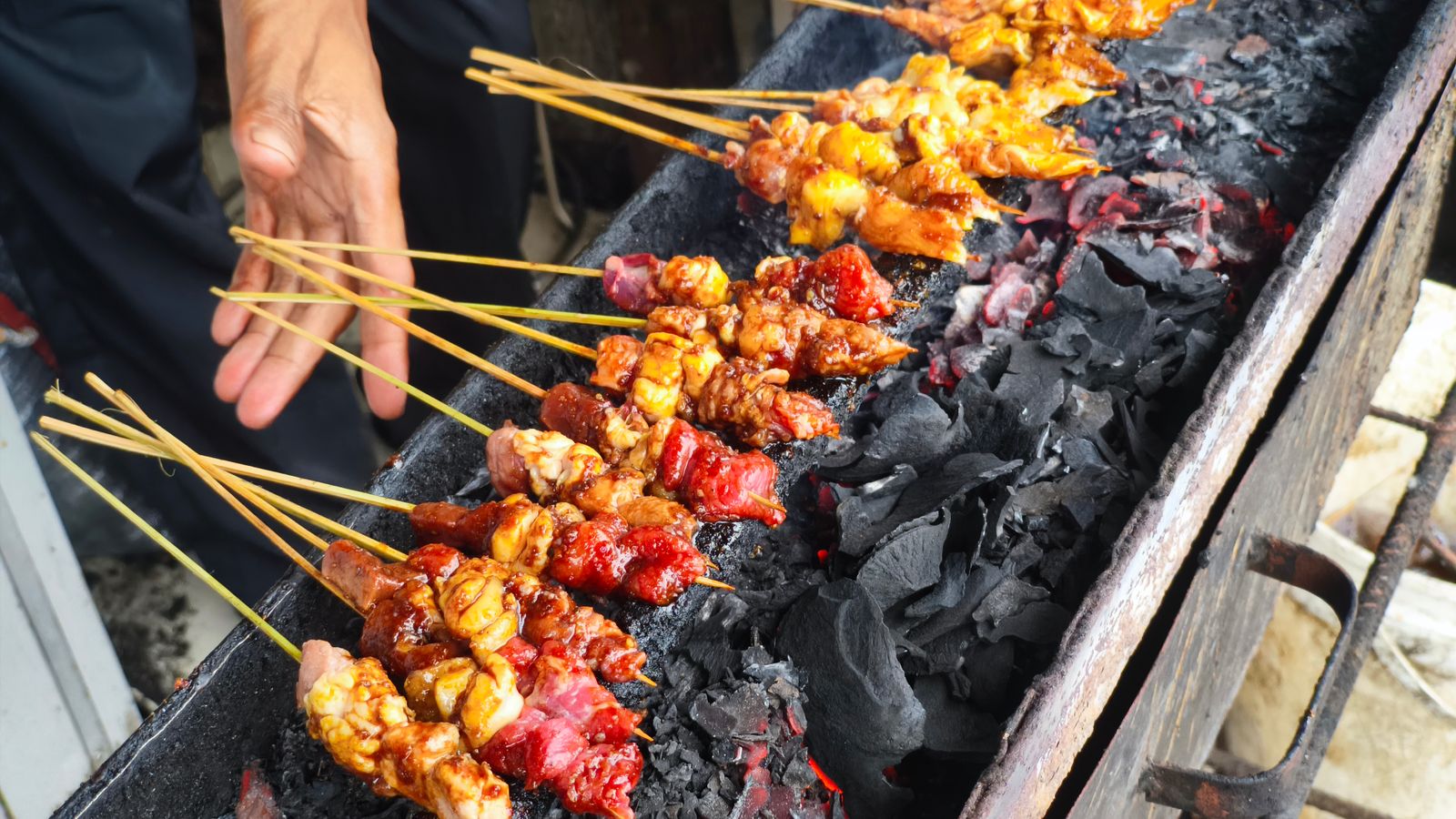
Southeast Asia runs the full spectrum from tiny skewer to whole pig.
The regional ambassador is satay (sate) — found with local variation across Indonesia, Malaysia, Thailand and beyond — bite-size pieces of marinated chicken, beef or goat threaded onto slim bamboo skewers and grilled fast over coconut-husk charcoal, which burns hot and lends its own faint sweetness to the smoke.
The marinades lean on turmeric, lemongrass, galangal and shallot, and the whole thing is served with a rich, spicy peanut sauce and often a compressed rice cake to soak it up. Then, at the other end of the scale, the Philippines brings the grand gesture.
Filipino inihaw covers everything grilled — from pork skewers to whole fish — but the showpiece is lechon: a whole pig, seasoned in the cavity with lemongrass and aromatics, skewered on a bamboo pole and turned by hand for hours over a bed of coals until the skin blisters into the most spectacular crackling on earth.
From a single mouthful on a stick to an entire animal on a spit, it's the same fire, scaled to the occasion.
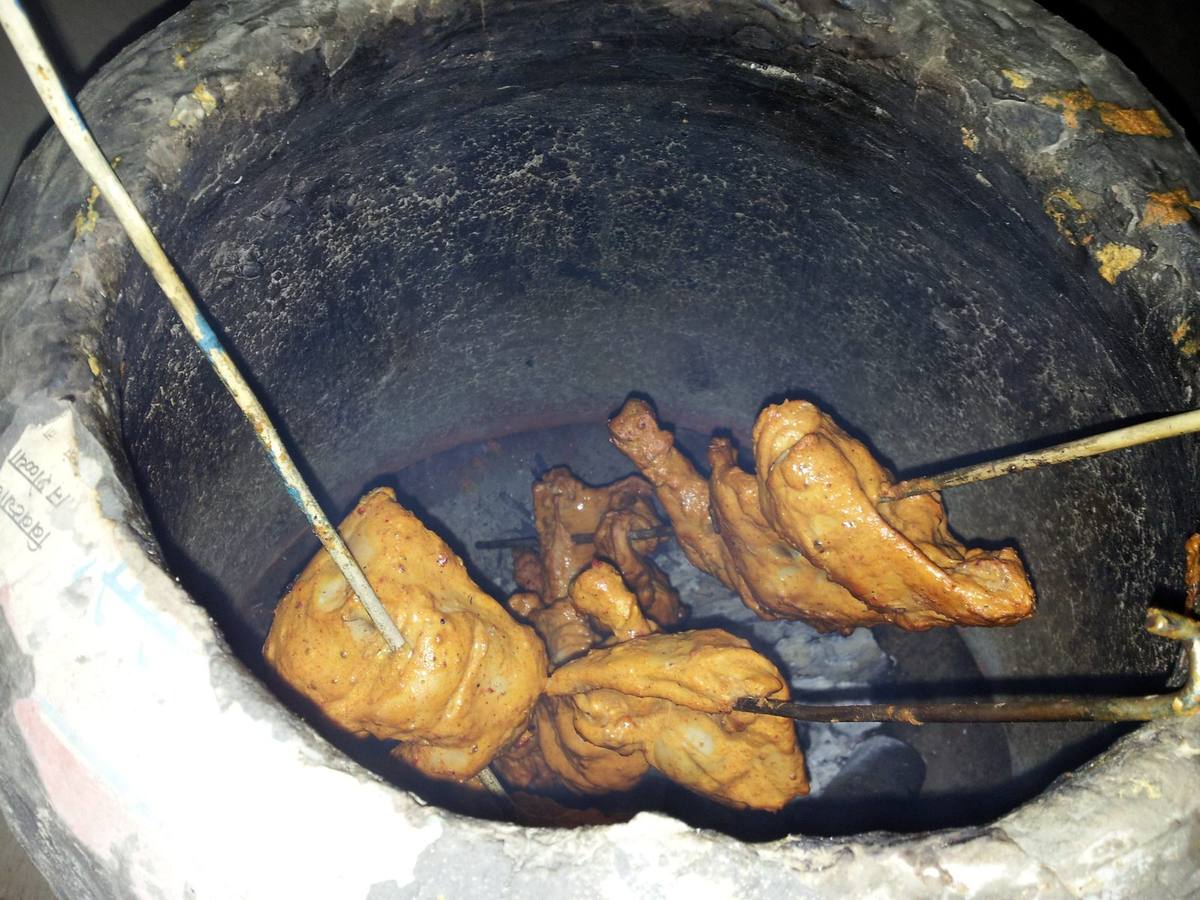
India's great fire vessel is the tandoor, and it's a marvel of low-tech engineering.
It's a barrel-shaped oven of thick clay, fired with charcoal at its base until the walls glow and the interior climbs past 480°C (900°F) — far hotter than any home grill, radiating fierce heat from every clay surface at once.
Into this inferno the cook lowers long metal skewers of yogurt-and-spice-marinated tandoori chicken and tikka, and seekh kebabs of spiced minced meat, where they cook in minutes — charred and smoky outside, astonishingly juicy within, protected by that yogurt marinade.
And the same oven bakes the bread: rounds of naan are slapped directly onto the hot clay wall, where they blister and puff and then get peeled off. It's grill, smoker and bakery in one clay drum.
The technique carries deep Punjabi and Mughlai roots and traveled with those cuisines around the world, but nothing quite matches meat pulled straight from a roaring tandoor.
It's a reminder that intense, dry, radiant heat is its own distinct branch of live-fire cooking — as different from Texas low-and-slow as a sprint is from a marathon.
We've been to the Pacific already for the buried fires of the imu, but the region has another, entirely different fire culture — one that's less about ancient ritual and more about a folding chair, a cold drink, and a summer afternoon. We finish the tour where the workday ends: the backyard.
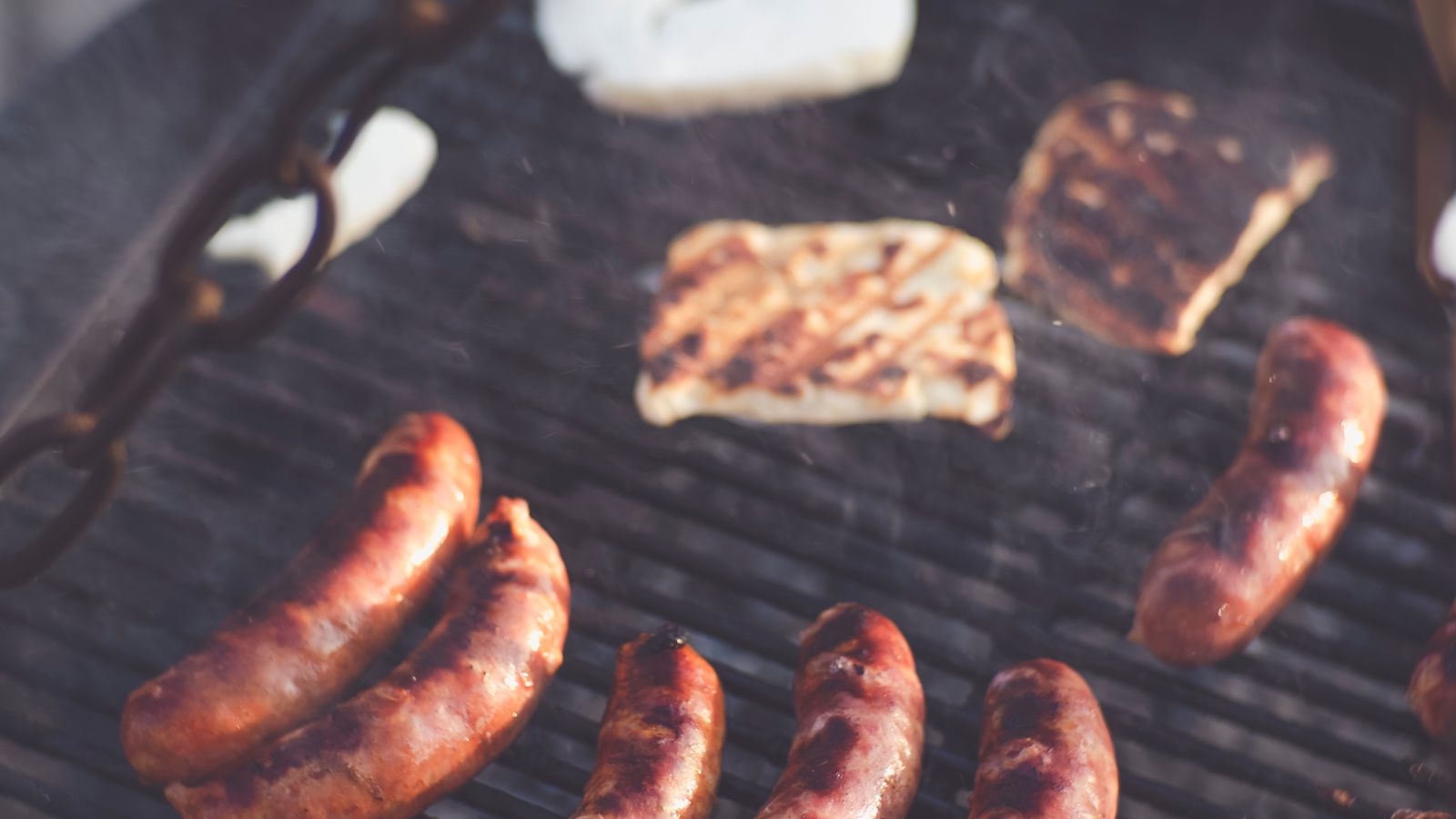
The Australian barbie is the most relaxed stop on this whole journey, and that's exactly the point.
This isn't a discipline handed down over centuries or a feast that takes a day to build — it's a flat-plate-and-grill culture centered on the backyard, the park and the beach, and it's fundamentally about getting people together on a warm afternoon.
The classic spread is unpretentious and beloved: snags (sausages, often tucked into a folded slice of white bread with fried onions and a squirt of sauce), steak, lamb chops, and — around the coasts — fat prawns thrown straight on the heat.
Much of it happens on a flat steel griddle plate rather than open bars, which suits the mix of snags and seafood.
And since someone always asks: the “throw a shrimp on the barbie” line was a 1980s tourism advertisement aimed at Americans, not a phrase Australians actually use — they say prawns, and they'll gently correct you.
But the spirit behind the ad was true enough: nowhere treats the barbecue as a more natural, casual, everyday act of togetherness. It's the same primal fire as everywhere else on this list, just with the volume turned down and the good humor turned up.
A whole planet of fire, boiled down to its four essentials. Read across any row and you can taste the difference.
| Region | Signature | Fuel / Setup | Seasoning |
|---|---|---|---|
| United States (South) | Brisket, ribs, whole hog | Hardwood smoke, low & slow in a pit/smoker | Salt-pepper rubs; regional sauces |
| Argentina | Asado (short ribs, flank) | Wood embers under an iron parrilla; the cross | Coarse salt; chimichurri after |
| Brazil | Churrasco (picanha, costela) | Metal swords over wood/charcoal; rodízio service | Coarse rock salt |
| Mexico | Barbacoa; al pastor | Agave-wrapped underground pit; vertical trompo | Chili-achiote marinade; agave steam |
| Peru | Anticuchos (beef heart) | Charcoal, street-cart skewers | Ají panca, garlic, cumin, vinegar |
| Jamaica | Jerk chicken & pork | Green pimento wood, low smoke under zinc/drum | Scotch bonnet, allspice, thyme, scallion |
| Hawaii & Polynesia | Kalua pig; hāngī, umu | Underground imu with hot volcanic stones & leaves | Sea salt; smoke & steam |
| Portugal / Madeira | Espetada; sardines; piri-piri | Wood embers; bay-laurel skewers | Garlic, salt; piri-piri chili |
| Greece & Balkans | Souvlaki; ćevapi | Charcoal grill; vertical spit for gyros | Lemon, oregano; simple mince seasoning |
| South Africa | Braai (boerewors, sosaties) | Wood/charcoal fire on a grid; shisa nyama | Coriander wors spice; Cape-Malay curry |
| West Africa | Suya (tsire) | Charcoal/wood, thin skewers | Yaji — roasted peanut, chili, ginger |
| Turkey | Şiş, Adana, Urfa, döner | Mangal brazier / ocakbaşı; flat metal skewers | Chili, cumin, pepper on minced lamb |
| Levant & Persia | Mashawi; jujeh & koobideh kabab | Charcoal, flat skewers, fanned coals | Garlic-lemon-yogurt; saffron |
| Central Asia / Caucasus | Shashlik | Mangal over coals; skewers with tail fat | Onion, vinegar/wine, black pepper |
| Korea | Gogi-gui (bulgogi, galbi, pork belly) | Tabletop charcoal/gas grill, cook-your-own | Soy-sesame-garlic-pear marinade; ssamjang |
| Japan | Yakitori, yakiniku, robata | Binchōtan white charcoal, intense clean heat | Shio (salt) or tare glaze |
| China (Xinjiang) | Chuàn'r (lamb skewers) | Charcoal over a long narrow trough | Ground cumin & dried chili |
| Southeast Asia | Satay; lechon; inihaw | Coconut-husk charcoal; whole-pig spit | Turmeric-lemongrass; peanut sauce |
| India | Tandoori chicken, tikka, seekh | Clay tandoor fired with charcoal to 480°C+ | Yogurt & spice marinade |
| Australia | The barbie (snags, steak, prawns) | Backyard flat-plate & grill | Casual — salt, pepper, sauces |
Here's what strikes me after a tour like this: strip away the names and the borders, and it's astonishing how little separates a Texas pit from a Hawaiian imu, an Argentine parrilla from a Xinjiang charcoal trough. It's always the same four things.
Fire, time, smoke and meat. A pitmaster in Lockhart and an asador in Buenos Aires and a mai suya in Kano would understand each other perfectly without a word of shared language, because they're all doing the same ancient job — coaxing something delicious out of an animal using nothing more than heat and patience and attention.
The disagreements are all in the accent: which wood, which cut, how much salt, whose turn to hold the tongs.
And that includes you. When you light your own grill this weekend — whatever it is, a kettle, an offset smoker, a hardware-store kettle full of lump charcoal — you're not doing something new.
You're the latest link in a chain that runs back past the Taino framework that gave us the word, past the first Polynesian earth oven, all the way to whoever it was that first held a piece of meat over a fire and decided to wait. That's not a small thing to be part of.
So learn the techniques these cultures spent centuries perfecting — the patience of low-and-slow, the clean coals of binchōtan, the dry-spice crust of suya, the two-zone control that makes all of it possible — and bring them home.
If this tour gave you an itch to try something, follow it. Start with the fundamentals in the two-zone fire setup guide and the low-and-slow smoking guide, dial in your doneness with the meat temperature and doneness chart, then pick a country and cook it: asado, jerk chicken, Korean BBQ, or yakitori. The whole world is on the menu, and it all fits over a backyard fire.
Grab the free doneness + wood-pairing cheat sheet ->