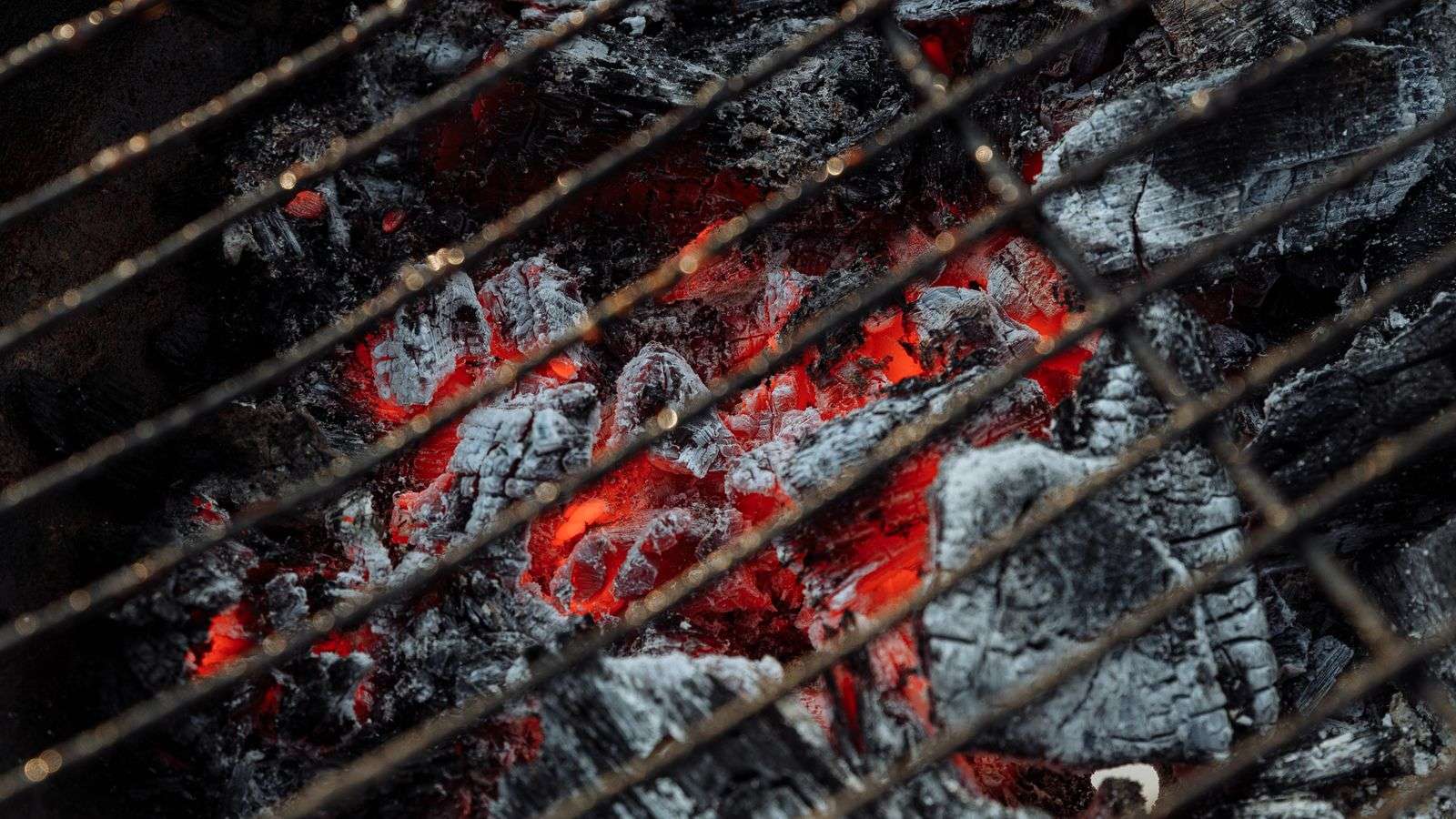
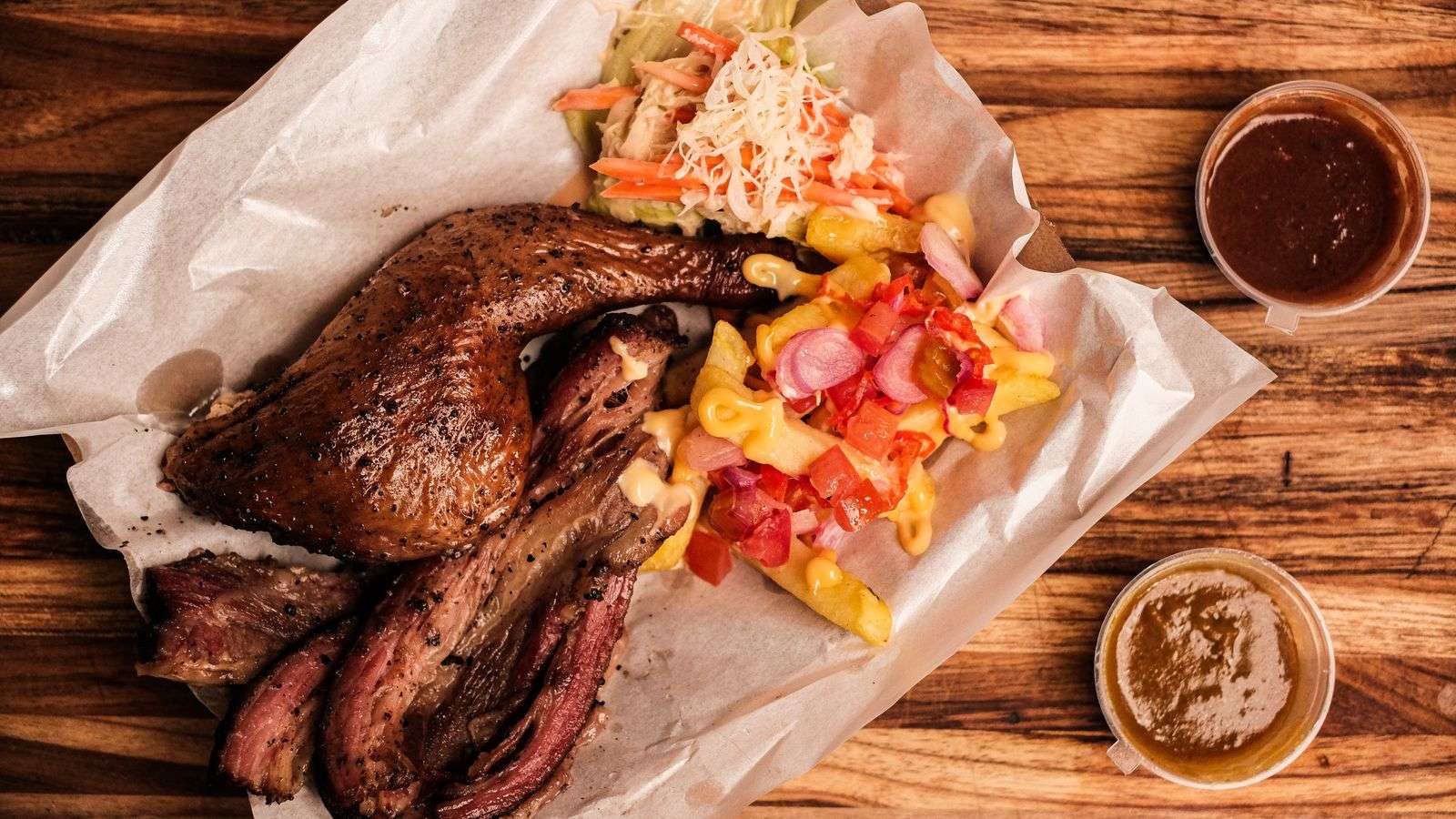
Asado isn't a recipe, it's a method: burn wood or lump down in a side fire, then shovel glowing coals under a parrilla grate set 8–12 inches above them — you never cook over open flame. Sausages and provoleta open the meal while tira de asado renders for 90–150 minutes; vacío joins mid-cook. Season with coarse salt only, serve chimichurri at the table afterward, and read doneness by feel and sight — a good asador checks the fire more often than the meat.
Forget the sauce, forget the rub, forget the thermometer alarm going off in your pocket. Asado is Argentina's answer to the question "what is barbecue for," and the answer is: people. It's a slow fire, a handful of cuts, coarse salt, and two or three hours where nobody's in a hurry. If you've only ever cooked American low-and-slow or thrown burgers on a gas grill, asado will retrain your hands and your patience in the best way.
This is a full walkthrough of how Argentines actually do it in their own backyards — the fire, the grill, the cuts, the seasoning, and the instinct that replaces a probe. Do it right once and you'll understand why asado is a ritual, not a recipe.
What Asado Actually Means
In Argentina, "asado" is both noun and verb — it's the cookout itself and the method of cooking meat over live fire and glowing embers. There's no single dish called asado; there's an event.
Someone is the asador (the fire-tender), and that person's whole job for two to four hours is managing heat, not flipping meat every five minutes.
Compare that to the fast-and-hot culture of a Saturday grill session, or even the communal, high-heat theater of Korean BBQ at home — asado is slower and quieter, closer in spirit to a long smoke than a quick sear, even though the meat isn't smoked at all.
The defining trait is indirect, gentle, radiant heat from wood or charcoal embers, not direct flame contact. That single idea explains almost every technique choice that follows.
Building the Fire: Leña, Lump, and the Coal Shovel
Traditional asado starts with a side fire, built either in a firebox off to the side of the grill or in a simple ring on the ground nearby. The fuel is leña — hardwood logs, commonly quebracho in Argentina, though in a US backyard any dense, dry hardwood (oak, hickory, mesquite) works fine. If you don't want to burn logs down to coal from scratch, natural lump charcoal is the honest substitute and what most home cooks use.
Here's the part that trips up newcomers: you never cook directly over the burning fire. You burn the wood or lump separately until it collapses into glowing, ash-covered coals, then shovel those coals underneath the grate in small, controlled batches. A basic asado setup uses a small metal shovel or coal rake for exactly this job — it's arguably the single most important tool at the fire, more than any grate or thermometer.
Plan on 45 minutes to an hour of pure fire-building before any meat touches the grate. Burn more wood than you think you need; a proper asado fire produces a steady stream of coals for two-plus hours of cooking, and you'll be topping up the coal bed throughout, not just once.
This is the same underlying logic as building a two-zone fire for indirect heat — you're separating flame from food — except asado takes it a step further by physically relocating the coals rather than banking them to one side.
CEO TIP: Keep the side fire burning continuously through the whole cook. An asado that runs two and a half hours needs a fresh batch of coals shoveled in roughly every 20-30 minutes — you're never coasting on one load.
The Parrilla: Cooking on Radiant Heat, Not Flame
The grill itself is called a parrilla — typically a flat or slightly angled iron grate set at a fixed height, sometimes with a crank to raise and lower it over the coal bed.
Height matters more than most people assume: for the low, slow render Argentines want, the grate usually sits 8 to 12 inches above the coals, noticeably higher than the 4-6 inches you'd use for a quick direct sear on a kettle.
That extra distance is what turns the cook from "grilling" into "asado" — it's gentle radiant heat and rising warm air doing the work, not licking flame.
Think of it as the opposite instinct from a hard sear: instead of chasing a crust with high heat, you're letting connective tissue and fat render unhurried, similar in principle to how reverse searing holds meat in a low zone before finishing hot — except in asado there usually is no hot finish.
The heat stays gentle from start to end.
A kettle grill, a Big Green Egg, or a classic offset can all be rigged to approximate a parrilla — raise your grate as high as your setup allows, keep the coal bed shallow and topped up rather than a deep, roaring pile, and resist the urge to close every vent down to a whisper. You want steady low heat, not smoldering, oxygen-starved heat.
Argentine asado is built around a specific short list of cuts, and knowing them is half the job.
Tira de Asado (Short Ribs)
Cut across the bone into flat strips about 1 to 1.5 inches thick — this is the signature cut of asado, visually distinct from the American practice of separating short ribs into individual bones.
The cross-cut exposes multiple bone cross-sections and a good ratio of meat, fat cap, and connective tissue. It cooks low and slow over the coals for a long stretch, often the full length of the asado, because that fat and collagen need time to render into something tender rather than chewy.
Vacío (Flank)
Vacío sits near the flank/skirt region — a long, fairly thin cut with a fat cap on one side. It goes on fat-side down first to let that fat render and baste the meat, then gets flipped. It cooks faster than tira de asado, so it typically goes on later in the sequence, not at the very start.
Chorizo and Morcilla
These are the openers. Chorizo here means a fresh pork sausage (not the cured Spanish/Mexican style), and morcilla is a blood sausage.
Both cook relatively quickly over the coals — 15 to 20 minutes with a few turns — and both traditionally come off the grill and get eaten first, often stuffed into a small roll as "choripán," while the big cuts are still hours from ready.
That's why the sequencing matters: sausages start first because guests need something to eat while the ribs render.
Cut / Item
When it goes on
Approx. cook time
How you know it's done
Provoleta (grilled cheese)
First
8-12 minutes
Edges bubbling and browned, center soft
Chorizo / morcilla
First, alongside provoleta
15-20 minutes
Firm, juices run clear, well-browned skin
Tira de asado (short rib)
Early, runs the longest
90-150 minutes
Fat rendered, meat pulls easily from bone
Vacío (flank)
Middle of the cook
45-70 minutes
Firm-springy, deep brown crust, juices show pink
Chicken (if serving)
Early-middle, skin side to heat first
50-70 minutes
Skin crisp and deep gold, no pink at the bone
Seasoning: Salt Only, Sauce Never Before
Asado seasoning is deliberately austere: coarse salt, applied to the meat before it goes on the grate, and nothing else. No dry rub, no marinade, no oil. The idea is that the fire, the fat, and the meat itself are the flavor — salt just draws it out and helps the crust form.
This is a real departure from the American rub tradition; if you've built your instincts around a layered dry rub, asado will feel almost bare, and that's the point.
Chimichurri — olive oil, vinegar, garlic, parsley, oregano, chili flake — is a condiment for the table, spooned over sliced meat after it's off the fire and resting, or served alongside for dipping. It never goes on during the cook, and it is absolutely never sweet.
If chimichurri tastes sugary or ketchup-adjacent, it's not chimichurri; it's something else wearing the name.
Compare it against the sweeter, tomato-and-molasses sauces common across the American BBQ regions and you'll see how different the flavor philosophy really is — asado lets fat and fire carry the dish, and the sauce only brightens what's already there.
No Thermometer, No Timer: Cooking by Feel and Sight
Here's the part that unsettles cooks trained on precise internal temperatures: a traditional asador rarely uses an instant-read thermometer at all. Doneness is read by touch (how much the meat springs back when pressed), by sight (the color of the exposed fat and the crust, the way juices bead on the surface), and by long experience with how a given cut behaves over a given coal bed. An asador checks the fire more often than the meat.
That said, if you're new to this and want a safety net while you build the instinct, there's nothing wrong with keeping the meat temperature chart in your back pocket for reference — pull beef in the medium-rare to medium range and pork and sausage to a safe internal minimum. Use it to check your feel-based calls against reality for your first few asados, then let the crutch go once your hands know the answer.
CEO TIP: Press the meat with the flat of your tongs, not a fork. A fork punctures the crust and lets juices escape; tongs give you the same doneness read without the damage.
Running the Order of Cook
A well-run asado follows a loose but real sequence. Get your coal bed established first — a full shovel or two of glowing embers, spread evenly under the grate. Provoleta and sausages go on first since they cook fastest and give guests something to eat immediately.
Tira de asado goes on early too, since it needs the longest total time. Vacío follows partway through once the ribs are well underway, since it cooks noticeably faster.
Chicken, if you're serving it, goes on skin-side to the heat early-to-mid cook and gets flipped only once or twice — asado technique in general favors fewer flips, letting each side develop fully before turning.
Throughout, you're topping the coal bed as it dies down, moving pieces around the grate as some cuts finish and others need more time, and resisting the urge to crank the heat to speed anything up. The entire appeal of asado is that it can't be rushed — the fire, the cuts, and the company are all built for the long, unhurried afternoon.
CEO TIP: If your fire is dying and dinner isn't ready, add more coals from the side fire rather than opening every vent — a sudden blast of high heat this late in the cook will scorch a crust that's spent two hours getting right.
Asado is a method and an event — a side fire of wood or lump shoveled under a raised parrilla grate, cooked on gentle radiant heat for two-plus hours.
Keep the coal bed shallow and topped up continuously; never cook directly over open flame.
Know your cuts: tira de asado and vacío for the main event, chorizo and morcilla to open the meal while the big cuts render.
Season with coarse salt only — chimichurri is a table condiment added after cooking, never a sweet sauce and never applied mid-cook.
Judge doneness by feel and sight first; use a thermometer as a check while you're learning, not as the main tool.
About the Author
Grillmaster John learned live fire the long way — kitchens, backyards and smoke pits around the world — and settled on one rule: taste the meat, not the heat. Every guide on this site gets cooked, temped and tasted before it gets published. Got a cook that beat you? Send it through the contact page and we'll sort it out together. — GJ