Buy by raw weight per person — 0.5 lb of ground beef, 2 hot dogs, 0.6 lb of chicken, 1 lb of ribs, 0.5 lb of cooked pulled pork — then add a 10-15% buffer, always rounding up. Smoke one anchor meat the day before and keep only burgers, dogs, and corn live-fire on the day, working backward from serving time on a 48-hour prep timeline. Keep raw meat at or below 40°F until it hits the grill, and pull mayo-based sides after just one hour once it’s over 90°F outside.
Every disaster Fourth of July I've ever pulled off — and I've pulled off a few — traces back to the same mistake: trying to cook everything live, on one grill, in front of thirty hungry people. That's not a cookout, that's a hostage situation.
The trick to a July 4th spread that actually works is treating it like a real production: one thing gets smoked low and slow the day before, a couple of things hit live fire when guests arrive, and the sides are built to sit on a table for four hours without turning into a science experiment.
Get the math and the timeline right, and you spend the holiday drinking a beer instead of sweating over a thermometer.
This is the exact system I use to feed a crowd — how much to buy, what to smoke ahead, how to stage the grill, and where the food-safety line actually is (it's not where most people think).
How Much Food to Buy: The Per-Person Math
Guess-and-check is how you end up with three flats of ribs nobody touches and not enough burger buns. Work from raw weight per person, then build in a buffer, because a Fourth of July crowd eats more than a normal weeknight dinner — people graze all day, and teenagers alone will blow your averages.
Item
Amount Per Person
For 20 Guests
Notes
Burgers
0.5 lb raw ground beef
10 lb (about 40 quarter-pound patties)
Plan on 2 patties per person if it's a burger-forward menu
Hot dogs
2 per person
40 dogs, 40 buns
Buy 10% extra buns — they always run out first
Chicken (bone-in)
0.6 lb raw per person
12 lb
Roughly one thigh + one drumstick per person
Ribs
1 lb raw per person
20 lb
About half a rack of baby backs per person; spare ribs run slightly heavier due to bone
Pulled pork
0.5 lb cooked per person
10 lb cooked (about 20 lb raw bone-in butt)
Pork butt loses roughly 40-50% of its raw weight to fat, bark, and moisture during the cook
Now add your buffer: 10-15% on top of every number above, always rounding up, never down. If your math says 18 lb of pulled pork, buy for 20. That buffer covers second helpings, the one guest who "just wants a taste" of everything, and the inevitable to-go plates people build for the drive home. It's cheap insurance against the single worst outcome of hosting — running out of food at 6 PM with the fireworks still hours away.
One more rule: don't cook every protein on the list for every guest count. Pick two or three anchors (below) and let the rest be optional add-ons. A menu of "everything" is how prep time spirals out of control.
Build the Menu Around One Make-Ahead Anchor
The single biggest lever you have is deciding what gets smoked the day before versus what gets cooked live in front of guests.
Low-and-slow meats — pulled pork, smoked chicken — actually improve with an overnight rest and a next-day reheat, because the connective tissue keeps breaking down and the flavor settles.
Live-fire items — burgers, hot dogs, corn — need to come off the grill hot and go straight to a plate, so those are your day-of cook.
Anchor Option 1: Pulled Pork
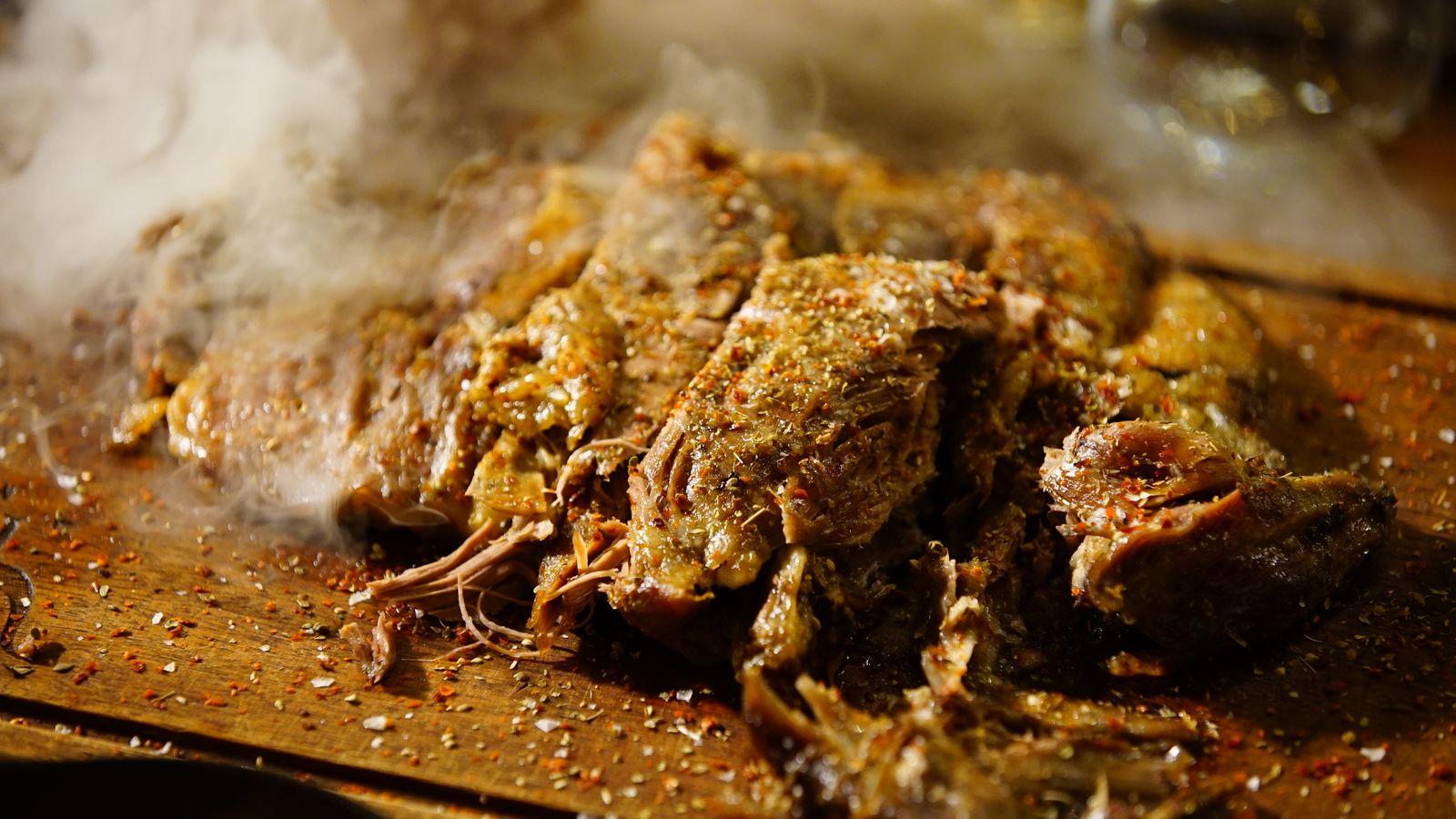
A smoked pulled pork shoulder is the best make-ahead anchor for a crowd because it holds and reheats better than almost anything else in the smoker. Smoke it the day before at 225-250°F until it hits 195-203°F internal and probes like warm butter, then rest, pull or chunk it, and refrigerate. Day-of, it reheats in about 45 minutes covered in foil with a splash of broth or apple juice, either in a 250°F oven or back on the smoker.
Anchor Option 2: Smoked Chicken
If pork isn't your crowd's favorite, a spatchcocked whole chicken or a tray of bone-in thighs works the same way — smoke the day before, reheat gently the day of.
Chicken thighs are safe at 165°F but genuinely better pulled at 175-180°F, where the connective tissue softens and the meat stays juicy even after a reheat.
Check every pull and doneness number against the meat temperature chart rather than trusting a clock — smokers vary too much cook to cook to rely on time alone.
CEO tip: Smoke your anchor meat 30-45 minutes past its minimum safe temp, not right at it. The extra margin means it survives a slow reheat without drying out, and it's your buffer against a smoker that runs a little cool overnight.
Work backward from your serving time. If you're eating at 2 PM on the Fourth, here's how the two days before should break down.
Two Days Before: Shop and Brine
Buy every protein and perishable side ingredient — don't leave meat shopping for the day before a holiday when the good cuts sell out.
Trim your pork butt and apply the dry rub, then wrap and refrigerate uncovered overnight so the rub sets into a bark-friendly surface.
If you're brining chicken, start it now — a basic wet brine needs 4-12 hours to actually change the meat's texture, so starting the morning before your smoke gives it time to work without oversalting.
Make ice. You will always need more ice than you think — plan on a full bag per cooler, refreshed the morning of.
The Day Before: Smoke and Prep
Get the pulled pork or chicken on the smoker early — a full pork butt can run 1-1.5 hours per pound at 225-250°F, so a 10 lb butt is a 12-15 hour cook. Start it the night before so it's done by mid-morning, not fighting your afternoon serving time.
Prep every side that holds: cook beans, make the slaw dressing (but keep it separate from the shredded cabbage until serving so it doesn't go watery), boil and peel eggs for deviled eggs, and bake cornbread — it reheats fine wrapped in foil.
Rest and refrigerate the pulled pork or chicken as soon as it's cool enough to handle safely; don't leave it out to "cool naturally" for hours.
Day-Of: Reheat, Grill, Serve
Pull the anchor meat out and start its reheat 60-90 minutes before serving.
Toss the cabbage with the slaw dressing, finish deviled eggs, and get the sides to room temperature timing so nothing sits out too long before the table opens (more on that below).
Fire up the grill and stage it (next section) about 45 minutes before you want to eat.
Grill burgers, dogs, and corn to order as guests arrive — this is the only part of the day that should feel improvised.
When
Task
Time Needed
2 days before
Shop, trim/rub pork, start chicken brine
2-3 hrs
Day before, evening
Start pulled pork smoke (overnight)
12-15 hrs
Day before, daytime
Cook beans, make dressing, bake cornbread, boil eggs
2-3 hrs
Day of, morning
Pork/chicken finishes, rests, refrigerates
1-2 hrs
Day of, 90 min before serving
Reheat anchor meat
45-60 min
Day of, 45 min before serving
Fire and stage the grill
30-45 min
Day of, serving window
Grill burgers/dogs/corn to order
ongoing
Staging the Grill: Low-and-Slow Off First, Then Direct
If ribs are part of your menu instead of (or alongside) pulled pork, don't try to run them simultaneously with burgers on the same fire. Build a two-zone fire — coals or burners on one side, empty grate on the other — and run the order like this:
Low-and-slow items go on first, and come off first. Ribs at 225-250°F indirect need 4-6 hours depending on style; get them started well before guests arrive and hold them wrapped in foil in a cooler (no ice, just insulation) once they're done — they'll stay hot and safe for an hour or more.
Direct-heat items go on last, cooked to order. Once the low-and-slow meat is off, open the vents, add fresh coals or crank the burners to build a 400-450°F direct zone, and run burgers, dogs, and corn through it in batches as people get hungry.
Keep raw and cooked separated at every stage — different tongs, different platters, never set a cooked burger back on the plate that held raw patties.
This staging matters as much for your sanity as for the food — nobody wants to run a 250°F smoker and a screaming-hot direct zone with the same set of tools and the same attention at the same time.
Food Safety for an All-Day Spread
A backyard cookout runs for hours in the heat, and that's exactly the environment foodborne illness loves. Two rules matter more than any other on the Fourth of July:
Raw Meat Stays Cold
Keep every raw protein at or below 40°F (4°C) until it hits the grill. That means a dedicated cooler packed with ice for burgers, dogs, and anything you're grilling live — not the countertop, not the porch, not "it'll be fine for a couple hours." Once a burger patty sits above 40°F, the clock on bacterial growth starts running, and it doesn't reset when you finally cook it.
Mayo-Based Sides Have a One-Hour Clock in Real Summer Heat
This is the rule most home cooks get wrong. The USDA's standard "two hours" guidance for perishable food at room temperature drops to one hour whenever the ambient temperature is above 90°F (32°C) — which is most backyards on July 4th afternoon. Potato salad, coleslaw made with a mayo dressing, deviled eggs, and creamy dips all fall into this window. Practical fixes:
Set serving bowls in a larger bowl or tray of ice, and swap the ice as it melts.
Put out small batches instead of the whole bowl, refilling from the fridge rather than letting one bowl sit out all day.
When in doubt, check the time it came out of the fridge — if it's been out past an hour in real heat, it goes back, not back on the table.
CEO tip: Write the time each dish comes out of the fridge on a piece of tape stuck to the table. It sounds fussy, but it's the only way to actually track a one-hour window across a five-hour party with people constantly refilling plates.
Finally, reheat any leftovers — pulled pork, chicken, beans — back to 165°F (74°C) before serving them again, and don't let cooked food sit out a second time once it's already had its hour or two in the heat.
Modular Menu Swaps
Not every crowd wants the same anchor meat, and that's fine — the timeline above works no matter what you plug into it. A few solid swaps and additions:
Want a wing station instead of, or alongside, the anchor meat? Smoked chicken wings hold up well on a warming tray and give guests something to graze on while the mains finish.
If ribs are your headline instead of pulled pork, treat them as their own anchor with the same day-before smoke logic, just note they don't reheat quite as forgivingly as pork shoulder — plan to serve them closer to when they finish.
Mix and match freely. The system — one smoked anchor made ahead, direct-fire items cooked live, sides built to hold — doesn't care which specific meats you plug into it.
The CEO's Bottom Line
Buy by raw weight per person — burgers 0.5 lb, dogs 2 each, chicken 0.6 lb, ribs 1 lb, pulled pork 0.5 lb cooked — then add 10-15% buffer, always rounding up.
Smoke one anchor meat (pulled pork or chicken) the day before; only burgers, dogs, and corn should be live-fire on the day itself.
Work backward from serving time on a real 48-hour timeline: shop and brine two days out, smoke overnight, reheat and grill on the day.
Run low-and-slow items on the grill first and pull them before switching to a hot direct zone for live-fire food.
Raw meat stays at or below 40°F until it cooks; mayo-based sides get pulled after just one hour once it's above 90°F outside.
About the Author
Grillmaster John learned live fire the long way — kitchens, backyards and smoke pits around the world — and settled on one rule: taste the meat, not the heat. Every guide on this site gets cooked, temped and tasted before it gets published. Got a cook that beat you? Send it through the contact page and we'll sort it out together. — GJ