The quick version
Running 300–350°F instead of 225–250°F cuts a packer brisket from 12–14 hours to 6–8 and shrinks the stall to 30–45 minutes, because collagen converts on time at temperature, not total cook length — you still pull brisket at 203°F and pork shoulder at 195–205°F either way. The trade is a thinner smoke ring, lighter smoke flavor, and a narrower margin for error. Wrap earlier, at 150–160°F, and rest a full 1–2 hours to bank back what the faster cook costs you.
Every pitmaster gets asked the same question at some point: "Can't you just turn it up?" For years the answer was a flat no — brisket and pork shoulder demanded 225F and patience, full stop. That's still the safer default.
But hot-and-fast at 300-350F is a legitimate, repeatable method, not a shortcut for people who don't know better. Run it right and you'll pull the same tender, juicy meat off the smoker in two-thirds the time. Run it wrong and you'll serve a dry, pale disappointment with no bark to speak of.
This isn't about picking a side. It's about knowing which tool fits which day — and there are real days, real weather, and real deadlines where hot-and-fast is the smarter cook, not the lazier one.
Hot-and-fast means running your pit at 300-350F instead of the traditional 225-250F used in low and slow smoking. On a 12-13 pound packer brisket, that's the difference between an 12-14 hour cook and one that's done in 6-8 hours.
A bone-in pork shoulder that takes 10-12 hours at 225F can be probe-tender in 5-6 hours at 325F.
This isn't a new invention — competition teams have run hot-and-fast for decades because contest schedules don't care how big your brisket is, and pitmasters like Aaron Franklin have talked openly about running briskets north of 300F when the clock demands it.
Pick a lane and stay in it. Bouncing your pit between 250F and 325F mid-cook is worse than committing to either end:
Here's the piece that trips people up: collagen renders based on time at temperature, not total cook time. Brisket flat and pork shoulder are both loaded with tough collagen that needs to convert to gelatin before the meat is tender — that's the whole story behind why tough cuts turn tender.
That conversion kicks off seriously around 160F and really accelerates from 195F up, and it happens whether the meat spent nine hours getting there or five.
What matters is the internal temperature you pull at and how long you let the meat coast there. Brisket is still done at 203F internal and probe-tender in the thickest part of the flat, whether you smoked it at 225F or 325F to get there. Pork shoulder still wants 195-205F before it shreds clean.
Check the meat temperature chart for the full breakdown by cut, but the short version is: the destination temp doesn't move, only the road there gets shorter.
CEO TIP: The rest matters more with hot-and-fast, not less. A brisket that raced to 203F in seven hours hasn't had the same slow, gradual carryover that a 13-hour cook gets for free. Budget a full 1-2 hour rest, wrapped and in a cooler, and don't skip it just because you saved time on the front end — that's the step that finishes the collagen conversion and lets the juices redistribute.
Higher chamber temps mean faster, more aggressive moisture evaporation off the meat's surface, which is exactly what builds bark.
At 325F your rub sets into a firm, dark crust in a fraction of the time it takes at 225F, thanks to the same browning chemistry covered in the Maillard reaction and bark guide.
Some pitmasters actually prefer the bark hot-and-fast produces — it's often thicker and craggier because the surface dries and caramelizes before the fat has fully rendered underneath.
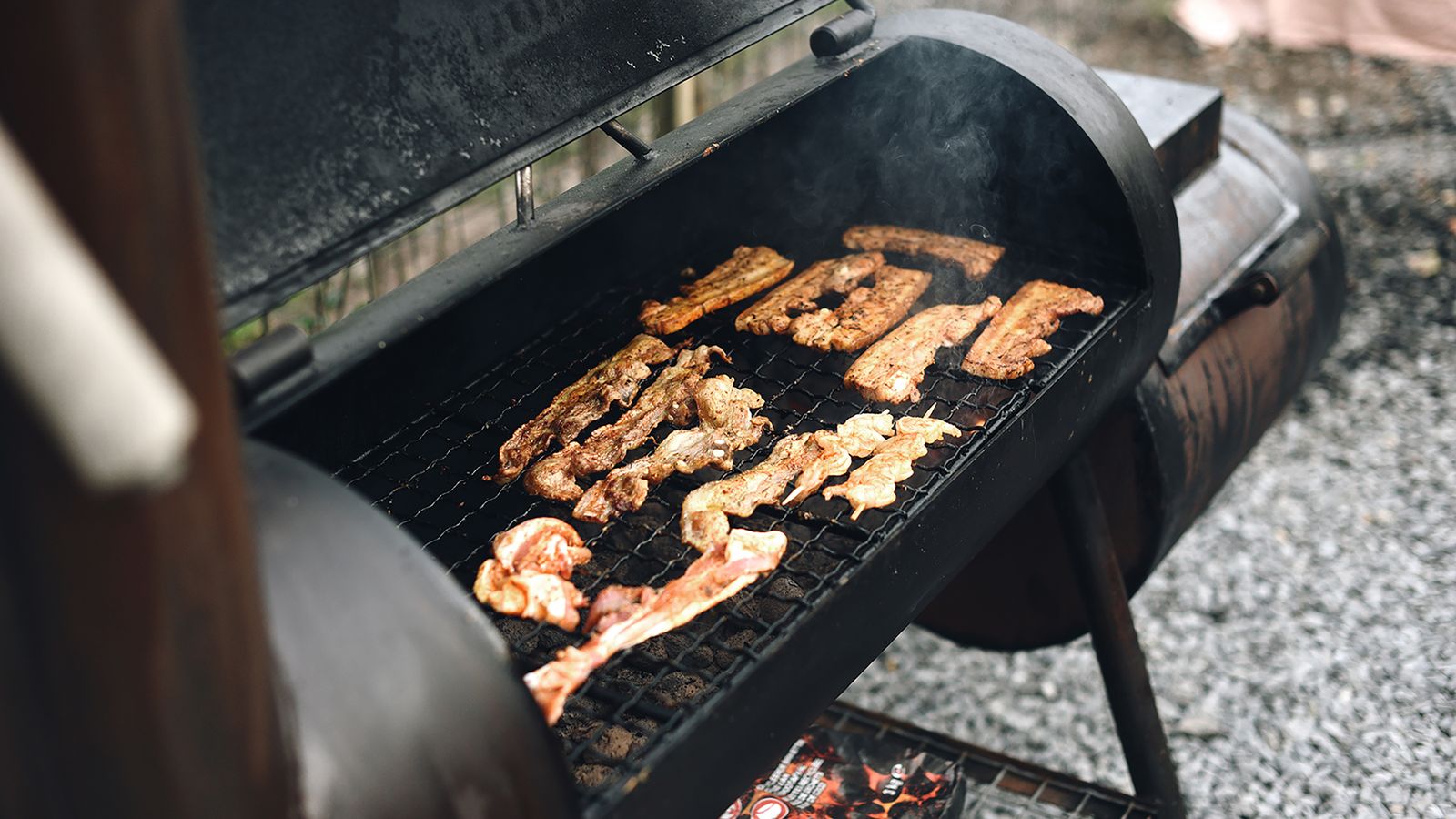
You'll also blow straight through the stall — that maddening plateau around 150-165F where evaporative cooling holds the internal temp flat for hours. At low-and-slow temps the stall can eat two to three hours.
At 325-350F, the higher ambient heat overpowers the evaporative cooling effect much faster, so the stall shortens to 30-45 minutes or gets skipped almost entirely. That alone accounts for a big chunk of the time you save running hot.
Because bark firms up quicker, you need to wrap earlier than you would low-and-slow — more on that below — or you risk a bark that's set hard before the fat cap has rendered properly underneath, leaving you with a tough crust over an under-rendered layer.
| Factor | Low-and-Slow (225-250F) | Hot-and-Fast (300-350F) |
|---|---|---|
| Brisket cook time (12-13 lb) | 12-14 hours | 6-8 hours |
| Pork shoulder cook time (8-9 lb) | 10-12 hours | 5-6 hours |
| Stall duration | 2-3 hours | 30-45 minutes, or barely noticeable |
| Bark | Deep, builds gradually | Sets fast, often thicker and craggier |
| Smoke ring / smoke flavor | Deeper ring, more smoke absorption | Thinner ring, lighter smoke penetration |
| Margin for error | Wide — small temp swings barely matter | Narrow — 15-20F swing changes the cook fast |
| Best for | Overnight cooks, competition depth of flavor, calm weather | Tight timelines, cold/windy days, weeknight cooks |
Hot-and-fast isn't free. You're trading three things for speed, and you should know exactly what they are before you commit a $70 brisket to the method.
CEO TIP: Run two thermometers on a hot-and-fast cook, not one. A leave-in probe in the thickest part of the flat or the shoulder's money muscle, plus a dedicated instant-read for spot checks elsewhere. At these temps you don't have the stall's built-in buffer to catch a probe placement mistake before it costs you the cook.
This is where the method stops being a compromise and starts being the correct choice:
If you're chasing maximum bark depth, the widest possible smoke ring, or you're cooking overnight anyway because that's when your schedule allows it, stick with low and slow. There's no prize for cooking fast if fast isn't what the day calls for.
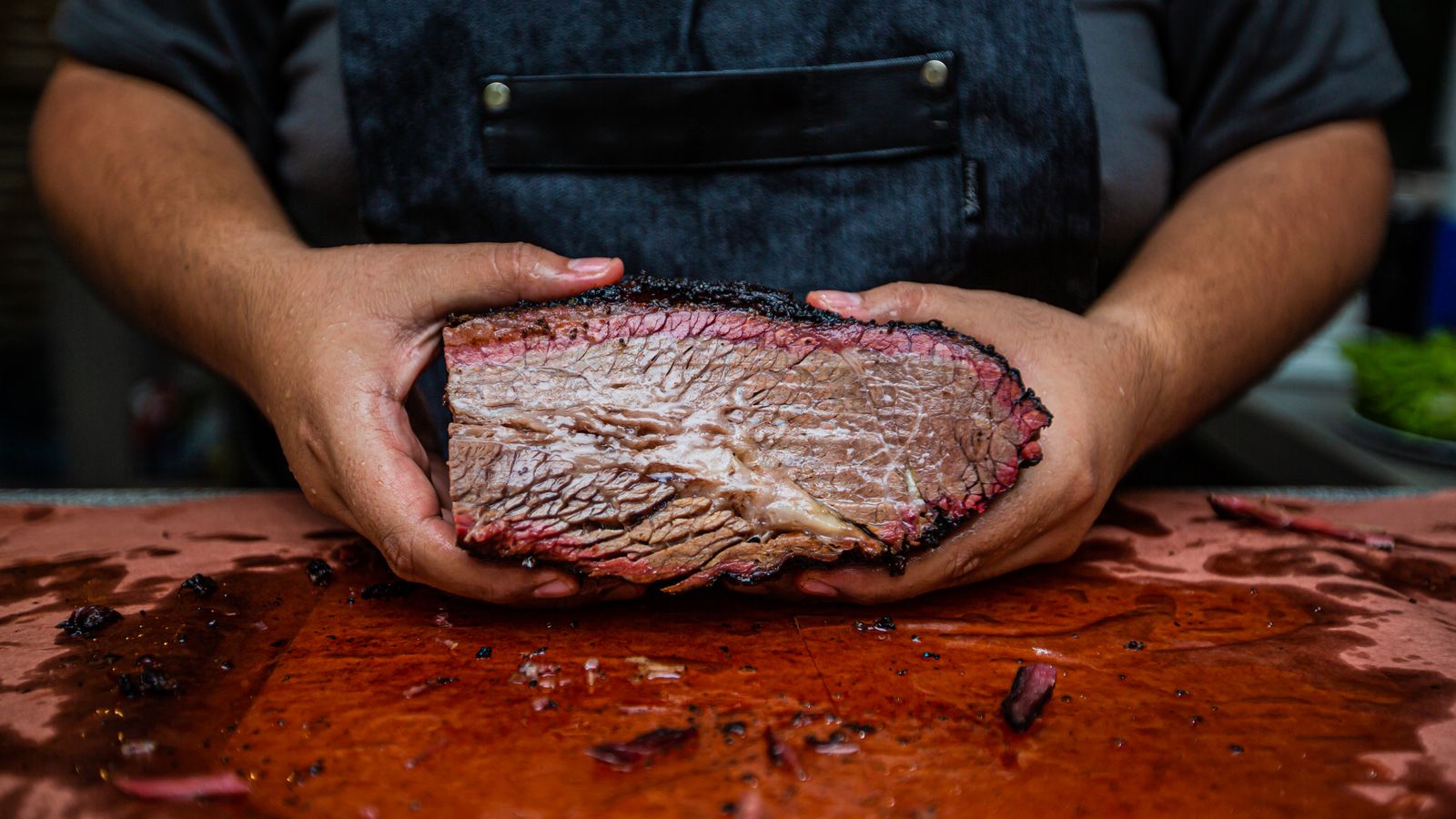
Running hot-and-fast isn't just "same recipe, higher dial." Two things need to change:
At low-and-slow temps you might wrap brisket at 165-170F internal, after a long stall. Hot-and-fast, wrap at 150-160F instead — as soon as the bark has color and firmness, usually 2.5-3 hours in.
Wrapping earlier locks in moisture before the faster evaporation at 325F+ has a chance to dry out the surface, and it still lets the bark set fully underneath the wrap thanks to the ambient heat.
Butcher paper is the better call here over foil — it lets a little moisture escape so the bark doesn't turn soft, while still speeding the cook through the tail end of the stall.
This is the mistake that ruins most hot-and-fast cooks: people save four hours on the smoker, then rest for 20 minutes because they're excited to eat. Don't. Wrap the finished brisket or shoulder in a towel, drop it in a dry cooler, and give it a full 1-2 hours minimum.
The faster cook means less gradual carryover happened on the pit itself, so the rest has to do more of that work — this is exactly where a rushed hot-and-fast cook turns into a dry brisket instead of a fast one.
If you followed the full process end to end, from trim through wrap through rest, revisit the complete packer guide and just swap in the hot-and-fast temps and timing above.
Grab the free doneness + wood-pairing cheat sheet →