The quick version
Tough cuts turn tender because collagen — the connective tissue that working muscles like brisket, chuck, and shoulder are loaded with — hydrolyzes into soft, moisture-holding gelatin. That conversion runs across roughly 160°F to 205°F, and it needs time at temperature, not one magic number: 145°F is food-safe and still chews like a tire. Probe-tender is the real finish line, the stall is the collagen doing its work, and the rest afterward is what lets the gelatin settle back through the meat.
Cook a brisket to 145°F and it'll be safe to eat and tough as a boot sole. Cook that same brisket to 203°F and hold it there through a long stall and it'll pull apart with a fork. Same piece of meat, same "doneness" in the food-safety sense, completely different eating experience.
The difference isn't magic and it isn't luck — it's collagen turning into gelatin, and understanding that one transformation is the single biggest thing separating a backyard cook who fights their meat from a pitmaster who commands it.
This is the chemistry that makes low and slow work at all. Skip it and you're just guessing with a thermometer. Learn it and every stall, every rest, every "why is this cut different" question in barbecue starts making sense.
Not all meat is built the same, and that's the whole ballgame. An animal's muscles fall into two rough camps depending on what job they did in life.
Chuck, brisket, shoulder (pork butt), shank, short ribs — these come from muscles that worked constantly. A steer's chest and shoulder muscles (the brisket) hold the animal's front end up and get used with every step. A pig's shoulder does the same kind of labor. Muscles under that much constant tension and load build up thick networks of connective tissue to keep from tearing themselves apart. That connective tissue is mostly a protein called collagen, and it's tough, fibrous, and completely unpleasant to eat raw or lightly cooked. Bite into an undercooked brisket flat and you're chewing on collagen that hasn't gone anywhere.
Tenderloin, loin, ribeye, most steak cuts — these come from muscles along the back that don't do much heavy lifting. Minimal movement means minimal connective tissue. There's little to no collagen standing between you and a tender bite, which is exactly why these cuts are prized (and priced) the way they are, and why they cook completely differently than a chuck roast.
Everything else in this article flows from that one fact: how much collagen a muscle built determines how you have to cook it.
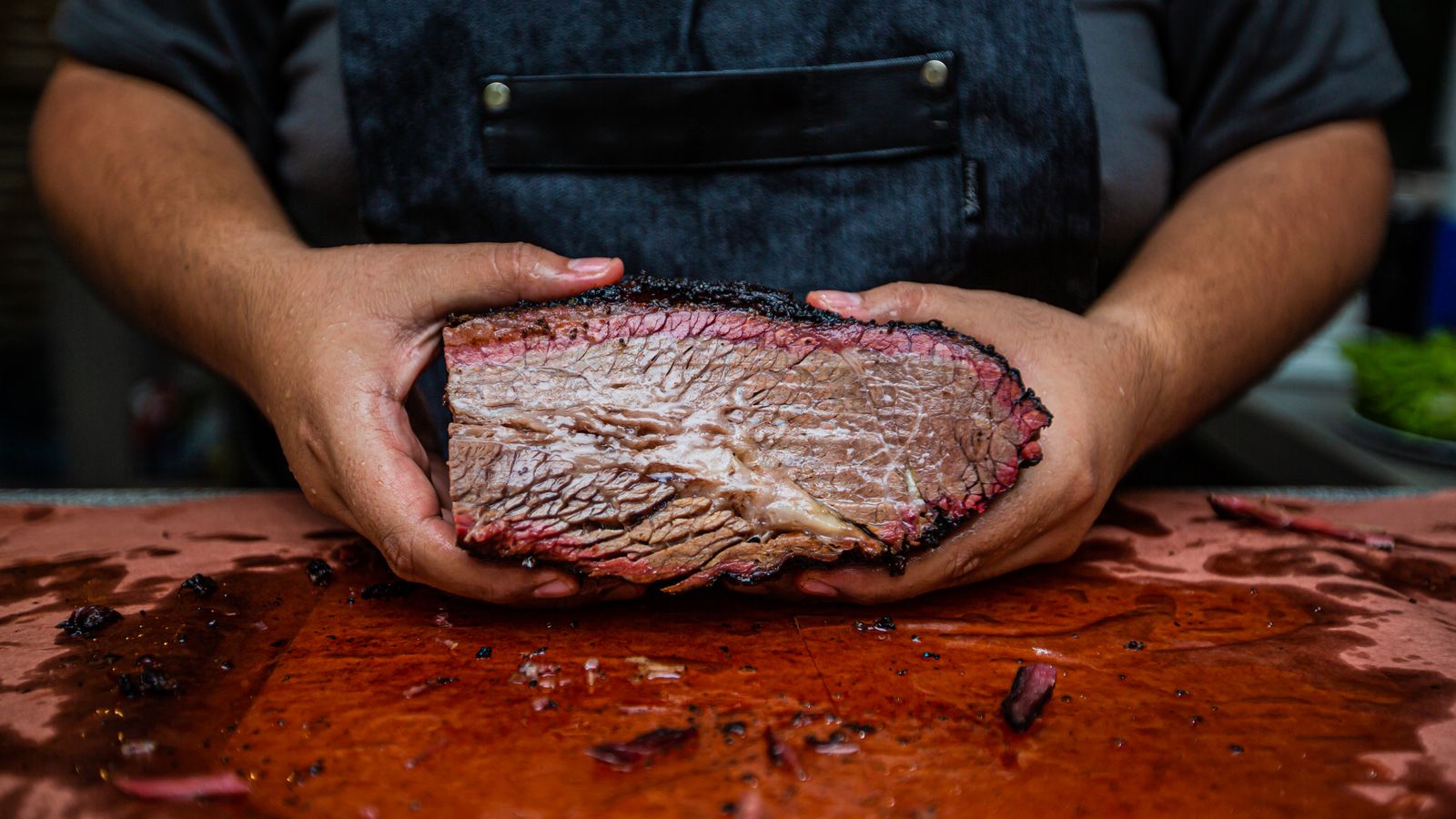
Collagen is a structural protein, wound into tight triple-helix strands that bundle into tough white sheets and silvery streaks running through and around muscle fibers. Raw, it's rubbery and nearly impossible to bite through cleanly. Lightly cooked to 145°F — the standard "medium" doneness range you'd want on a steak — collagen is still basically intact. It hasn't had the conditions it needs to change.
But apply enough heat over enough time, and collagen does something remarkable: it hydrolyzes. Water molecules attack those triple-helix strands and unwind them into gelatin — the same substance in a box of unflavored Knox gelatin, the stuff that thickens stock into aspic when it cools.
Gelatin is soft, silky, and it holds moisture like a sponge. That's the transformation you're chasing every time you smoke a brisket or a pork butt: tough collagen sheets rendering down into soft, juicy gelatin running back through the meat fibers.
Here's where most backyard cooks get tripped up. They want one clean number — "brisket is done at 203°F" — and treat it like a light switch. It isn't. Collagen conversion happens across a wide band, roughly 160°F to 205°F (71–96°C), and where any given piece of meat actually turns tender inside that range depends on time at temperature just as much as the temperature itself.
Think of it like slow-cooking dried beans. You could technically get beans "hot enough" in twenty minutes, but they'd still be hard little pebbles. Give them ninety minutes at a gentler simmer and they turn creamy.
Collagen behaves the same way — it's a chemical reaction, and chemical reactions need both heat and duration to run to completion. A brisket held at 165°F internal for four extra hours can render out more collagen than one that flew straight through 165°F on its way to 203°F in an hour.
This is exactly why the low and slow approach exists: a long cook at a moderate pit temperature (225–275°F) gives collagen the hours it needs to fully convert before the exterior dries out or burns.
CEO TIP: Stop treating your target temperature as a finish line and start treating it as a checkpoint. At 203°F, probe the flat, the point, and the thickest part of the shoulder separately — collagen doesn't convert evenly, and one section reading "done" doesn't mean the whole cut is.
The USDA's safe minimum internal temperatures exist purely to kill pathogens — they have nothing to do with texture. Ground beef, whole cuts, poultry — those numbers on the meat temperature chart tell you when a piece of meat is safe to eat, not when it's good to eat. A chuck roast is technically "done" and food-safe at 145°F. It will also chew like a tire. You haven't cooked it for texture at all — you've only cooked it for safety, and stopped exactly where the real work was about to begin.
This is the mental shift that separates competent barbecue from mediocre barbecue: for collagen-rich cuts, you are not cooking to doneness.
You are cooking to texture, and texture is measured with a completely different tool than a thermometer — it's measured with a probe sliding through the meat like it's going into warm butter. That's "probe-tender," and it's the real finish line, regardless of what the number on the display says.
A brisket point can hit 203°F and still probe like a hockey puck if it hasn't had enough time in that range; pull it anyway because a chart told you to, and you'll wonder why your brisket turned out tough and dry instead of tender.
Flip the script for lean cuts — tenderloin, strip steak, ribeye, pork loin, chicken breast. These have little to no collagen to render, so there's nothing to gain by cooking them longer.
Push a ribeye past medium and you're not melting anything useful; you're just squeezing out moisture and toughening the muscle fibers through overcooking. There's no reward waiting on the other side of well-done for a steak the way there is for a chuck roast.
For lean cuts, cook to doneness and stop — that's it. Pull a steak at 130–135°F for medium-rare and let carryover and a rest finish the job (this is the whole logic behind a reverse sear). Pull a pork loin around 140–145°F. Pull chicken breast at 165°F.
There is no stall to push through, no gelatin to wait on, no probe-tender test to chase. Trying to "low and slow" a tenderloin doesn't make it more tender — it just dries it out while you wait for a transformation that was never going to happen.
| Cut | Collagen Level | Cooking Goal | Typical Target |
|---|---|---|---|
| Brisket (flat & point) | Very high | Render to probe-tender | 195–205°F, probe-check |
| Pork shoulder / butt | Very high | Render to probe-tender / shreddable | 195–205°F |
| Beef short ribs / chuck | High | Render to probe-tender | 195–204°F |
| Pork ribs (spare/baby back) | Moderate-high | Bend test, near probe-tender | 195–204°F |
| Pork loin, chicken breast | Low | Cook to safe doneness only | 140–165°F |
| Steaks, tenderloin | Very low | Cook to doneness only | 125–140°F |
Every long cook eventually plateaus — internal temp climbs steadily into the 150s and then stalls dead flat for an hour, two hours, sometimes longer, refusing to move while you stare at the pit thermometer wondering if something's broken. Nothing's broken. The stall is mostly evaporative cooling as surface moisture wicks out and evaporates, acting like sweat on skin, but it lands right in the heart of the collagen-melt zone — and that's not a coincidence you should fight.
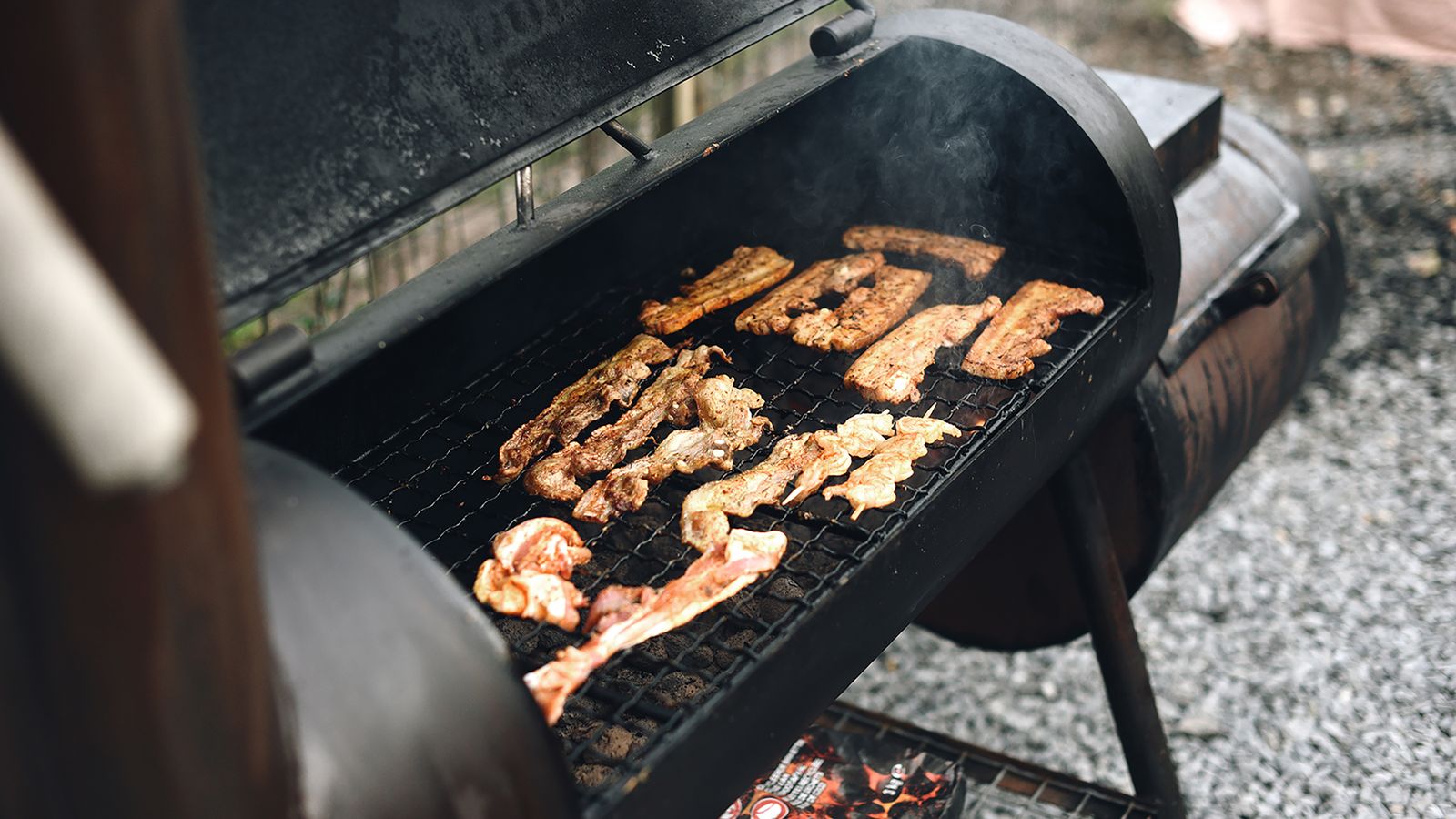
That flat stretch of temperature is exactly when a huge amount of collagen-to-gelatin conversion is happening. The meat isn't stuck; it's working.
Wrapping in butcher paper or foil (the "Texas crutch") can push through the stall faster by trapping steam and reducing evaporative cooling, which is a legitimate technique when you're racing a clock — but understand what you're trading.
Push through too fast and you can outrun the conversion, hitting 203°F on the dial before the collagen has actually had the hours it needs at that range. That's how you end up with a brisket that reads "done" on the thermometer and eats tough on the plate.
Patience through the stall isn't wasted time — it's the actual cook.
Pull the meat and every fiber inside it is holding hot, loose juices and liquid gelatin under pressure, with muscle fibers still contracted tight from the heat. Slice into it immediately and that liquid runs straight out onto the cutting board — you'll watch a puddle form and wonder where all your moisture went. Give it a rest, wrapped loosely in foil or butcher paper, in a cooler or turned-off oven, and two things happen together: the meat fibers relax as they cool slightly, and the melted gelatin and rendered juices redistribute back through the meat instead of gathering in one soft, saturated pocket.
Thirty minutes minimum for ribs and smaller cuts; a full 60–90 minutes (some pitmasters push to 2+ hours in an insulated cooler) for a whole brisket or pork butt. This is not an optional garnish step tacked onto the end of the cook — it's the second half of the collagen story. You did the work of melting it during the smoke; the rest is what lets that work actually pay off in the slice.
CEO TIP: Never rest a big cut on a wire rack over a pan — the juice drains straight through and pools uselessly underneath. Rest it sitting in its own juices, loosely tented, so what escapes gets reabsorbed instead of lost.
Get a reliable instant-read or leave-in probe thermometer and start tracking not just where your temperature lands, but how long it dwells in that 160–205°F window. That single habit will teach you more about tenderness than any recipe ever will. Grab the free doneness + wood-pairing cheat sheet →