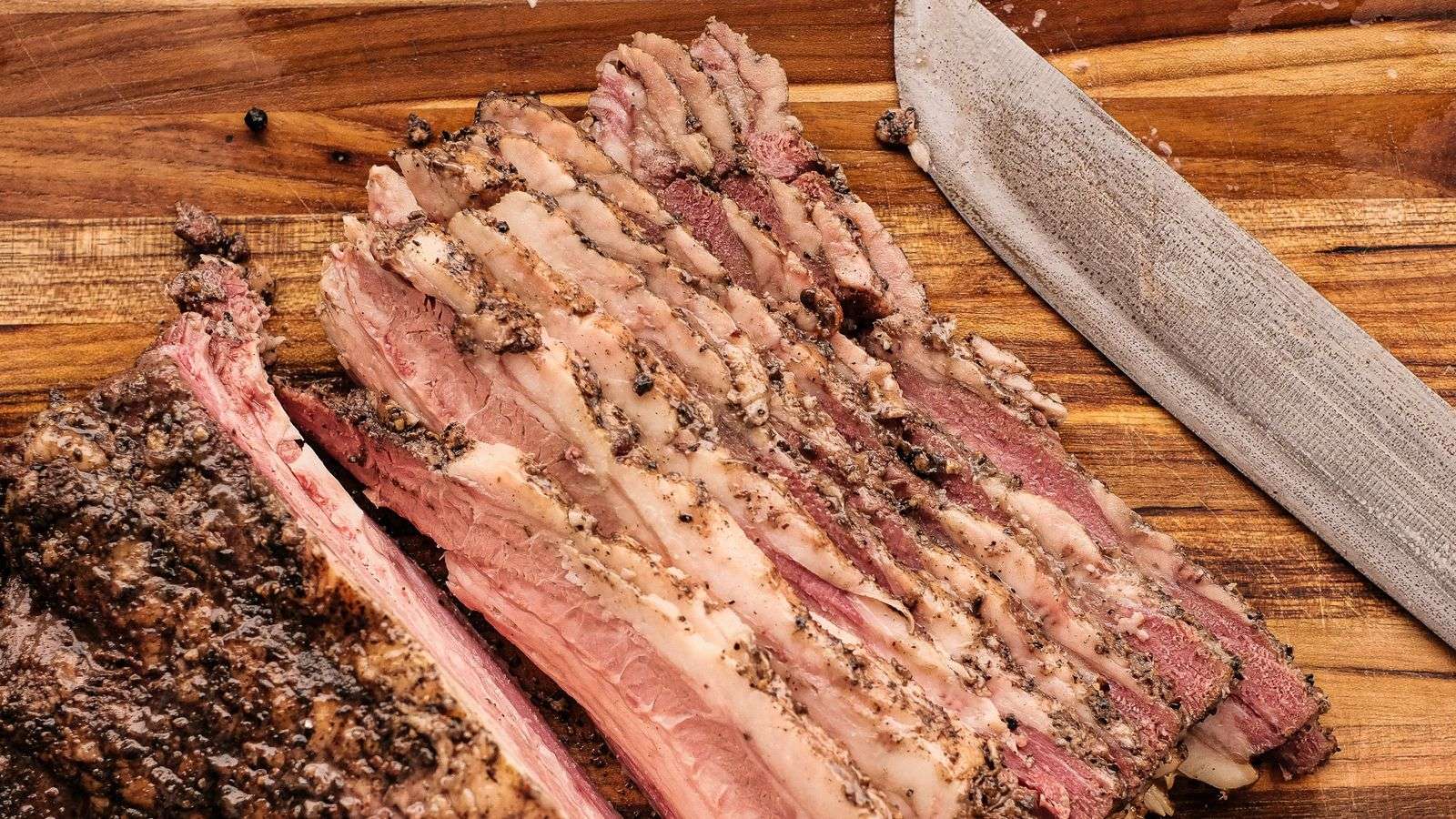
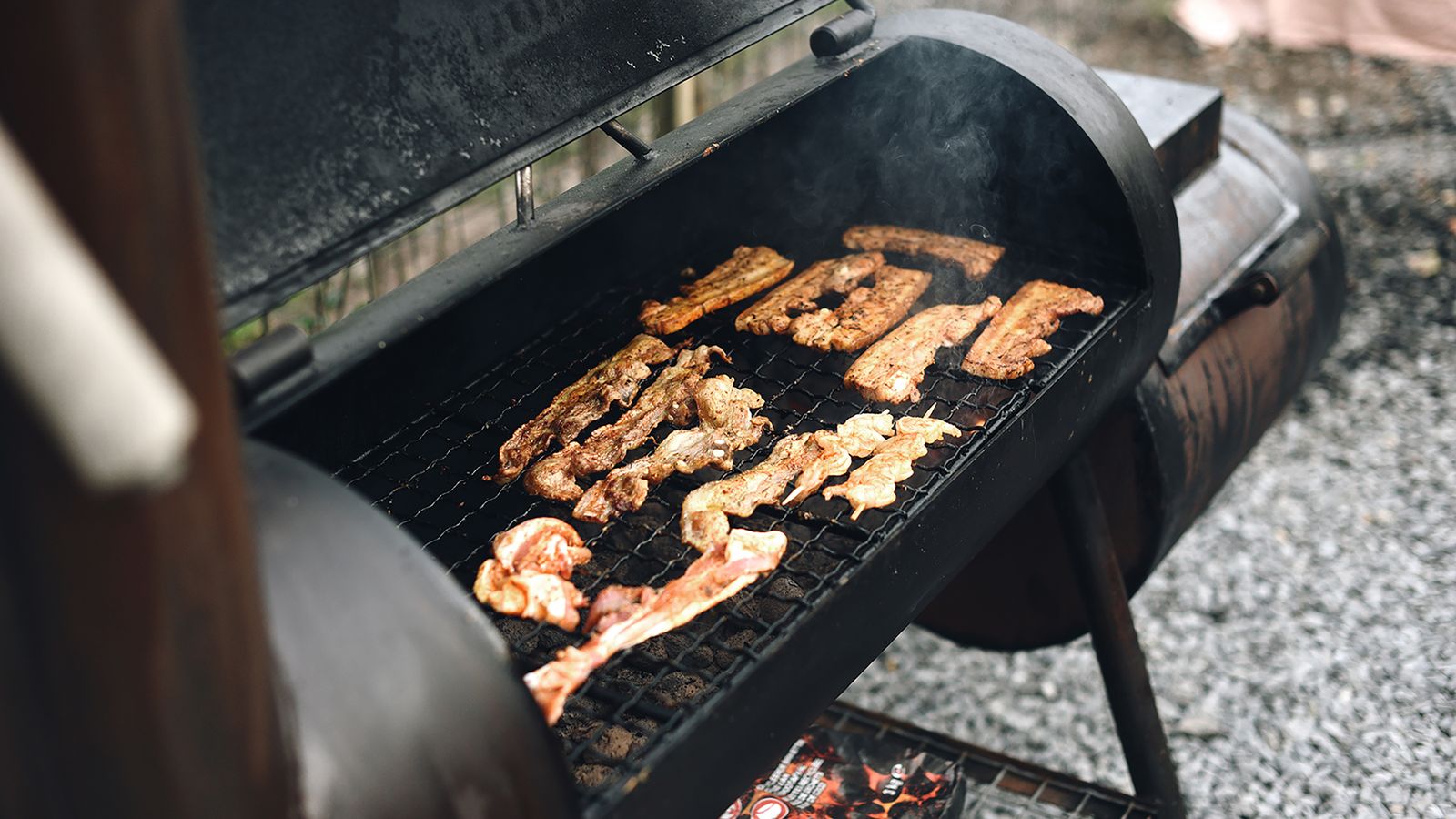
The smoke ring is nitric oxide from burning wood or charcoal binding to myoglobin and fixing it pink before heat can turn it brown — the same chemistry that keeps a hot dog pink. It only forms while the meat surface is below roughly 140F and still moist, so the whole thing is decided in the first one to three hours, and it locks for good once the surface passes about 170F. It adds zero flavor and isn’t scored in competition — but if you want one, start the meat cold, keep the surface damp early, and burn real wood or charcoal.
Slice into a brisket at a competition and the first thing everybody looks at isn't the bark, it's the quarter-inch of bubblegum-pink meat just underneath it. That's the smoke ring, and for a lot of backyard cooks it's become shorthand for "this guy knows what he's doing." Problem is, most people chasing it don't actually know what it is, which means they're chasing the wrong things to get it.
It's chemistry, not skill, and definitely not flavor. Once you understand the reaction that makes a smoke ring, you'll stop worrying about it on the days it doesn't show up, and you'll know exactly which three variables to control on the days you want one deep and pink for the table.
What the Smoke Ring Actually Is
Raw meat is red because of a protein called myoglobin, which stores oxygen in muscle tissue. When you cook meat, heat denatures that myoglobin and it turns brown or gray, which is why a well-done steak looks gray all the way through.
The smoke ring is a zone right under the surface where that denaturing never fully happens the normal way, because the myoglobin gets chemically "fixed" into a stable pink pigment before the heat can knock it out.
The fixing agents are nitric oxide (NO) and, to a lesser extent, carbon monoxide (CO), both byproducts of incomplete combustion.
Burning wood and charcoal doesn't just make heat and smoke particles, it also produces nitrogen dioxide from the nitrogen naturally present in wood and in the air drawn through your fire.
That nitrogen dioxide reacts with the moisture on the meat's surface, converts to nitric oxide and nitrous acid, and those compounds penetrate the outer layers of the meat.
Nitric oxide binds to the iron atom in myoglobin the same way it does in cured meats like ham and bacon, forming nitrosylmyoglobin, a pigment that stays pink even after cooking.
It's the identical chemistry that makes a hot dog pink all the way through, just happening from the outside in instead of from a cure mixed into the meat.
This is also why the ring has a defined depth instead of covering the whole cut: it only forms as deep as the gas can diffuse into moist tissue before the surface dries out and seals over, typically an eighth to a half inch depending on how long that early window stays open.
It's Cosmetic -- Not a Flavor or Doneness Signal
Here's the part that saves you a lot of needless anxiety: the smoke ring adds zero flavor. Nitric oxide fixing myoglobin is a color reaction, not a flavor reaction.
The actual smoky taste in your barbecue comes from an entirely different set of compounds, phenols and guaiacol from wood smoke settling on the surface, combined with the browning and crust formation covered in our deep dive on the Maillard reaction and bark.
You can have a gorgeous half-inch smoke ring on a bland, oversalted brisket, and you can have zero ring on a brisket that's the best thing anyone at the party ate all year.
Judges at barbecue competitions know this, which is exactly why smoke ring isn't a scored category in sanctioned contests -- taste, tenderness, and appearance of the whole plate are what count, and appearance means the overall presentation, not a pink ring specifically.
If your pork butt comes off the smoker with almost no ring, it isn't a sign you did anything wrong. Check the bark, check the tenderness, check the temperature you pulled it at against the meat temperature chart, and judge the cook on those, not on a color band you can't taste.
CEO TIP: If someone at your cookout says a brisket "isn't real barbecue" because it has no smoke ring, hand them a fork instead of an argument. Taste wins every time.
The Window: How and When It Forms
The smoke ring is a race against temperature, and the race is over fast. Myoglobin stops accepting new nitric oxide and starts denaturing on its own once the meat surface climbs past roughly 140F (60C), and it's essentially locked in place by 170F (77C).
Everything that matters for your ring happens in that first stretch of the cook, usually the first one to three hours depending on cooker temperature and the size of the cut, well before you're deep into the stall or worrying about internal doneness.
Two conditions have to be true at the same time during that window for a ring to develop: the meat has to be below that ~140F threshold, and the surface has to be moist.
Moisture is what lets nitrogen dioxide convert into the nitric oxide and nitrous acid that actually penetrate the meat -- a bone-dry surface just doesn't absorb the gas efficiently.
That's why a smoke ring forms almost entirely in the early, cool, damp part of a low-and-slow cook and essentially never forms during a quick high-heat grill session, because the surface blows past 140F in minutes instead of hours.
How to Get a Deeper Smoke Ring on Purpose
If you want a pronounced ring for a cook-off or just because it looks sharp on a cutting board, you're really just manipulating those two conditions plus your fuel choice. None of this requires special equipment, just sequencing.
Put the Meat on Cold
Pull your brisket, pork butt, or ribs straight from the refrigerator instead of letting them sit out and come to room temperature first. Cold meat takes noticeably longer to climb through that sub-140F zone, which stretches out the window nitric oxide has to penetrate the surface. This is one of the single biggest levers you have, and it costs nothing -- skip the "let it rest on the counter" step entirely on smoke-ring days.
Keep the Surface Damp
A wet surface absorbs combustion gases far better than a dry one. A light coat of yellow mustard, a thin oil binder, or simply not trimming and patting the meat bone-dry before it goes on all help keep that surface moist through the early hours.
Some pitmasters spritz with water, apple juice, or vinegar during the first hour specifically to keep the exterior from crusting over too soon -- just don't overdo it to the point you're washing rub off, since bark formation still needs some surface drying eventually, just not in that first hour.
Burn Real Wood or Charcoal
This is the variable that matters most. Nitric oxide comes from incomplete combustion involving the nitrogen in solid fuel, so what you're burning changes everything.
A classic offset burning oak or hickory splits, or a kettle running lump charcoal with a couple of wood chunks tossed in, gives you the richest source of nitric oxide because you're burning a large volume of solid fuel with plenty of nitrogen-bearing wood involved in the combustion itself.
If a deep ring matters to you, this is where your setup choice does more work than any spritz bottle ever will -- see our smoker types comparison if you're deciding between an offset, kamado, and drum before your next build.
Why Pellet Grills and Gas Give You a Fainter Ring
Pellet grills burn compressed wood pellets through an auger-fed firepot with a fan driving fairly efficient, complete combustion -- that's exactly what makes them so convenient to run at a steady temperature, but complete combustion produces less of the nitric oxide byproduct that fixes myoglobin.
You'll still get some ring on a pellet cooker, especially with the cold-meat and moist-surface tricks stacked on top, but it typically comes in thinner than what the same cut would show off an offset or a charcoal kettle.
Gas grills are the extreme case: propane combustion generates very little of the nitrogen chemistry involved, so even with a smoker box of wood chips added, you're mostly relying on whatever chips you burn rather than the main heat source, and the ring will usually be faint to nonexistent.
None of this means pellet or gas barbecue is inferior -- it means the ring is a byproduct of solid-fuel combustion chemistry, not a report card on your cook.
Why It Stops -- And Why That Should Stop Worrying You
Once the meat's surface pushes past roughly 170F, myoglobin has fully denatured in that zone and there's no more unreacted pigment left for nitric oxide to bind to.
The ring you had at the two-hour mark is the ring you'll have at hour twelve -- it doesn't grow, shrink, or change once that surface temperature threshold is crossed, no matter how much longer you run the cook or how much smoke you keep feeding the fire.
That's an important thing to internalize because it means smoke ring depth has nothing to do with total cook time, final internal temperature, or how tender your brisket turned out.
A brisket pulled at 203F for probe-tender collagen breakdown has the exact same ring it had hours earlier when the surface first crossed 170F.
Don't use ring size to judge whether you smoked something long enough -- that's what a thermometer and the texture test are for, the same fundamentals covered in our low and slow smoking guide and in the complete brisket guide.
The smoke ring is nitric oxide from combustion fixing myoglobin into a stable pink pigment before it can denature normally -- it's chemistry, not skill.
It adds no flavor and isn't scored in competition barbecue -- judge your cook on bark, tenderness, and taste instead.
It only forms while the meat surface is below roughly 140F and still moist, almost always in the first one to three hours of a cook.
Boost it by starting with cold meat, keeping the surface damp early on, and burning real wood or charcoal instead of gas.
It locks in place for good once the surface passes about 170F -- longer cook times or higher final pull temps won't deepen it, so never use ring size to judge doneness.
About the Author
Grillmaster John learned live fire the long way — kitchens, backyards and smoke pits around the world — and settled on one rule: taste the meat, not the heat. Every guide on this site gets cooked, temped and tasted before it gets published. Got a cook that beat you? Send it through the contact page and we'll sort it out together. — GJ