The quick version
Match the wood to the machine: chips for gas and electric (smoking in 10–15 minutes, gone in 20–30), fist-sized chunks for charcoal, kamado and bullet smokers (45 minutes to over an hour of smolder each), and splits for an offset, where the wood IS the fire — a fresh one every 45–60 minutes. Skip soaking entirely; wet wood only steams before it smolders and makes the early smoke harsh. Pair strength to the meat — hickory and oak for long beef and pork cooks, mesquite for short hot ones only, apple and cherry for poultry — and front-load your wood in the first half of the cook.
Walk into any hardware store or feed lot in the fall and you'll find three bins of smoking wood sitting side by side, and almost nobody standing there actually knows which one their smoker needs.
Chips, chunks, and splits aren't interchangeable — they're built for different fires, and grabbing the wrong one is one of the fastest ways to end up with bitter, ashy bark instead of the clean smoke flavor you're after.
Here's how to match the wood to the machine, kill the soaking myth for good, and pick a species that actually complements the meat instead of fighting it.
Chips are small, thin pieces of wood, usually an inch or less across, sold in bags at every grocery store and hardware chain. Their whole appeal is surface area — a thin chip catches heat fast, smolders quick, and starts throwing smoke within minutes.
That makes chips the right call on a gas grill or an electric smoker, where you don't have a bed of hot coals to bury a chunk in and need something that'll ignite off a burner or a heating element.
The standard method: build a foil pouch with about a cup of dry chips, poke six to eight holes in the top with a fork so smoke can escape, and set it directly on the flame tamer or heat diffuser under the cooking grate, or right on top of an electric smoker's designated wood tray.
It'll start smoking in 10 to 15 minutes and burn itself out completely in 20 to 30 minutes flat. That's the tradeoff — chips are fast and convenient, but they don't last, so for anything beyond a couple hours you'll be replacing pouches every 30 to 45 minutes to keep smoke going.
For a quick rack of wings or a couple of chicken breasts that's no big deal; for an all-day brisket on a gas grill it becomes a chore, which is exactly why serious low and slow smoking is usually done on equipment built for chunks or logs instead.
Chunks are roughly fist-sized pieces of wood — about the size of a tennis ball to a baseball — and they're the workhorse for anything running on charcoal: a kettle grill, a Big Green Egg or other kamado, a Weber Smokey Mountain or other bullet-style smoker.
Because a chunk has far less surface area relative to its mass than a chip, it smolders slowly instead of flaring up, releasing smoke steadily for 45 minutes to well over an hour buried in hot coals.
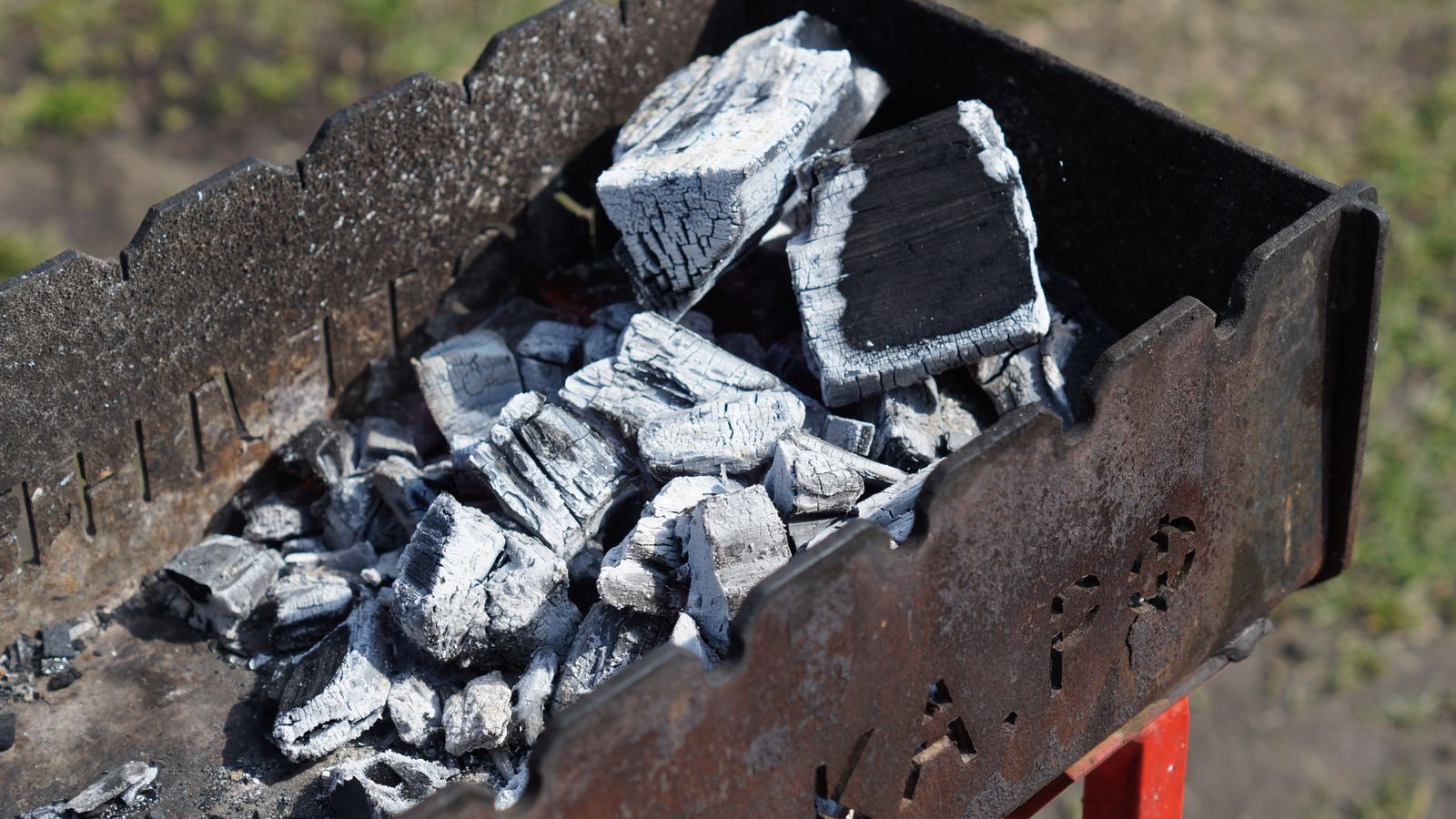
The technique is simple: nestle 2 to 4 chunks directly into your unlit charcoal before you light it if you're running the minion method or a snake, or drop one chunk at a time onto already-glowing coals as you go.
On a bullet smoker or kamado holding 225°F to 250°F (107°C–121°C), a single fist-sized chunk placed at the start plus one more added around the two-hour mark is plenty for most 4- to 6-hour cooks like ribs or a chicken.
For a long haul like a 10- to 14-hour pork butt or brisket, plan on 4 to 6 chunks total, added gradually rather than all at once — dumping the whole pile in early just means you'll have burned through your smoke wood before the meat's done taking it on.
CEO TIP: Keep your vents tuned before you worry about wood. If your fire's choking on too little air or roaring on too much, you'll get thick white smoke and swings in temp no matter how good the chunks are — dial in your charcoal vents first, then manage smoke wood.
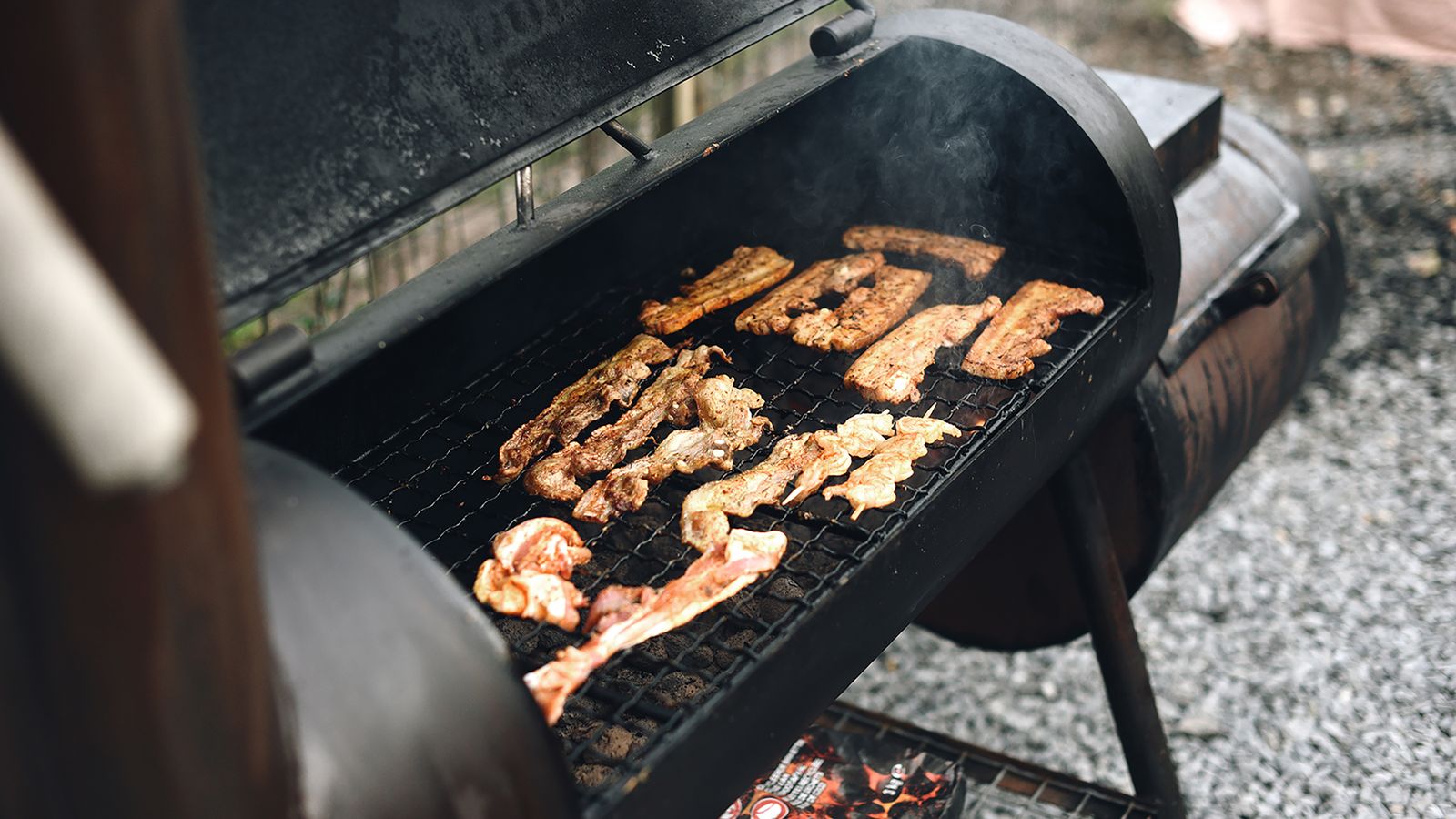
Splits — full logs split down to roughly forearm-thick pieces, sometimes called sticks — are what a traditional offset stick burner is built around. Unlike chips and chunks, which are added as a smoke supplement to a charcoal fire, splits ARE the fire.
There's no charcoal base at all in a proper stick-burner cook; you're building and maintaining a genuine wood fire in the firebox and pulling heat and smoke across the cook chamber to the meat.
Running an offset well means feeding splits on a schedule, not by feel. At a typical 225°F to 275°F (107°C–135°C) cook temp, that's a new split roughly every 45 minutes to an hour, added to a bed of active coals so it catches quickly rather than smoldering cold and dirty.
The goal the whole time is a small, hot, clean-burning fire — thin blue smoke, not the thick white or gray clouds beginners chase thinking more smoke means more flavor. A well-run offset should barely look like it's smoking at all from a distance; that's the sign of complete combustion.
If you're new to reading fire, our guide to thin blue vs. white smoke will save you from bitter, creosote-tasting bark.
Splits should be well-seasoned — six months to a year of dry storage, ideally under 20% moisture — because green or wet wood on a stick burner smokes dirty and makes temperature control miserable.
Somewhere along the way, "soak your wood chips for 30 minutes before using" became gospel, and it's simply not true. Wood is dense — even a porous species only absorbs water a few millimeters deep in a half-hour soak.
That thin wet shell doesn't infuse the interior with moisture that later releases as extra smoke flavor.
What actually happens is the wet surface has to boil off as steam before the wood can reach combustion temperature and start smoldering, which delays smoke production and can make your early smoke wetter and harsher, sometimes described as sour or acrid rather than clean.
Dry wood, by contrast, reaches smoldering temperature almost immediately and burns clean and consistent. If you want wood that lasts a little longer on a gas grill or electric unit, the better move is a slightly thicker chip or a small chunk instead of a soaked chip — mass slows the burn far more effectively than water does. Save your soaking efforts for corn husks and skip it entirely for wood.
Different species carry genuinely different intensities, and pairing the wrong one to a delicate protein is how you end up with a smoke flavor that overpowers everything else on the plate. Think of wood strength on a spectrum from mild to intense:
| Wood | Strength | Flavor Profile | Best Paired With |
|---|---|---|---|
| Hickory | Strong | Bacon-like, savory, slightly sweet | Pork butt, ribs, brisket |
| Oak | Strong (balanced) | Earthy, medium-bold, not overpowering | Brisket, beef ribs, long cooks |
| Mesquite | Intense | Sharp, earthy, almost tangy | Short, hot cooks — steaks, burgers, fajita meat |
| Pecan | Medium | Nutty, sweeter and milder than hickory | Pork, poultry, brisket |
| Apple | Mild | Sweet, fruity, subtle | Poultry, pork, fish |
| Cherry | Mild | Sweet, slightly tart, deep reddish bark color | Poultry, pork, and mixed in with hickory or oak |
Hickory and oak sit at the strong end and can carry a long cook like a full packer brisket or a pork butt without disappearing under the meat's own fat and rub.
Mesquite is the most intense of the common woods and turns bitter fast if it's over-applied or used for many hours, which is why Texas cooks who love it tend to reserve it for shorter cooks like steak or fajita beef rather than a 12-hour brisket.
Apple and cherry are gentle enough to use generously on chicken, turkey, or pork without masking the meat, and cherry's got the bonus of darkening bark to a rich mahogany color.
Pecan splits the difference — nuttier and sweeter than hickory but with more backbone than fruit woods — and it's a safe, forgiving choice across almost anything.
Meat's ability to absorb smoke isn't constant through a cook — it's highest early on while the surface is cool and moist, and it drops off sharply once bark starts to form and the surface dries and tightens, usually somewhere in the first 3 to 4 hours of a long smoke.
That's why loading a smoker with wood for the entire cook, or constantly topping it off hour after hour on a 12-hour brisket, doesn't get you more flavor — it gets you creosote buildup and a bitter, sooty edge on the bark.
Front-load your smoke wood in the first half of the cook and let the back half run cleaner.
The same logic applies across cut sizes: a rack of wings or a couple of pork chops needs only a light touch of wood because the total exposure time is short, while a whole brisket can handle more total wood simply because the cook itself is longer — but "more time" doesn't mean "more wood per hour." Watch the smoke, not the clock.
Thin, almost invisible blue smoke means you're in the zone; thick white smoke rolling off the vents means dial back the fuel, open the vents, or let the fire clean up before adding more wood.
If you're dialing in exact pull temperatures alongside your wood strategy, keep the meat temperature chart handy so you're pulling meat at the right internal temp, not just chasing a clock.
Grab the free doneness + wood-pairing cheat sheet →