The quick version
Thin, wispy, near-invisible blue smoke means a clean-burning fire; a thick white or black column means it's smoldering and coating your bark in creosote — that ashtray bitterness isn't "too much smoke flavor," it's a dirty fire. Nearly every case traces to four causes: choked airflow, too much wood at once, wet or cold wood, or a buried fire. Fix it by preheating your splits, opening the vents, running a small hot fire, and adding wood one piece at a time — with smoke, less is more, because you can't take bitter back out of the meat.
Walk up to a stranger's smoker and you can tell everything you need to know about their cook before you ever taste the meat — just by looking at what's coming out of the stack. A thin, lazy ribbon of blue-gray smoke means somebody's doing it right.
A fat rolling column of white or black smoke means the meat is about to taste like the inside of a chimney. This is the single most useful diagnostic skill in backyard barbecue, and almost nobody teaches it properly.
Here's the whole idea in one sentence: fire needs oxygen to burn clean, and when it doesn't get enough, it smolders instead of combusts — and smoldering wood makes bitter, acrid smoke that sticks to your food and ruins the bark. Everything else in this guide is just detail on that one principle.
Good smoke is easy to miss, and that's the point. Stand a few feet back from your pit and look at the exhaust vent or the gap around the lid. Clean-burning smoke is thin, wispy, almost transparent — you'll see a faint blue-gray shimmer against a dark background, and against the sky it can look like it's barely there at all. Some pitmasters call it "invisible smoke" because on a bright day you have to squint to catch it.
This is the smoke you want touching your brisket, your pork butt, your ribs. It's the product of complete combustion — wood and charcoal burning hot enough and with enough oxygen that the volatile compounds in the smoke (the flavor-carrying particles) are burning too, not just vaporizing off unburned. That's the whole chemistry lesson: thin blue smoke means the fire is consuming its own smoke instead of coughing it out raw.
CEO TIP: Check your smoke at eye level with the stack, not from above looking down. Backlight it against shade or a dark fence line — that's where thin blue smoke shows up clearest and thick white smoke looks obviously wrong.
If what's rolling out of your smoker looks like a factory chimney — thick, opaque, billowing — you've got a problem, and it's costing you flavor by the minute.
This is the most common mistake beginners make, and the most misunderstood. Thick white smoke feels like "more smoke flavor," but it's the opposite — it's unburned wood particulate and moisture being driven off a fire that's choking, not a fire that's cooking. It usually shows up right after you toss on a fresh, cold chunk or split and shut the vents down too far.
Gray sits in between — sometimes it's just white smoke thinning out as the fire recovers, sometimes it's a sign the fire is marginal and could tip either way. Give it a few minutes and watch which direction it moves before you touch anything.
Black smoke is the worst of the three. It means you're burning something incompletely at a much larger scale — often fat dripping onto coals and igniting, or a fire that's been smothered so badly it's producing heavy soot. Black smoke will coat your meat in a greasy, carbon-flavored film almost immediately.
| Smoke Color | What It Means | What To Do |
|---|---|---|
| Thin blue / near-invisible | Clean, complete combustion | Nothing — this is the goal, hold steady |
| Thick white | Smoldering, wet or cold wood, starved fire | Open vents, let it burn off before adding food or more wood |
| Gray | Transitional — could clear or worsen | Watch closely; add air if it's not clearing in 5 minutes |
| Black | Fat fire or heavily smothered fire | Pull food off heat if possible, get flames and air back, clean grates after |
Dirty smoke doesn't just smell wrong drifting across the yard — it settles directly onto your food, and that's where the damage happens. The unburned particulate in white and black smoke is loaded with creosote, the same tarry, bitter compound you'd find scraped out of a chimney flue. It's sticky, it's acidic, and it clings hardest to the wettest, tackiest surface on your cook: the bark that's forming on your brisket or pork butt.
The result is a specific, recognizable flavor — an ashtray bitterness that coats the back of your tongue and turns what should be a deeply savory crust into something genuinely unpleasant to eat. It's not subtle.
Guests will pick around it, or worse, trim it off entirely and toss the best part of the cook.
If you've ever bitten into a rib or brisket point and gotten a flat, sooty, chemical bitterness instead of rich smoky sweetness, that's creosote from a dirty fire — not "too much smoke flavor." There's no such thing as too much clean smoke. There's only dirty smoke, and it's avoidable.
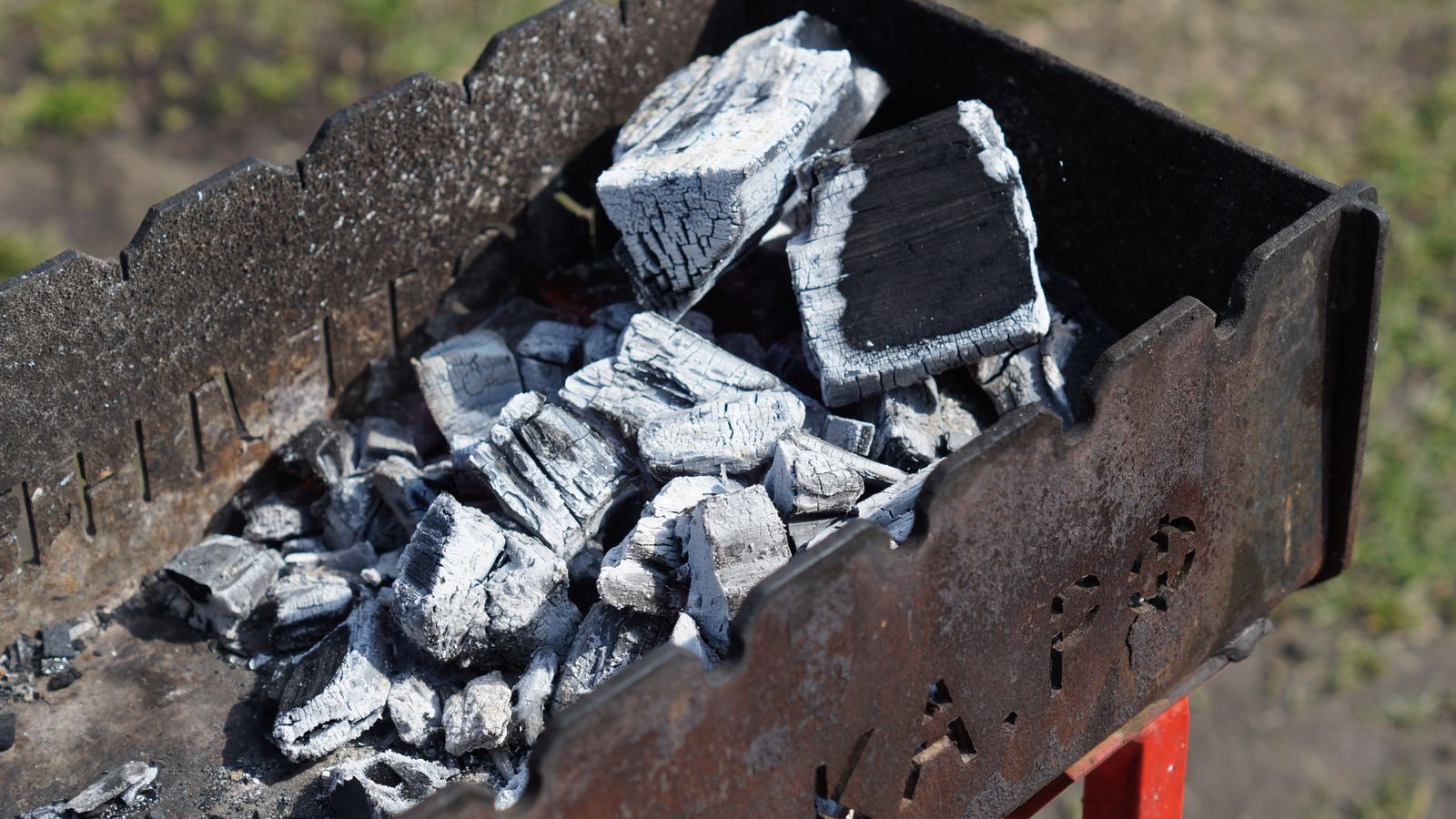
This matters most on long cooks, because the surface of the meat is exposed to smoke for hours while the bark develops through the Maillard reaction and dehydration. A few minutes of dirty smoke early in a fifteen-minute grill session barely registers. A few minutes of dirty smoke every time you open the firebox over a twelve-hour brisket cook compounds into a genuinely ruined bark.
Every case of bitter, sooty barbecue traces back to one or more of four fire mistakes. Learn to spot these and you'll fix ninety percent of your smoke problems before they start.
Fire is a chemical reaction that consumes oxygen. Close your vents down too far — whether that's the intake on a kettle, the damper on an offset, or the exhaust on a kamado — and you starve the fire of the air it needs to burn its own smoke.
This is the single biggest cause of white smoke, and it's an easy trap: beginners choke down the vents to "hold temperature" and end up smothering the fire instead.
Mastering your intake and exhaust vents, not just closing them blindly, is the fix — see our full breakdown on controlling temperature with charcoal vents for exact starting positions on a kettle or kamado.
Dump a handful of chips or two big splits onto a bed of coals all at once and you'll smother the fire under a pile of cold, high-moisture fuel. The coals underneath choke, the wood on top can't ignite fast enough, and you get a wall of white smoke for ten or fifteen minutes until things catch up — if they catch up at all.
Wood fresh out of a cooler, off a shaded woodpile in winter, or — worst of all — soaked in a water bucket the way old advice used to recommend, has to boil off that moisture before it can actually combust. That boiling-off process is exactly what thick white smoke is made of: steam and unburned wood vapor. Skip the soaking entirely. It doesn't add moisture to the meat and it guarantees dirty smoke.
Pile unlit charcoal or wood directly on top of your hot coals and you bury the fire's air supply under fuel it can't yet burn. The bottom smolders, the top sits there raw, and the whole pit fills with white smoke until the pile slowly catches from the bottom up — which can take twenty minutes or more on a stubborn fire.
The fixes mirror the causes almost exactly, and none of them require new equipment.
Set your next splits or chunks on top of the firebox, on a warming shelf, or near enough to the fire to dry out and warm up before they go in. Warm, dry wood ignites almost immediately when it hits the coals instead of smoldering through a wet, cold startup phase. On an offset, this is standard practice among serious pitmasters for exactly this reason.
Open your intake vent further than feels intuitive, especially right after adding fuel. A brief flare and a hotter box for a few minutes is a far better trade than ten minutes of white smoke rolling over your meat. If you're running a proper two-zone fire setup, the hot side gives your fresh fuel somewhere to catch quickly before it settles into the indirect zone.
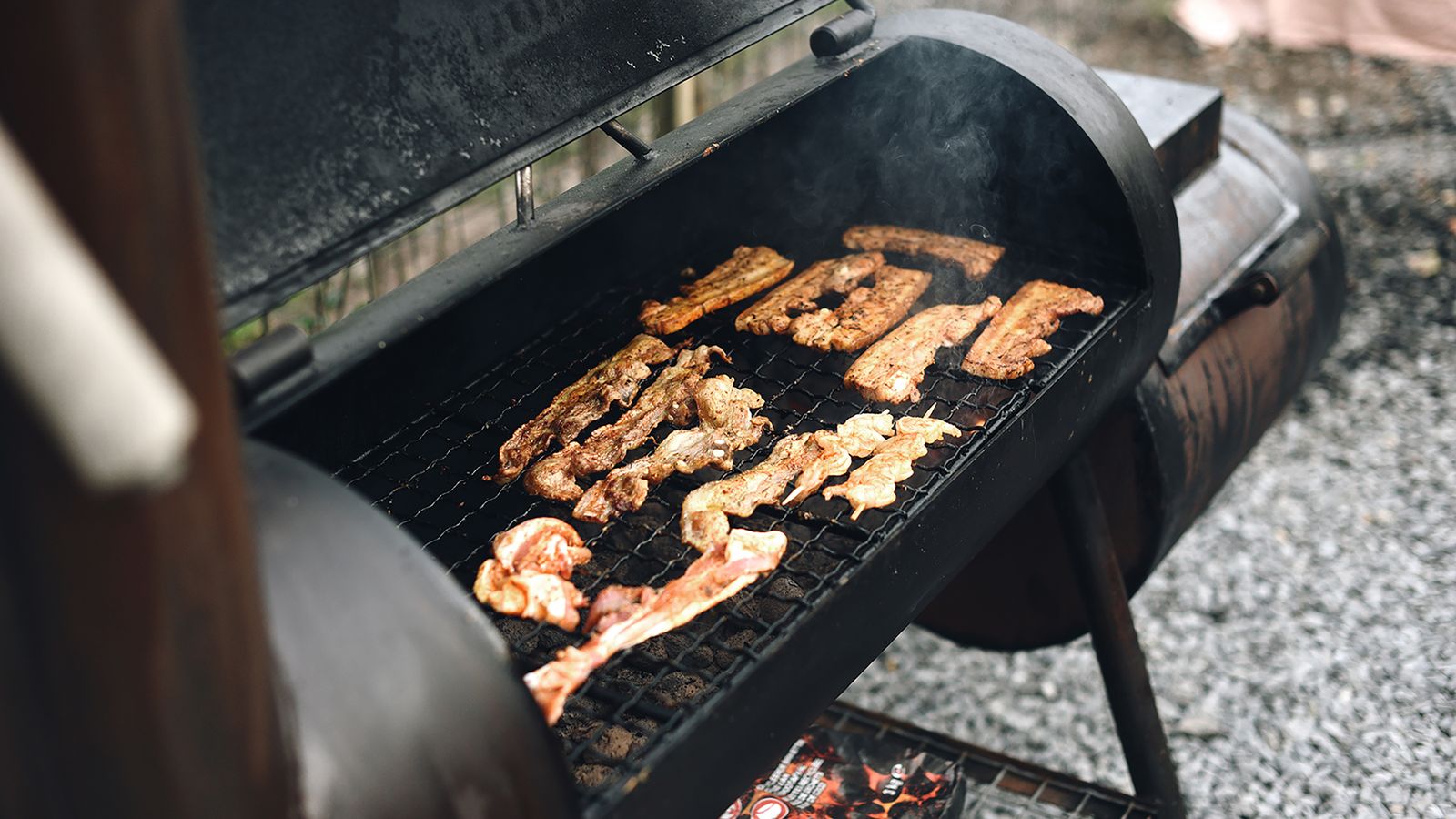
Counterintuitively, a smaller, hotter fire fed regularly burns cleaner than one big pile of fuel choked down to last for hours.
This is the whole logic behind the minion method and behind offset pitmasters running small splits instead of logs — less fuel combusting completely, more often, beats a lot of fuel combusting poorly.
It's also central to good low and slow smoking technique: your target dome or grate temperature should come from air control and fire size, not from smothering a big fire down to size.
One chunk or split at a time, added to an already-established fire with good airflow, not a fresh pile that has to build combustion from scratch. Let each addition catch and burn clean — usually just a few minutes — before you judge whether you need more.
CEO TIP: If you can smell acrid, sooty smoke standing near your pit — not the pleasant sweet-woodsy smell of a clean fire — trust your nose before your eyes. Bitter smell means bitter bark, even if the visual hasn't caught up yet.
New pitmasters almost always over-smoke, because more smoke feels like more flavor. It's the same instinct that leads people to over-salt or over-sauce on a first cook. But smoke flavor is cumulative and irreversible — you cannot pull smoke back out of a piece of meat once it's absorbed it, and a mild, clean smoke flavor on brisket or pork butt is far more pleasant, and far more forgiving of a long cook, than a heavy one.
The safest approach on any long smoke: run a small, hot, well-ventilated fire, add fuel a piece at a time, and let each addition burn clean before adding more. If you finish a cook and the smoke flavor feels a touch light, that's a far better outcome than bitter bark you can't fix. You can always smoke something a little longer or a little heavier next time. You cannot un-ruin a brisket that's picked up creosote for six hours straight.
Grab the free doneness + wood-pairing cheat sheet →This same principle explains a lot of the "why are my ribs tough and bitter" complaints that show up after a first few cooks — dirty smoke and a fire that's fighting for oxygen usually go hand in hand with temperature swings, which is its own separate problem covered in our ribs troubleshooting guide.
And whatever you're cooking, once the smoke is right, pull based on internal temperature, not the clock — check the meat temperature chart for safe minimums and the doneness window for your specific cut.