The quick version
Dino ribs are plate (123A) short ribs if you can get them, chuck short ribs cut English-style if you can’t — bones on either way. Season with nothing but salt, pepper, and garlic, smoke at 250-275°F over oak or hickory, and don’t spritz until the bark sets after the first 2 to 3 hours. The fat cap lets you ride the whole cook unwrapped; pull at 200-210°F when the probe slides in like butter and the meat jiggles off the bone, then rest 30-45 minutes and slice between the bones.
Beef short ribs smoked low and slow are the closest thing backyard barbecue has to a party trick. Slice one off the rack and you get a slab of dark bark, a smoke ring you can see from across the yard, and meat that pulls apart in soft, beefy strings between the bones.
People call them dino ribs because they look like something out of a cartoon caveman's dinner, and once you've made them right, you'll understand why they disappear off the cutting board faster than anything else you cook.
This isn't a fussy recipe. Beef short ribs are forgiving, fatty, and built to survive a long cook, which makes them a great next step after you've smoked a pork butt or worked your way through a full packer brisket. Get the cut right, season it simple, and manage your fire, and the smoker does most of the heavy lifting.
Not all beef ribs are created equal, and the cut you buy determines everything downstream — cook time, how much meat you actually get, and whether the bark forms the way you want. There are two main players:
These come from the plate section of the cow, down near the belly, and they're the gold standard for dino ribs. A rack of plate short ribs is usually three bones, each one 4 to 6 inches long, with a thick cap of meat sitting on top.
This is the cut you see in barbecue photos where the meat towers over the bone — it's genuinely dramatic, and it's also the fattiest, most forgiving cut you can smoke.
Ask your butcher for "123A short ribs" or "plate ribs" by name; most grocery store meat cases don't carry them pre-cut, so a real butcher counter or a warehouse club is usually your best bet.
Cut from the shoulder, chuck short ribs are shorter, meatier per bone in some cases, and much easier to find — most supermarkets stock them, often labeled simply "beef short ribs" or "flanken-style" (which is cut across the bones and is NOT what you want here; you want them cut parallel to the bone, English-style).
Chuck ribs have slightly less fat than plate and a bit more connective tissue, but they smoke up beautifully and are the more realistic option for a first attempt.
Either cut works. Plate is the showstopper for a cookout centerpiece; chuck is the practical weeknight-adjacent version. Whichever you buy, leave the bones on — they insulate the meat, add flavor as the marrow renders, and give you the built-in handle for slicing later.
Beef short ribs don't need aggressive trimming. Pull off any hard, waxy chunks of fat on the surface — the kind that won't render even after nine hours in the smoker — and remove the thin, papery silverskin membrane if it's still on the meat side.
Leave the softer fat cap alone; that's exactly what's going to baste the meat and carry flavor as it melts down over the course of the cook. If your rack has the thin membrane still attached to the bone side (like on pork ribs), peel that off too, since it can go leathery and chewy under smoke.
CEO TIP: Buy your ribs a day ahead if you can and let them sit uncovered on a rack in the fridge overnight. The surface dries out slightly, which helps the bark set up faster and darker once they hit the smoker.
Beef this rich and this well-marbled doesn't need sugar, and sugar is actually working against you on a long cook — it scorches and turns bitter well before nine hours are up.
Stick with the Texas standard: equal parts coarse kosher salt, coarse black pepper, and granulated garlic (that's SPG), or go pure Dalmatian rub with just salt and pepper in a 1:1 ratio by volume.
Coarse-ground pepper (a true 16-mesh butcher grind if you can get it) matters here — it gives you texture and a peppery crust that stands up to hours of smoke instead of disappearing into it.
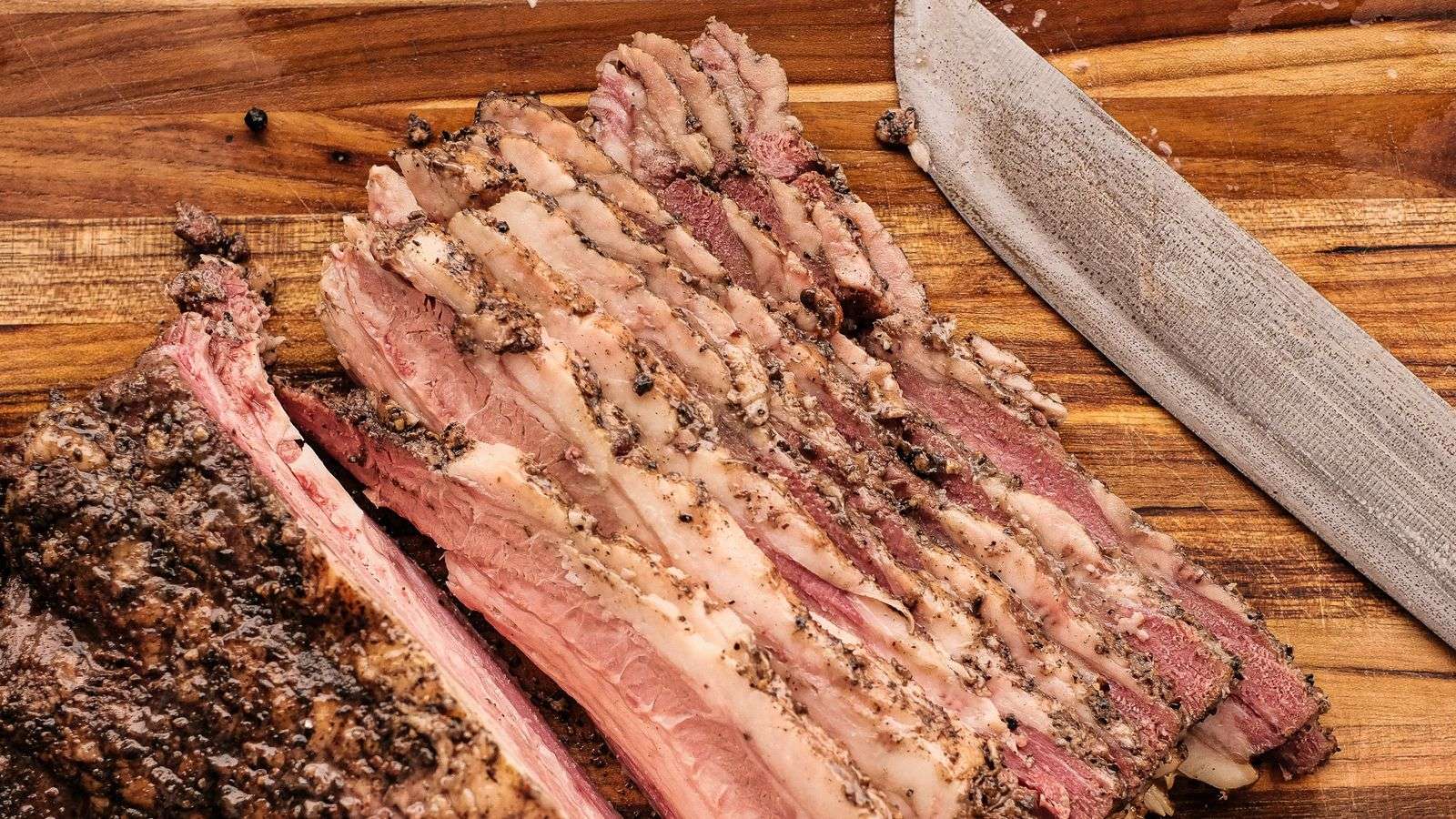
Apply the rub generously on all sides, pressing it in slightly so it adheres to the fat cap and the meaty edges between bones. You want a visible, even coating — this is going to become your bark, so don't be shy. If you want a deeper dive into building your own blend for other cuts, the dry rub guide walks through ratios and variations, but for beef ribs specifically, simple wins every time.
Beef short ribs want a hotter low-and-slow range than brisket. Run your smoker at 250 to 275°F (121 to 135°C) — the extra heat compared to a typical 225°F brisket cook helps render that thick fat cap without drying out the meat, since short ribs have plenty of fat reserve to spare.
Oak is the classic choice for beef; it's got enough smoke intensity to stand up to a rich cut without turning bitter. Hickory works well too and gives a slightly sharper, more assertive smoke flavor.
Either way, avoid anything too delicate like fruit woods here — beef ribs can take a stronger wood than chicken or pork can.
Whether you're running an offset, a Weber Smokey Mountain, a kamado like a Big Green Egg, or a pellet grill, the goal is the same: steady heat, clean smoke, and patience. If you haven't already got your fire management dialed in, review the fundamentals of setting up a two-zone fire and low and slow smoking before you commit a $30-40 rack of ribs to the pit.
Don't spritz right out of the gate. Let the ribs run naked on the grate for the first 2 to 3 hours until the surface has actually set — you should see the rub darken and turn tacky, almost dry to the touch, before you introduce any moisture.
Spritzing too early just washes the rub off and delays bark formation. Once the bark has set, spritz every 45 minutes to an hour with a 50/50 mix of apple cider vinegar and water, or straight beef broth for extra flavor.
The point of the spritz isn't to "keep it moist" in some magical sense — it's to keep the surface tacky so smoke particles keep adhering and the bark keeps building layer by layer, and it moderates surface temperature slightly to slow evaporative crust formation.
Here's the good news: plate and chuck short ribs are fatty enough that you can run the entire cook unwrapped, or "naked," and still come out with tender, moist meat.
That fat cap is doing the same job foil or butcher paper does on a brisket — protecting the meat from drying out — so you don't need to fight the stall the way you would with a leaner cut.
The internal temperature will still plateau somewhere in the 150-170°F range for an hour or more as evaporative cooling fights the smoker's heat; just leave it alone and keep your pit steady.
Wrapping is optional here and mostly just speeds things up — most pitmasters leave dino ribs unwrapped the whole way because the bark payoff is worth the extra hour or two.
CEO TIP: If your cook is dragging past hour eight and the bark already looks great but the internal temp is stuck, a loose foil tent (not a full wrap) for the last hour will push through the stall without softening the crust you worked for.
Temperature alone won't tell you when beef short ribs are done — you need temperature AND feel. Start probing with an instant-read thermometer once you're past 195°F, sliding it into the thickest part of the meat between the bones (not touching bone or hitting straight fat).
You're looking for a range of 200 to 210°F (93 to 99°C), and more importantly, you want the probe to slide in with virtually no resistance — like pushing into softened butter, not like poking raw meat.
Reference the full range of pull temps on the meat temperature chart if you want the doneness targets for every other cut side by side.
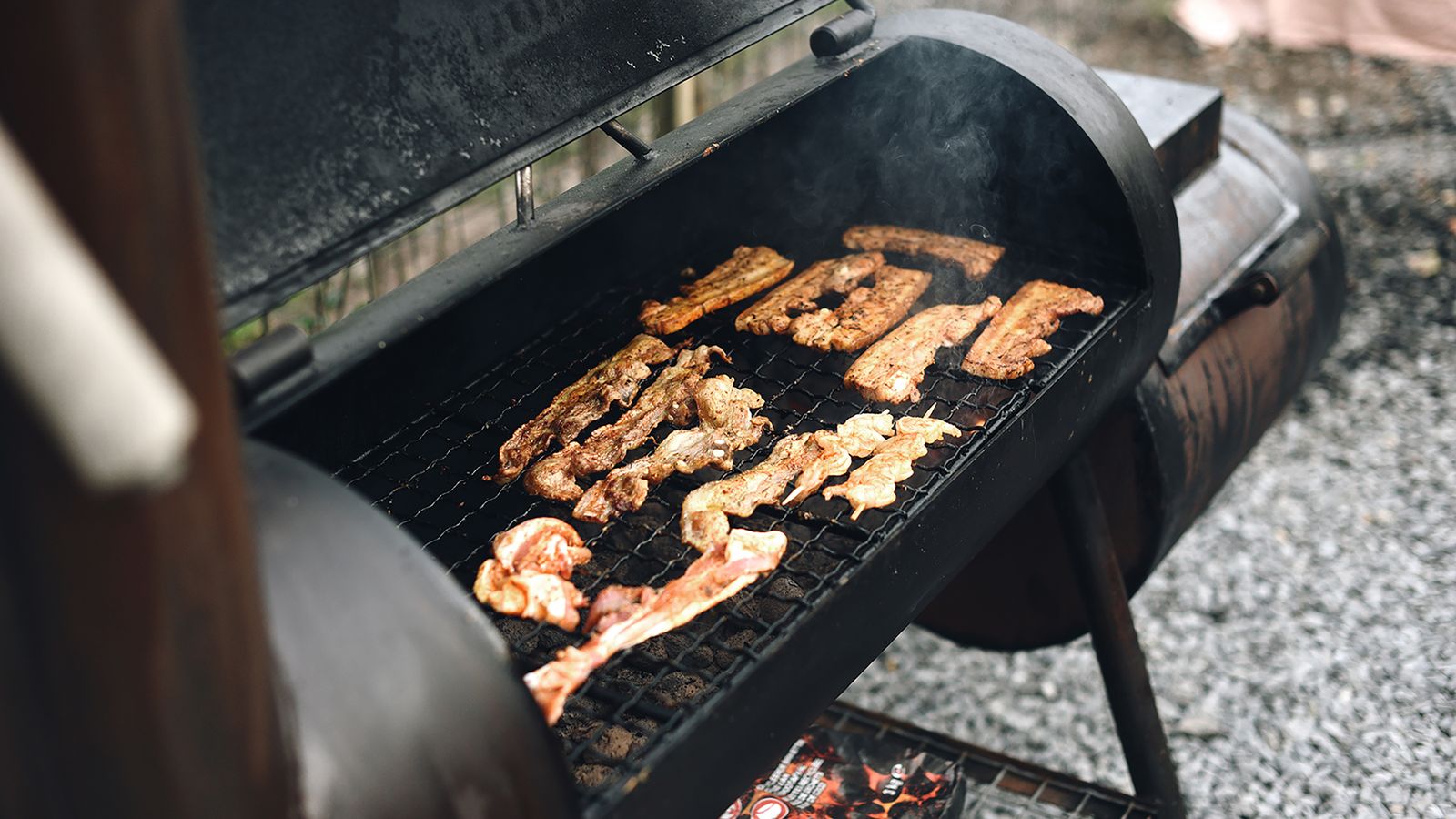
A second good tell: grab the rack with tongs and give it a gentle jiggle. When it's ready, the meat will wobble and separate slightly from the bone like jello, and you'll see the meat visibly pulling back from the bone ends by a half inch or so. If it still feels firm or springs back, it needs more time regardless of what the thermometer says — collagen breakdown, not a number, is what you're actually chasing.
| Stage | Internal Temp | Approx. Time | What's Happening |
|---|---|---|---|
| Bark setting | 100-140°F | Hours 0-3 | Rub dries and darkens; hold off on spritzing |
| The stall | 150-170°F | Hours 3-5 | Evaporative cooling plateaus the temp; stay patient |
| Push through | 170-195°F | Hours 5-7 | Fat and collagen begin breaking down into gelatin |
| Probe-tender | 200-210°F | Hours 6-9 | Probe slides like butter; meat jiggles and pulls from bone |
Total cook time typically runs 6 to 9 hours depending on the size of the rack, your exact pit temperature, and how much fat you left on. A big three-bone plate rack will run longer than a smaller chuck rack, so plan your day around the meat, not the clock — start early and hold if it finishes ahead of schedule.
Grab the free doneness + wood-pairing cheat sheet →Pull the ribs when they hit that probe-tender feel and let them rest, tented loosely in foil, for 30 to 45 minutes before you touch a knife. This isn't just tradition — the muscle fibers are still relaxing and reabsorbing the juices that got pushed toward the surface during the cook.
Cut too early and you'll watch a puddle of juice run out onto the board instead of staying in the meat where it belongs. If you need to hold longer, wrap in foil and a towel and rest in a cooler for up to 2 hours; short ribs hold heat well thanks to all that fat and bone mass.
Slice between the bones, not across them, so each portion is a single bone with its full slab of meat attached — that's the whole point of dino ribs, and cutting them any other way wastes the presentation.
Use a sharp slicing knife and let it do the work; if you're fighting the meat, it either needs more rest or wasn't quite done.
Serve them straight up with nothing more than the bark and a little flaky salt, or alongside a regional sauce if your crowd wants one — check the regional BBQ sauce guide for options that won't overpower the beef. A simple side of slaw or beans rounds out the plate without competing for attention.