The quick version
The cook isn't over when you pull — carryover keeps driving the center up, 3–5°F on steaks and chops, 5–10°F on big roasts, so always pull below your target and let the rest finish the job. Resting isn't really about juices "redistributing"; it's about letting contracted fibers relax so the juice stays in the meat instead of pooling on the board. Steaks want 5–10 minutes, whole birds 10–30, and brisket or pork butt a minimum of 1 hour — a towel-wrapped cooler holds them above 140°F for 4-plus hours.
You did everything right. You nailed the fire, you pulled at the perfect internal temp, the bark looks like a magazine cover. Then you slice into it the second it comes off the pit, and a puddle of juice runs out onto the board and takes half the flavor with it. That puddle is your reward for skipping the one step nobody photographs: the rest.
Resting is the most under-respected move in barbecue, partly because it feels like doing nothing and partly because the reason everyone gives for it is wrong. You've heard that resting "lets the juices redistribute." That's half a truth. What's actually happening is more useful to understand, because once you get it, you'll know exactly how long to rest any cut — and why the cook isn't finished when you take the meat off the heat.
Heat makes muscle fibers contract. As the interior climbs through the cook, those fibers squeeze like thousands of tiny fists, driving moisture out of the cells and toward the surface — which is why a screaming-hot steak sheds juice the instant you cut it. The meat is under pressure, and your knife is the release valve.
Rest the meat and two things happen. The fibers relax as the surface cools slightly, easing that pressure so the liquid stays put instead of flooding the board. And the moisture that got pushed outward reabsorbs and thickens as it cools, so it clings to the meat when you finally slice.
It was never really about juice "redistributing" evenly like water finding its level — it's about lowering the pressure so the juice you worked for ends up in your mouth instead of on your cutting board.
The proof is on the board itself: slice a rested brisket and a straight-off-the-pit brisket side by side and the unrested one leaves a visibly bigger pool. Same cook, same temp — the only difference is patience.
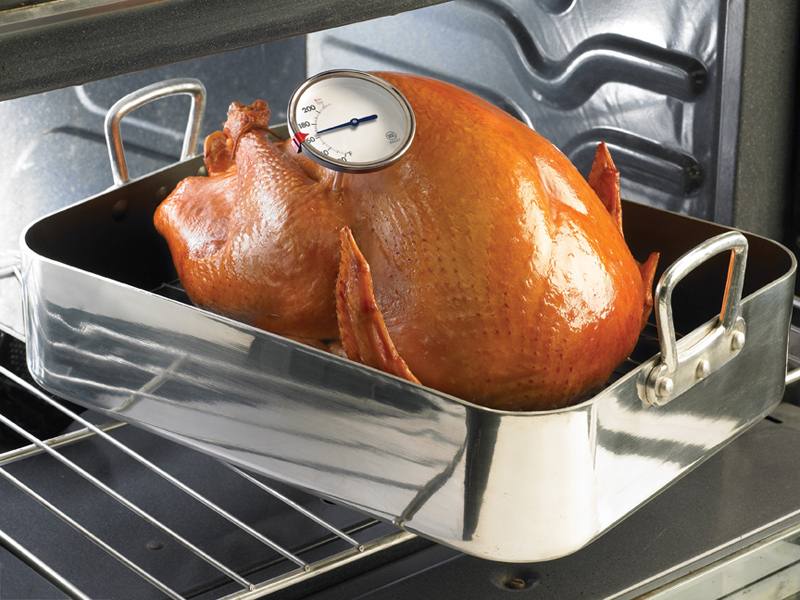
Here's the part that trips people up. Meat keeps cooking after it leaves the heat. The outer layers are hotter than the center, and that heat keeps marching inward for several minutes, dragging the internal temperature up even though the meat is nowhere near the fire. This is carryover cooking, and if you ignore it you will overshoot your target every single time.
How much it carries depends almost entirely on size and cooking temperature:
The rule is simple: pull early, let carryover finish the job — targets for every cut are on the meat temperature chart. If you wait until your thermometer reads the exact number you want, the center is already past it by the time you're eating.
This is exactly why a reliable instant-read thermometer matters more than any fancy grill feature — and why the reverse sear is so forgiving: the gentle first stage keeps the temperature gradient shallow, so carryover is small and predictable.
Rest time scales with the size of the cut — bigger mass, more stored heat, longer to settle. Rough guide:
The big smokes are a different animal. A brisket or pork butt isn't just relieving pressure during its rest — it's still hot enough that collagen keeps breaking down and the whole cut evens out from bark to center. Rushing a brisket to the slicer after a 12-hour cook is how you turn a great brisket into a merely good one.
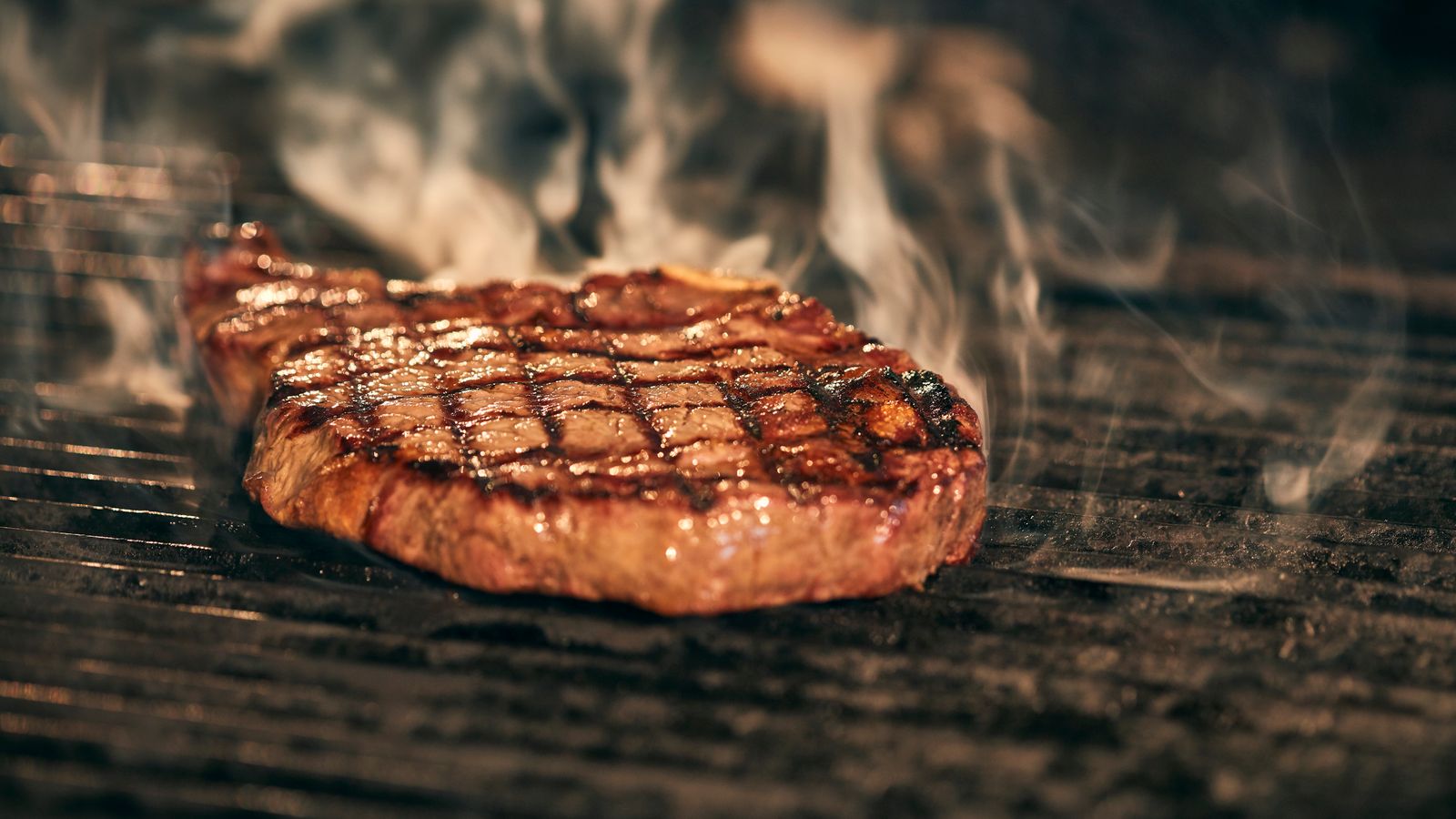
For steaks and roasts, rest uncovered or tented loosely with foil on a board or rack. Wrapping tightly in foil traps steam against the surface and softens any crust you built — a real loss if you've spent hours developing bark. Loose tenting slows heat loss without steaming the exterior.
For the long cooks, use the faux cambro (hold above 140°F — see the danger-zone rules) — the pitmaster's holding trick. Wrap the brisket or butt (butcher paper or foil), roll it in a couple of old towels, and set it in an empty cooler.
That insulated box will hold the meat above the safe 140°F line for 4 hours or more, giving you a huge buffer between "it's done" and "everyone's ready to eat." It's also the single best way to guarantee a hot, relaxed brisket the moment your guests sit down — no cook has ever regretted having that window.
Pull it early, let it rest, then slice against the grain. Carryover finishes the cook, the rest keeps the juice where it belongs, and your board stays dry because the flavor stayed in the meat. It costs you nothing but patience — and patience is the whole game. Taste the meat, not the heat.