The quick version
Match the marinade to the cut and treat time limits as real limits: boneless breast gets 30 minutes to 2 hours, bone-in thighs 4 to 12, and buttermilk — the gentlest acid of the six — is the only one that’s safe up to 24 hours. The all-purpose classic is cider vinegar, ketchup, and brown sugar for 4–12 hours, cooked over a two-zone fire so the sugars don’t burn. And never brush used raw-chicken marinade on as sauce unless it’s hit a full rolling boil for a minute — or just reserve a clean batch before the chicken goes in.
Most "marinade recipes" online are just a list of bottles dumped in a bag with no explanation of what the acid is doing to the meat, how long is too long, or which marinade belongs on which cut.
That's how you end up with mushy chicken breast, a bland thigh that tasted the sauce for thirty seconds before it hit the grate, or — worse — a batch of raw-chicken marinade brushed on as a "finishing sauce" that never got hot enough to kill anything.
I've broken this down the way I'd explain it to someone standing at my pit: six marinades that earn their spot, ranked by what they're actually best at, plus the timing rules and the one safety step that separates a good cook from a bad week.
A marinade does three jobs, and almost never all three at once: it adds surface flavor, it can tenderize (acid or enzymes breaking down protein structure at the surface), and in a few cases it changes texture all the way through.
The mistake most people make is treating every marinade like it penetrates deep and works forever — it doesn't. Acid-based marinades (vinegar, citrus) only affect the outer few millimeters of meat, and past a certain point the acid starts toughening and drying the surface instead of tenderizing it.
That's why "more time equals more tender" is wrong, and why the cut you're marinating matters as much as the marinade itself.
CEO TIP: If a marinade contains vinegar, citrus, wine, or yogurt/buttermilk, treat time limits as real limits, not suggestions. Beyond the window, you're not adding flavor — you're breaking down texture into something chalky or mushy.
This is the marinade that built backyard BBQ chicken, and it earns the top slot because it does everything decently: tenderizes lightly, builds a real crust, and caramelizes hard on the grill.
Whisk cold, submerge the chicken, and marinate 4–12 hours refrigerated. The vinegar does the tenderizing work early; the sugar and ketchup are there for color and glaze once heat hits them. Because it's sugar-heavy, cook over a proper two-zone fire — direct heat will burn the sugars before the inside is done, so sear briefly over the hot side and finish over indirect heat until the chicken hits a safe internal temperature.
Pull temp matters more than any marinade: check the meat temperature chart for exact safe minimums — 165°F (74°C) for breast meat, and thighs are far better pulled at 175–185°F (79–85°C) where the connective tissue actually renders.
Grab the free doneness + wood-pairing cheat sheet →
Buttermilk works through lactic acid, which is far gentler than vinegar or citrus. It breaks down proteins slowly and evenly instead of attacking the surface fast, which is why it's the marinade to reach for when tenderness — not just flavor — is the goal, especially on lean breast meat that dries out easily.
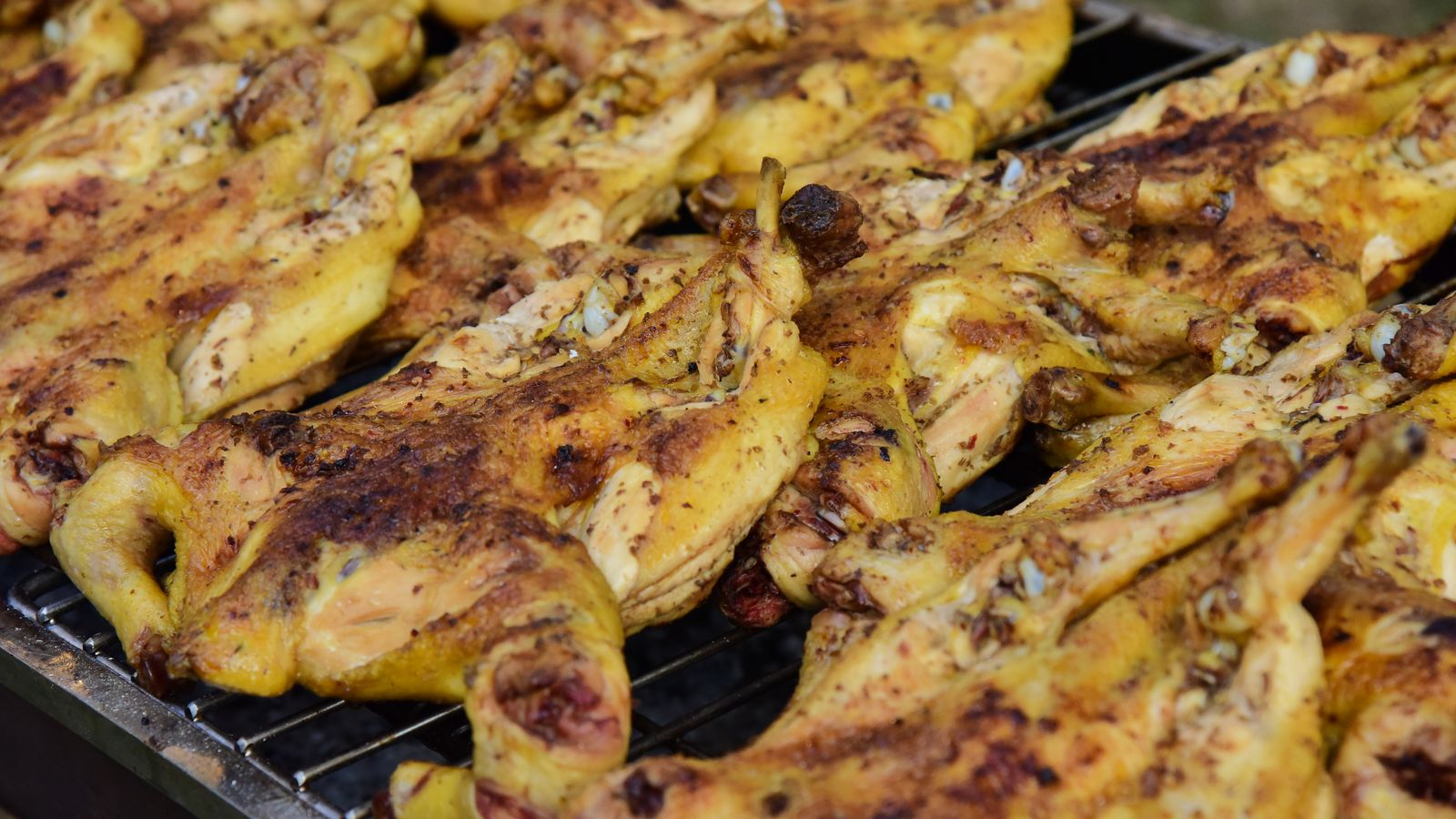
Submerge and refrigerate 4–24 hours. Because the acid is mild, you have far more room here than with vinegar — 24 hours won't wreck the texture the way a full day in cider vinegar would.
This is essentially a flavored version of the same science behind a wet brine: moisture and salt moving into the muscle, just with buttermilk's fat and tang riding along. Shake off excess before it hits the grill or the sugar-free buttermilk will just steam instead of sear.
Technically a sauce, but mayo-based marinades work because the fat carries pepper and acid deep into the crevices of bone-in cuts while coating the surface to stay moist.
Whisk 1 cup mayonnaise, 1/4 cup apple cider vinegar, 1 tbsp coarse black pepper, 1 tbsp prepared horseradish, 1 tsp lemon juice, and salt to taste.
Marinate 2–4 hours only — mayo-based marinades don't benefit from long soaks the way straight acid does — then reserve a separate, untouched batch to brush on as a finishing baste once the chicken clears 165°F (74°C).
This is the same white sauce that defines Alabama's regional BBQ sauce tradition, just doing double duty.
Sour orange juice (or a 2:1 mix of orange and lime juice), a full head of garlic minced, 2 tbsp dried oregano, 1 tbsp cumin, 1/3 cup olive oil, and salt. This is a citrus marinade, so treat it like vinegar: 2–6 hours for boneless cuts, up to 8 hours for bone-in thighs or a spatchcocked bird.
It's the marinade I reach for on a whole chicken headed for the smoker — pair it with the spatchcock method so the citrus and garlic get even contact across the whole bird.
1/2 cup soy sauce, 1/4 cup brown sugar, 2 tbsp rice vinegar, 2 tbsp BBQ sauce, 1 tbsp grated ginger, 2 cloves garlic, 1 tsp sesame oil. This one is built for cubed chicken thighs or breast on skewers — 30 minutes to 2 hours max.
The sugar and soy combination burns fast, so this only works with quick, high-heat cooking over the direct side of a two-zone setup, moving skewers off heat the moment they color. It's a good excuse to also work through a wing recipe if you want the same glaze on a different cut.
Time isn't one-size-fits-all. A boneless, skinless breast is thin and has no bone or skin to slow acid penetration — it goes from "flavored" to "mushy" fast. A bone-in thigh is dense, protected by skin and bone, and can sit in the same marinade for hours longer without any downside.
| Cut | Marinade Time | Why |
|---|---|---|
| Boneless, skinless breast | 30 min – 2 hrs | Thin and lean; acid penetrates fast and over-marinating turns the surface stringy/mushy |
| Bone-in, skin-on breast | 2 – 6 hrs | Skin slows penetration, giving you a wider safe window |
| Boneless thighs | 2 – 8 hrs | More fat and connective tissue tolerates longer acid exposure |
| Bone-in thighs / drumsticks | 4 – 12 hrs | Dense muscle plus bone means slow, even flavor penetration with no mushy risk |
| Whole spatchcocked chicken | 4 – 12 hrs | Flattened for even surface contact; treat like bone-in thighs |
As a rule: thin and boneless means short and gentle; thick and bone-in means long and bold. If you're marinating a whole bird, spatchcocking it first means every part of the marinade window applies evenly instead of the breast finishing early while the thighs are still bland.
Any marinade that has touched raw chicken carries whatever bacteria was on that chicken — salmonella and campylobacter don't care that the marinade "looks fine." Brushing that same liquid on as a finishing glaze without treating it is one of the most common backyard food-safety mistakes there is.
Two safe options, and only two:
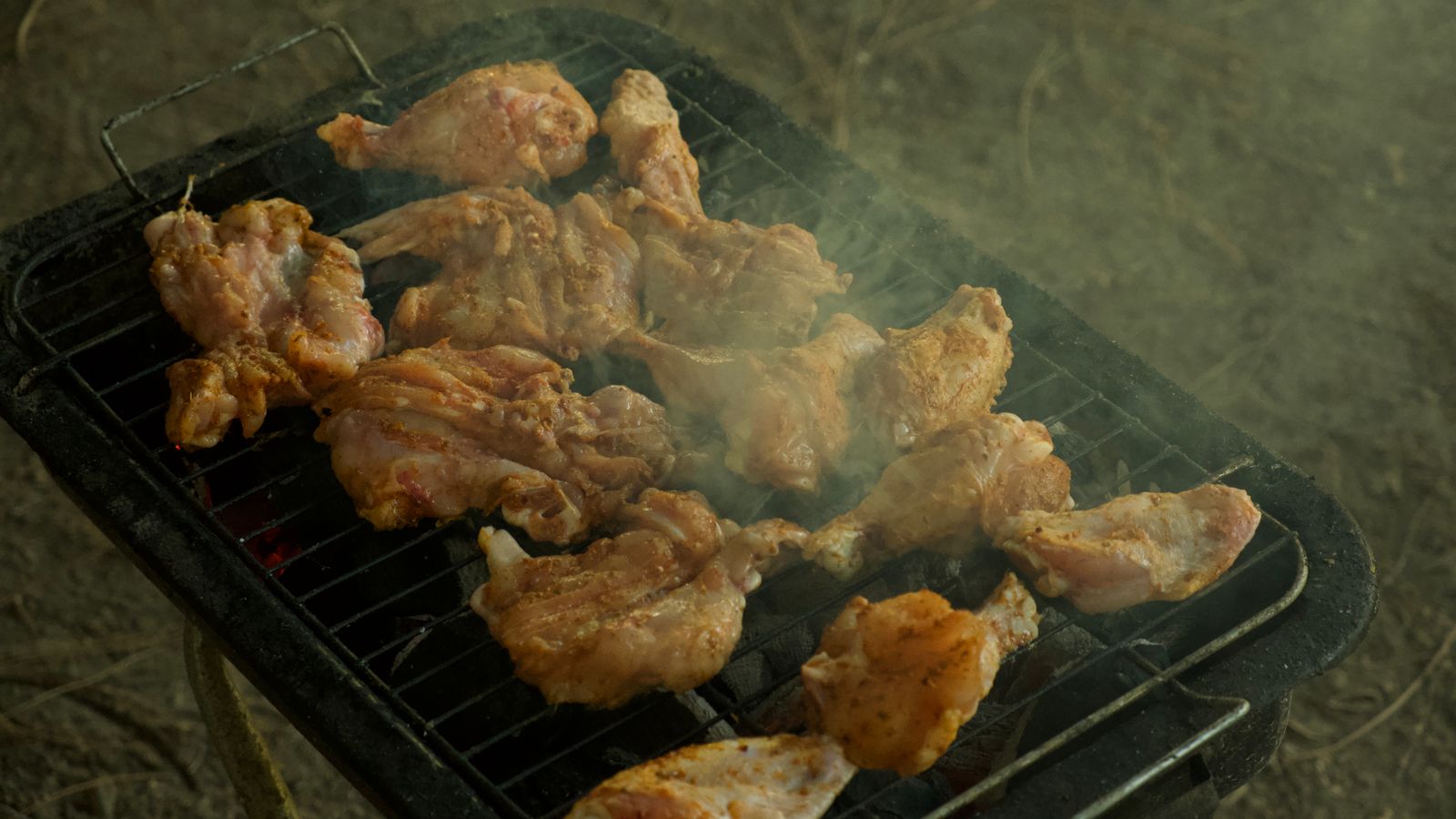
There's no shortcut here. "It's basically cooked once it's on the hot grill" isn't good enough — the marinade itself needs to reach a full boil, independently, before it's safe to eat raw or brushed on near the end of the cook.
You don't have to choose between a dry rub and a marinade — used in the right order, they stack.
This is the method I use most: marinate the chicken for its full window, then pull it out, pat it completely dry with paper towels, and apply a dry rub immediately before it hits the grate. A wet surface won't hold a rub or form bark — it steams instead of caramelizing. Drying the surface first is what lets a rub built from the dry rub fundamentals actually stick and crust up.
Reserve a cup of unused marinade (or a fresh batch made just for basting), boil it for 1 minute if any raw chicken touched the original batch, and use it as a mop during the last 20–30 minutes of cooking. This rebuilds moisture and gloss on the surface without washing off the rub you built underneath — brush it on in thin layers rather than one heavy coat, letting each layer set for a few minutes before adding the next.
Skip rubbing the chicken before it goes into a wet marinade — the liquid dissolves and washes most of it off anyway, so you're wasting rub for no benefit. Rub goes on dry meat, right before heat.