Texas argues about brisket. The Carolinas argue about vinegar. Memphis just puts pork on a plate, dusts it, and lets you decide whether you want sauce on it.
Memphis barbecue is the most misunderstood of the big four styles, because the thing it is famous for — the dry rib — is not actually the thing the city eats most. That is the pork shoulder: cooked overnight, chopped or pulled, piled on a cheap bun under a fistful of slaw and sold for the price of a sandwich. The ribs are the postcard. The shoulder is the economy. This guide covers both, tells you where the pit houses are and what to order at each, and then hands you the numbers to cook it at home. Every fact below was checked against the business’s own site or a named source on the date at the bottom of the page. If you have read the Central Texas and Kansas City guides, this is the third leg of the same trip.
The style, reduced to a spec sheet. Everything below is what makes a plate read as Memphis and not as Kansas City, Central Texas or Eastern Carolina.
| The meat | Pork, almost exclusively. Rib slabs and whole shoulder do the work. |
|---|---|
| The cuts | Spare ribs, usually trimmed to the St. Louis cut. Whole pork shoulder — Boston butt and picnic together, or the butt alone. |
| The rub | Paprika-forward, with garlic, chili powder and black pepper behind it. The Rendezvous version traces to Charlie Vergos’ father’s Greek chili seasoning, with paprika added for colour. |
| Dry vs wet | Dry = rub only, cooked and served with no sauce. Wet = brushed with sauce before, during and after the cook. Half-and-half is a legitimate order. |
| The sauce | Thin, tomato-based, vinegar-forward, brown sugar rather than molasses-heavy, frequently with mustard. Less sweet and far thinner than Kansas City sauce — thin enough to work as a marinade. |
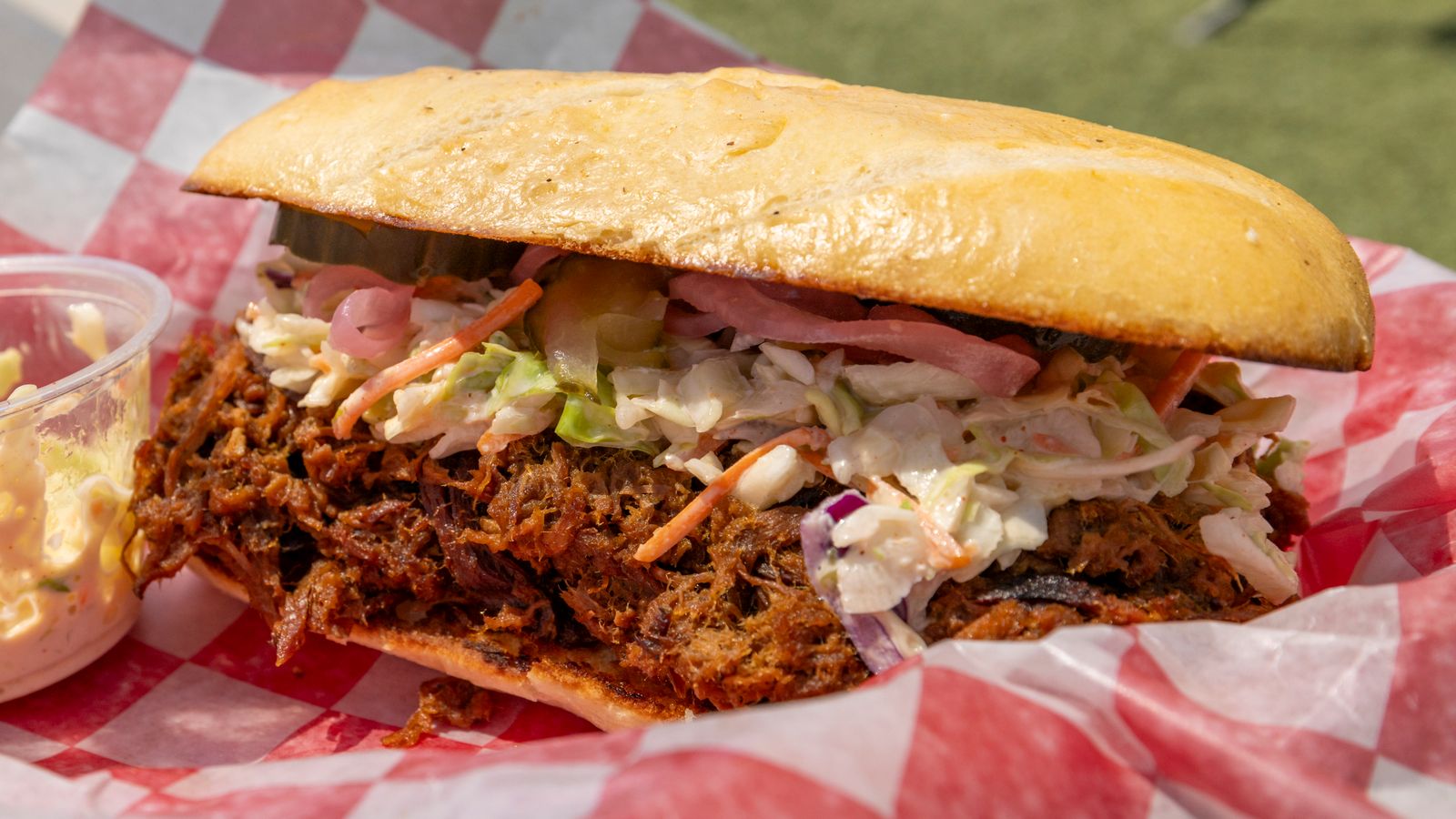
| The sandwich | Chopped or pulled shoulder + sauce + cole slaw, on a plain white bun. The slaw goes on the meat, not on the side. |
| The slaw | Two schools: creamy mayonnaise slaw, and the bright yellow mustard slaw that Payne’s built its reputation on. |
| The wood | Hickory is the house wood; Central BBQ runs hickory and pecan. The Rendezvous is the outlier — charcoal, not a smoker. |
| The house oddities | Barbecue spaghetti, barbecue nachos, barbecue bologna, smoked Cornish hen. All four are normal menu items here and nowhere else. |
| The contest | The World Championship Barbecue Cooking Contest — Guinness-recognised as the largest pork barbecue contest in the world. 48th edition: May 13–16, 2026, at Liberty Park, with over $190,000 in prize money. |
| # | Pit house | Since | Order this | How they cook it | Where |
|---|---|---|---|---|---|
| 1 | Charlie Vergos’ RendezvousTheir site → | 1948 | A dry slab, and the red-skin potato salad | Charcoal-broiled, not smoked | 52 S. Second St — basement, down the alleyTue–Thu 11am–9pm · Fri–Sat 11am–10pm |
| 2 | Payne’s Bar-B-Queno website | 1972 | Chopped shoulder sandwich, mustard slaw | Pit-cooked shoulder, chopped to order | 1762 Lamar Ave — a converted gas stationTue–Thu 11am–2pm · Fri 11am–2.30pm · Sat 11am–2pm |
| 3 | Cozy CornerTheir site → | 1977 | Smoked Cornish hen, barbecue bologna | Pit-roasted with a house dry rub | 735 N. ParkwayTue–Sat 11am–8pm |
| 4 | The Bar-B-Q ShopTheir site → | Brady & Lil’s lineage | Barbecue spaghetti, ribs on Texas toast | Slow-smoked, Dancing Pigs sauce | 1782 Madison Ave, MidtownTue–Sat · closed Sun–Mon |
| 5 | Central BBQTheir site → | 2002 | Barbecue nachos, ribs half wet half dry | Hickory and pecan, no sauce in the pit | Four Memphis locations; original on Central AveSeven days · check the location |
| 6 | Interstate Bar-B-QueTheir site → | 1979 | Chopped pork sandwich, barbecue spaghetti | Purpose-built pits, house secret sauce | 2265 S. Third St, off I-55 exit 7Check before travelling |
Hours and status checked 2026-08-05 against each business’s own site or listing. Memphis pit houses keep short weeks and close when the meat runs out — call before you drive.
A dry rib in Memphis is a rib that has been seasoned with a spice rub and cooked and served with no sauce on it at all. A wet rib is brushed with sauce before, during and after the cook. That is the whole distinction — it is about sauce, not about moisture, and a dry rib is not a dry rib in the culinary sense.
Where it gets interesting is when the rub goes on. Most dry-rib houses season the raw slab, cook it, and often dust it again on the way out, so the spices bloom in the rendering fat. The Rendezvous does the opposite: raw rub, sprinkled on the cooked rack as it is served. That is why a Rendezvous rib tastes sharper and more powdery than a rib from a smoker, and why arguments about whether it counts as barbecue have run for seventy-odd years.
The city does not resolve this for you, and it does not have to. Central BBQ will sell you a slab half wet and half dry on one plate. Order that, eat both ends, pick a side.
Commercial barbecue in Memphis grew after the Second World War, when neighbourhood joints with purpose-built pits opened across the city. What those pits were built for was pork shoulder — a cut that takes twelve hours or more, feeds a crowd cheaply, and rewards a pit that holds a low temperature all night.
The output is chopped or pulled shoulder, and its natural home is a sandwich: meat, thin sauce, cole slaw, plain white bun, no ceremony. Leonard Heuberger is credited with assembling the first one in Memphis in 1922 after trading a Model T for a small sandwich stand, and the format has not needed revision since. The slaw is not a garnish and it is not on the side — it is structural, supplying the acid and crunch that keep a pile of rich pork from going one-note.
There are two slaw schools. Creamy mayonnaise slaw is the default across most of the city. The mustard slaw — bright yellow, vinegar-sharp — is the one Payne’s is famous for, and once you have had it on chopped shoulder the creamy version feels like it is holding back.
Memphis sauce is tomato-based, like Kansas City sauce, and that is where the family resemblance stops. It is cut hard with vinegar, sweetened with brown sugar rather than loaded with molasses, and it very often carries mustard. The result is thin, tangy and pourable — thin enough that people use it as a marinade, which you would never do with a Kansas City sauce.
That thinness is functional. On chopped shoulder it soaks in rather than coating; on a wet rib it can be brushed on repeatedly through the cook without turning into a sugar crust that scorches. If you want the difference in one sentence: Kansas City sauce is a glaze, Memphis sauce is a seasoning. Our regional styles guide puts all of them side by side.
Four dishes on a Memphis menu will look like typos to a visitor. Barbecue spaghetti — chopped pork and thin sauce over pasta — was invented by Brady Vincent at Brady & Lil’s and lives on at The Bar-B-Q Shop, which still calls itself the originator. Barbecue nachos are the modern one, chips under pork, sauce, cheese and slaw, and Central BBQ made them a citywide default. Barbecue bologna is a thick-cut, scored, smoked slab of it, and it is better than it has any right to be. And smoked Cornish hen is the Cozy Corner signature that nobody else copies well.
None of these are tourist inventions. They are what a pit house does with a pit that is already lit and a customer who wants lunch for eight dollars.
The room that made the dry rib famous, and the one most likely to confuse a purist. Charlie Vergos opened in a downtown basement in 1948 after falling out with his brother-in-law, and built the seasoning from his father’s Greek chili recipe with paprika added for colour. The ribs sit about eighteen inches off a charcoal fire for roughly an hour and a quarter with a vinegar wash to keep them moist, and — this is the part that starts arguments — the raw rub goes on after the ribs come off the fire. It is charcoal-broiling, not low and slow. Go anyway: it is the origin story of the thing you came to eat.
Order: A dry slab, and the red-skin potato salad
Charlie Vergos’ Rendezvous — their own site →If you eat one thing in Memphis, eat this. A family-run counter in an old service station on Lamar, no website, few tables, no interest in your opinion of the décor: chopped shoulder on a soft bun under a heap of the yellow mustard slaw that is the reason people fly here. The sausage sandwich gets the same treatment. It is a lunch operation and it closes at 2pm — build the day around it, not the other way round.
Order: Chopped shoulder sandwich, mustard slaw
No website. The address and the phone book are the whole listing.Raymond and Desiree Robinson opened Cozy Corner in 1977; Desiree has since been inducted into the Barbecue Hall of Fame and four generations of Robinsons now work the kitchen. The house signature is not a rib — it is a whole barbecued Cornish hen, dry-rubbed and pit-roasted, split down the middle and served with white bread. Order the bologna alongside it. This is the plate that explains why Memphis barbecue is broader than the postcard.
Order: Smoked Cornish hen, barbecue bologna
Cozy Corner — their own site →The direct descendant of Brady & Lil’s, where Brady Vincent invented barbecue spaghetti. Before he retired he taught his techniques and recipes to Frank and Hazel Vernon, who renamed the place The Bar-B-Q Shop and kept the spaghetti exactly as it was; their son Eric runs it now. Order the spaghetti — pork and thin sauce over pasta, which sounds wrong and is not — and take the ribs on Texas toast rather than a bun.
Order: Barbecue spaghetti, ribs on Texas toast
The Bar-B-Q Shop — their own site →The modern one, and the easiest to get into. Craig Blondis and Roger Sapp met on the competition circuit in the mid-1980s and fired the first Central pit on Central Avenue in 2002, bringing competition-style cooking to a walk-up counter. Hickory and pecan, an overnight marinade, a secret dry rub and no sauce in the pit at all — their line is “smoke is our sauce.” Ribs come wet, dry, or half-and-half, which makes this the single best place to settle the dry-versus-wet argument in one sitting. The barbecue nachos are the city’s great modern invention.
Order: Barbecue nachos, ribs half wet half dry
Central BBQ — their own site →Jim Neely bought the Interstate Grocery on South Third in 1978 and converted it into a barbecue restaurant the following year; by 1989 the local paper had called it the home of the best all-round pork barbecue sandwich in Memphis. It sits south of downtown, away from the tourist loop, and it is the pit house locals name when they are tired of being asked about the Rendezvous. Chopped pork sandwich, ribs, and a plate of the spaghetti.
Order: Chopped pork sandwich, barbecue spaghetti
Interstate Bar-B-Que — their own site →Memphis barbecue runs on short hours and small rooms. Two rules cover most mistakes: eat lunch early, and do not try to do more than two pit houses in a day.
It is open Tuesday to Saturday and closes at 2pm — 2.30pm on Friday. Everything else on this page is easier to reach. Go there first, then work outward.
Down the alley off Second Street, in the basement, Tuesday to Saturday until 9pm or 10pm. It is a room as much as a meal, and it is walking distance from downtown hotels.
Central BBQ will do it on one slab. It is the fastest way to understand the entire style, and their locations keep normal hours when the old-line places do not.
Interstate on South Third, off I-55 exit 7, is where the conversation goes when people are tired of talking about downtown.
The World Championship Barbecue Cooking Contest — the largest pork barbecue contest in the world by Guinness’ count — runs its 48th edition May 13–16, 2026 at Liberty Park, with more than $190,000 in prize money. Note the venue: Liberty Park, not the riverfront. SmokeSlam, the Tom Lee Park festival, is pausing for 2026 while a combined event is planned for 2027.
Several of these places close Sunday and Monday and stop serving when the meat is gone. Call the number on the business’s own site before you drive across town.
Memphis is the most reproducible of the big styles because it asks for less equipment than the others: a rub you can mix from the spice drawer, a pit that holds 225–250°F, and the discipline to leave the sauce bottle shut. No foil, no spritz schedule, no wrap.
The Rendezvous-style proportions are roughly eight parts paprika to four parts garlic powder, four parts chili powder and three parts black pepper, with mustard seed, celery seed, oregano, thyme, allspice and coriander behind them. Salt is handled separately — salt the meat first, then rub it — so you can season generously without over-salting.
Square off the rack, pull the membrane off the bone side. Memphis rib houses are spare-rib houses; baby backs cook faster and give you less to work with.
Hickory is the house wood, pecan is the softener. Keep smoke thin and clean. Read our hot and fast vs low and slow notes if you are tempted to push the pit.
This is the part people cannot resist breaking. A Memphis dry rib is naked from start to finish; a wet one gets brushed, thinly, late. Sugar-heavy sauce applied early scorches — that is the reason the local sauce is thin in the first place.
Lift the slab at the centre with tongs and bounce it: it should bow into a soft U and crack on the surface without tearing. That lands around 190–203°F, with most racks hitting their sweet spot near 198°F. Confirm with a second signal — a toothpick sliding between the bones with no resistance — before you pull.
Whole shoulder or Boston butt, same pit temperature, twelve hours and up. Pull it when the probe slides in like warm butter, 195–205°F — that is collagen finishing its conversion to gelatin, not a number for its own sake. Rest at least an hour, then chop rather than shred it fine.
Cheap soft white bun, chopped shoulder, a spoon of thin sauce, then slaw on top of the meat and the lid on. Do not toast the bun and do not serve the slaw on the side. The whole point is that the acid arrives in the same bite as the pork.
| Pit temperature | 225–250°F, steady |
|---|---|
| Rib cut | Spare ribs, St. Louis trim |
| Rib doneness | Bend test cracks the surface; 190–203°F, sweet spot near 198°F |
| Shoulder cut | Whole shoulder, or Boston butt alone |
| Shoulder doneness | Probe-tender, 195–205°F |
| Shoulder rest | One hour minimum before chopping |
| Wood | Hickory; pecan to soften it |
| Rub base | Paprika, garlic, chili powder, black pepper — salt applied separately |
| Sauce | Thin: tomato, vinegar, brown sugar, mustard. Late or not at all |
| Wrap | None |
Facts, hours and dates on this page were verified on 2026-08-05. Pit houses change hours and close without notice — the business’s own site is the final word.
No money on this page. Nothing here is an affiliate link and no pit house paid to be on the list. Every link goes to the business’s own website — never Amazon, never a marketplace, never a delivery aggregator taking a cut of a family kitchen’s margin. Payne’s has no website, so Payne’s gets no link, which is the honest answer rather than a convenient one.